 Mazda
Mazda
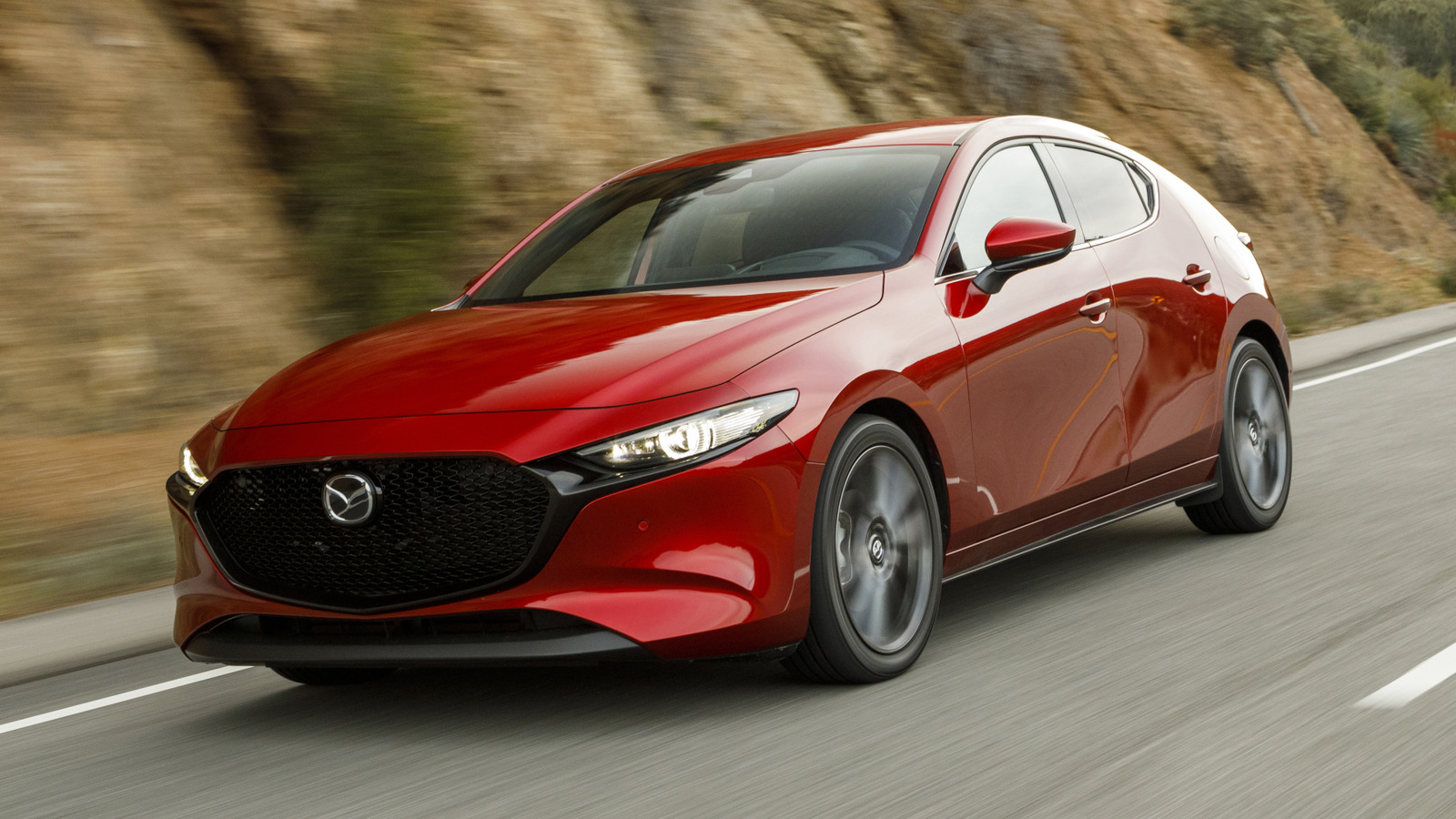
When Mazda debuted the compact Mazda3 in the early 2000s as a replacement for the Protege, the car quickly earned praise for being one of the best-handling, most driver-focused cars in its class, and by most accounts, that's still the case today. Mazda may have discontinued the Mazda6 sedan as part of its pivot toward SUVs, but the Mazda3 continues to keep Mazda's compact car roots alive.
This doesn't mean, however, that the Mazda3 has remained the same over its long lifespan. One of the bigger changes to the Mazda3 happened for the 2019 model year, when the car moved from a multi-link rear suspension setup to a simpler torsion beam rear suspension. Given that Mazda's entire brand image, including that of the Mazda3, is focused on handling and driver enjoyment, wouldn't this be a serious downgrade? And why would the automaker do it in the first place?
According to Mazda, the decision to change the Mazda3's rear suspension wasn't made as a cost-cutting measure. Instead, it adopted a torsion beam suspension to improve noise, vibration, and harshness (NVH), increase interior space, and make handling more predictable. And the good news is that the change hardly impacted the Mazda3's reputation for being one of the funnest, best-handling compact cars in its class.
Is simpler better?
 Mazda
Mazda
On most compact cars, the vast majority of buyers will likely not care or even know what type of rear suspension their car has. But the Mazda3 has always prided itself on its driving dynamics, so there was some concern about the move to a simpler torsion beam when the car debuted back in 2019. While Mazda's engineers admitted at the time that a more complex multi-link setup might perform better on a race track, they wanted more predictable handling with smoother transitions in normal driving, and to reduce the amount of rear suspension movement that passengers felt. Equally important for everyday use was the new torsion beam design's smaller packaging, which freed up space in the trunk.
Reviews of the 2019 Mazda3 quieted fears about the new suspension noticeably harming the compact car's handling. It holds up well to this day, too, despite its age: we reviewed the 2025 Mazda3 and found that it's still a competent, engaging compact that stands out from the crowd.
It's also important to note that since the Mazda3 is front-wheel-drive (or, in some cases, all-wheel-drive), the rear suspension is doing less work than it would with rear-wheel drive. Yes, it could change the way a car handles or feels on the road, but not as dramatically as, for example, when the Ford Mustang moved from a solid axle rear suspension to an independent rear suspension with the S550 in 2015.
New suspension, same Mazda3
 Mazda
Mazda
While you might appreciate the benefits of multi-link rear suspension if you are driving flat out on a race track, the bigger loss from moving to a torsion beam suspension would mostly be the extra adjustments available with a multi-link rear suspension. And though the Mazda3 has always been well regarded by enthusiasts, it's never been as popular a race car as its stablemate, the Mazda Miata. Thus, the loss of adjustability arguably isn't that important.
And to Mazda's credit, while the move to the torsion beam may have upset some enthusiasts, most would probably agree that the addition of an all-wheel drive option, along with the availability of a more powerful turbocharged engine, more than made up for it. The current car might not be fire-breathing and will likely never be the future classic that the old Mazdaspeed3 might become, but it's still one of the more engaging cars in its price range today. No matter what type of rear suspension it has, though, the Mazda3 continues to keep that old-school Mazda charm alive amidst the automaker's current focus on crossovers and SUVs, and we hope that charm sticks around for years to come.