 Jowi Morales/SlashGear
We may receive a commission on purchases made from links.
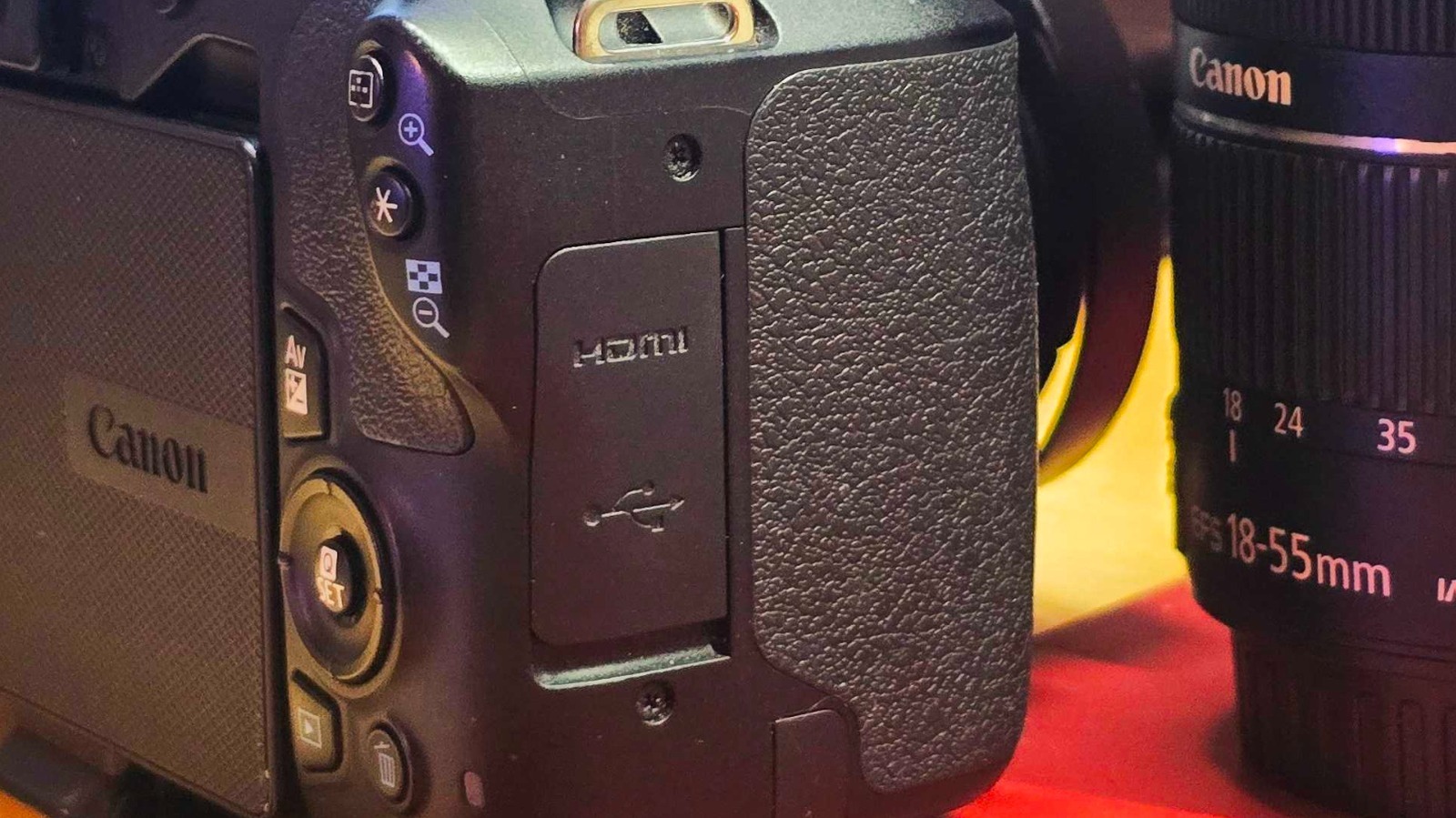
Whether you have a compact or mirrorless camera or even a DSLR, it likely has a USB port where you can plug it into your computer or other devices, especially if it's a somewhat new model. You usually find it under a protective flap on the side or bottom of your device, but most people ignore it, especially if they don't explore the gear that much. After all, you can typically charge your camera's battery with the included charger and transfer photos from its memory card to your computer using a card reader or through a wireless connection.
However, the USB port on your camera actually gives it superpowers, so you shouldn't ignore it. It can do everything from saving you when you forget a crucial accessories, especially when you're traveling, to turning your camera into an important part of a streaming setup. I've used all these features on the various cameras that I've owned over the years. However, you should note that USB-C port capabilities will vary between different cameras, so you should check your manual to know what yours can do. Nevertheless, these are some of the things that you can achieve with the USB port on your camera, especially if you have a fairly recent model.
Transfer photos and videos without a card reader
 Jowi Morales/SlashGear
Most photographers transfer photos from their SD card to their computer via a card reader. After all, these accessories often do not need an external power source, typically transfer at much higher speeds, and their smaller size and lighter weight means that you can easily attach them to your computer, tablet, or smartphone. However, if you happen to leave your card reader at home and need to transfer a lot of images, you don't have to go out of your way to purchase a card reader — instead, just use your camera's USB port.
To move your photos and videos, you need a USB charging cable that also transfers data, which can also be the same cable that you use to charge your phone. In fact, even if you don't have a laptop with you, you can use the cable to move the data in your camera to your phone or tablet without taking out its memory card. However, when you do so, ensure that you have enough battery power so that your camera does not shut off in the middle of the transfer. I also recommend using the copy instead of the cut command, so if you run into an issue and the files being transferred to your device get corrupted, you'll still have the original files on your camera.
Recharge your camera
 Jowi Morales/SlashGear
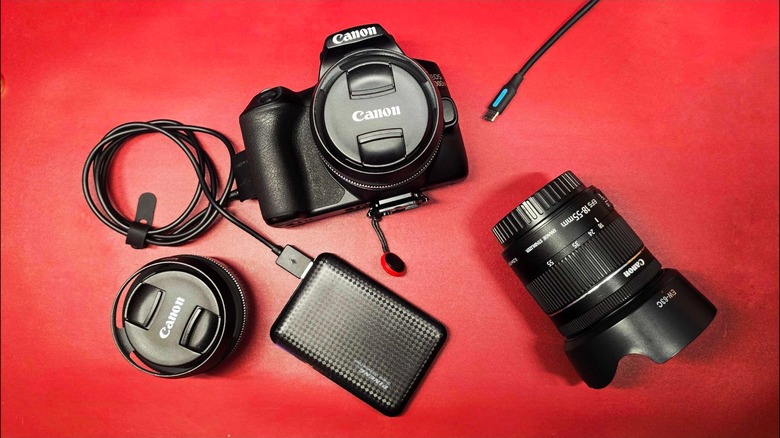
Aside from transferring files, the USB port can also charge the removal battery inside most modern cameras. You should still charge the battery on the supplied external charger (if your camera comes with one) as much as possible, as it's typically faster. But if you forgot your charger on a trip, your phone's USB-C cable and charging brick can save you, and let you to charge your camera back at your hotel.
A spare battery is one of the first accessories you should get after buying a camera. It doesn't matter if you've got the cheapest camera you can buy — a camera without power is just dead weight around your neck. But if you don't have an extra battery and your camera gives you the low battery warning, you can quickly top it up with a power bank using the USB port. That way, you can keep on shooting later in the day without worrying about running out of juice.
If the red battery warning starts blinking while you're still taking photos or recording videos, that may mean you have no choice but to have a USB cable sticking out of the side of the camera while you use it. However, that's probably preferable to missing that important moment because you've run out of power.
Use it as a webcam
 Jowi Morales/SlashGear
If you're using a desktop computer, you typically need to buy a third-party webcam for meetings and streaming. And even though most laptops have ones built-in, I'd still recommend using a separate camera to improve the quality that your audience sees. It's not about resolution — many video conferencing and streaming platforms compress the streamed video anyway. However, using a camera with a larger sensor and better lens will greatly improve how you look, even with a compressed video signal.
And you don't need to purchase a separate device if you already have a camera with a USB port — just use it as your webcam. As usual, you'll have to check if your camera supports this feature. If it does, you should just need to install the driver software from its manufacturer, and then you can start capturing yourself with your mirrorless or DSLR camera's higher-quality sensor.
If your camera does not support video output via USB-C but has a micro-HDMI port, you can use a capture card and software instead. While you'll have to buy the hardware to make this system work, you can use free apps like OBS Studio to use your existing gear as a webcam.
Shoot directly using a computer or tablet
 Jowi Morales/SlashGear
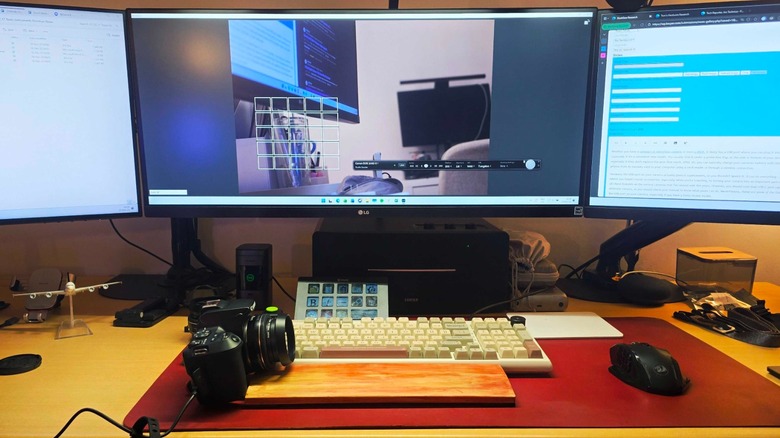
Most people generally rely on the small screen or eyepiece of their camera to compose their image. But if you're shooting in a studio setting, you can use the larger screen of your laptop or tablet to immediately see the finer details of your image. This is called tethered shooting, and you can do this by attaching your device to your camera via its USB port. Aside from needing a USB cable, you also need specific software to do this. I personally use Adobe Lightroom Classic, but you can do the same using Capture One. You can also use Capture One Mobile or Cascable so you can do tether your camera to your iPad.
Aside from seeing the images you shoot immediately on a larger screen; you can also use these applications to control your camera. That way, you don't have to stand up and move around to change the camera's settings like shutter speed, aperture, and ISO, and you can even press the shutter button from your device. This is crucial if you've already set up your camera on one of the best tripods for your DSLR or mirrorless camera and don't want to disturb your set up. You can also use tethered shooting to pre-process your raw files in Adobe Lightroom, especially as studio photography usually have tightly controlled lighting conditions. This will save you time and allow you to get your desired final output with much less work.
Sync with a gimbal
 Nikola Spasenoski/Getty
If you're a videographer, a gimbal like the DJI RS 4 Mini will help you shoot completely stable footage. However, changing your camera's settings can get a bit challenging, especially as it can disturb the stability of the setup. That's why some gimbals will connect to your camera via its USB-C port, allowing you to play around with shutter speed, sensitivity, and aperture without touching the camera directly.
The only thing that you would not be able to manipulate easily via your camera's USB port would be the zoom of the lens (unless you have a fixed lens camera with zoom capability). If you want to do that, you'd need a separate motorized accessory for adjusting your lens' focal length, like the Tilta Nucleus Nano II Wireless Lens Control System. When you combine these two systems, you can remotely control almost all the crucial functions on your camera through the gimbal. That way, you don't have to touch the camera when you need to make changes to your settings, ensuring that it stays stable as you film.