 Ryobi
Ryobi
We may receive a commission on purchases made from links.
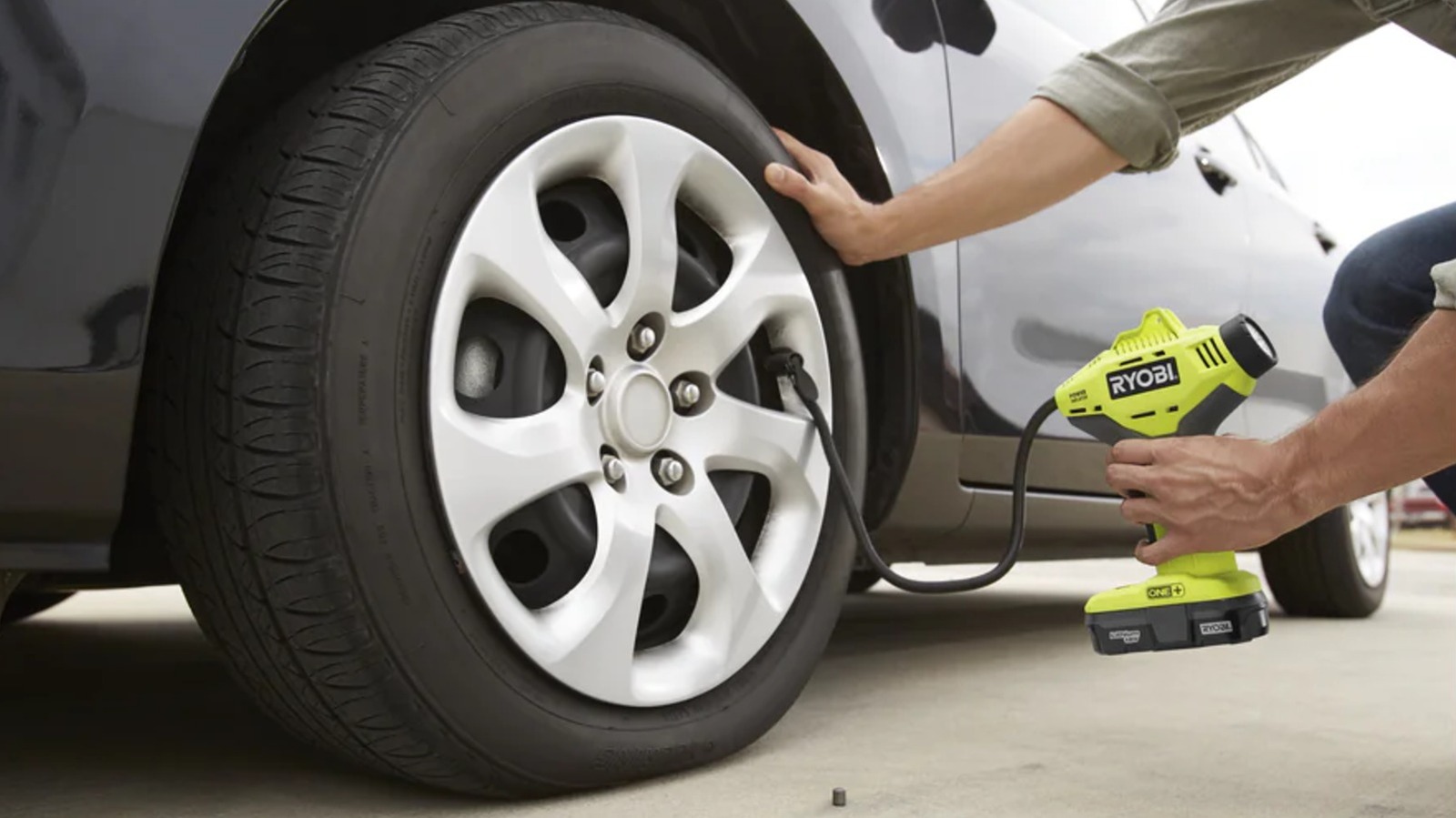
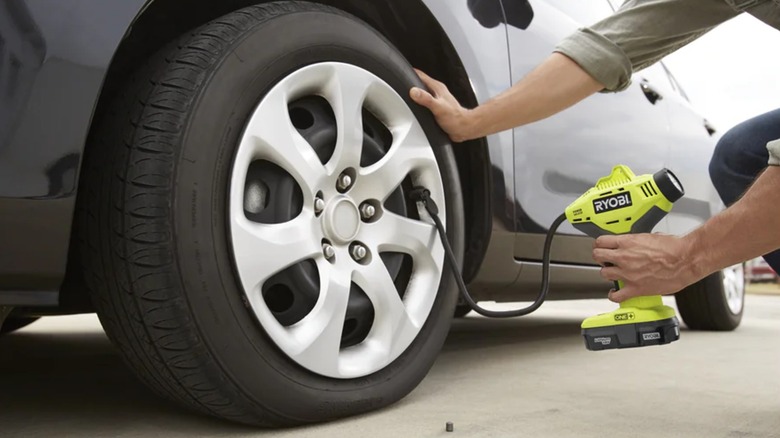
Ryobi's tool offerings extended beyond one's workshop or garage. There are plenty of Ryobi tools you should keep in your car in case of an emergency, though you should be mindful of where and how you store tools in your car. All it takes is one ending up in a position it shouldn't be for things to turn catastrophic in a hurry. Case in point, Redditor u/BrianP84 found that their Ryobi handheld air compressor suddenly caught fire in their car — seemingly through no fault of Ryobi's.
The Reddit user explained that the compressor caught fire, melting itself, the car's seats, and parts of the floorboard. They also noted that the battery wasn't the culprit, as there wasn't any sign that it caught fire, so the Reddit community tried to fill in the blanks. The best guess was that the compressor may have moved around and had its power trigger pressed down and held in that position, likely because it wasn't stored securely. This would have caused heat buildup over time as the tool ran, leading to overheating and eventual flames. Ryobi isn't to blame here, as there's no indication of a faulty tool. Instead, this was seemingly just a matter of circumstance.
All in all, this is a cautionary tale of what can happen when tools aren't properly stored in a vehicle. That raises the question: What is the right way to keep Ryobi power tools in a car? Well, there are a few steps one can take to ensure the safety of tools and the vehicle they're stored in.
Best practice for in-vehicle Ryobi tool storage
 Ryobi/Amazon
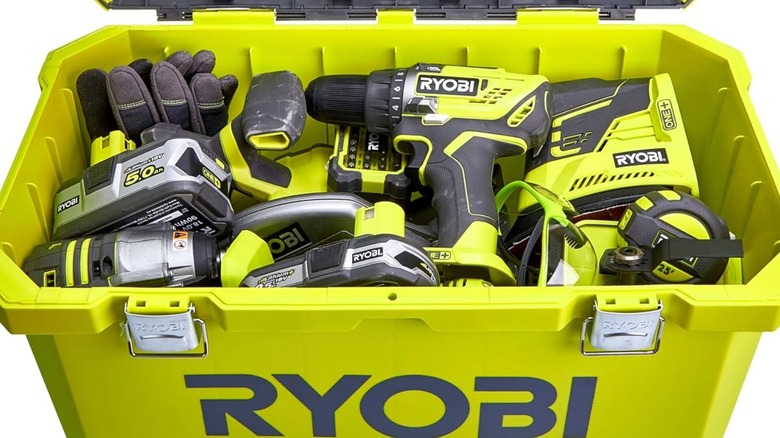
If you absolutely need to keep Ryobi power tools in your vehicle, there are a few steps to keep yourself, your ride, and your collection safe. First, don't leave batteries connected to your tools. Keeping a power source connected opens the door for accidental activation. Besides, a vehicle is one of the many bad places to store a Ryobi battery anyway: Ryobi recommends against long-term storage over 30 days in temperatures over 80 degrees Fahrenheit, which a vehicle interior can certainly reach. If not stored properly, lithium-ion batteries can overheat, leak, or even explode, which can spell disaster for you or your tools.
As for the tools themselves, it's worth investing in a container to hold them while you drive. For example, Ryobi has its own line of storage containers, featuring latched lids, built-in organization, and more. These also support foam inserts, preventing your tools from rattling or moving around inside and potentially being damaged. Alternatively, a tool bag could be a good choice, as they're designed for durability with pockets for organization and restricting tool movement. In especially hot conditions, though, moving tools to a climate-controlled area is best. Even without a battery, heat can cause damage to internal elements and thus reduce a tool's life.
Ryobi tools generally aren't prone to breaking or overheating suddenly, but they, and any other brand's tools, could become dangerous in the right conditions. If you tend to leave tools in your vehicle for any amount of time, it's in your best interest to do so as safely and responsibly as possible.