- Home
Edition
Africa Australia Brasil Canada Canada (français) Català España Europe France Global Indonesia New Zealand United Kingdom United States Skip to content Edition:
Global
Edition:
Global
- Africa
- Australia
- Brasil
- Canada
- Canada (français)
- Català
- España
- Europe
- France
- Indonesia
- New Zealand
- United Kingdom
- United States
Academic rigour, journalistic flair
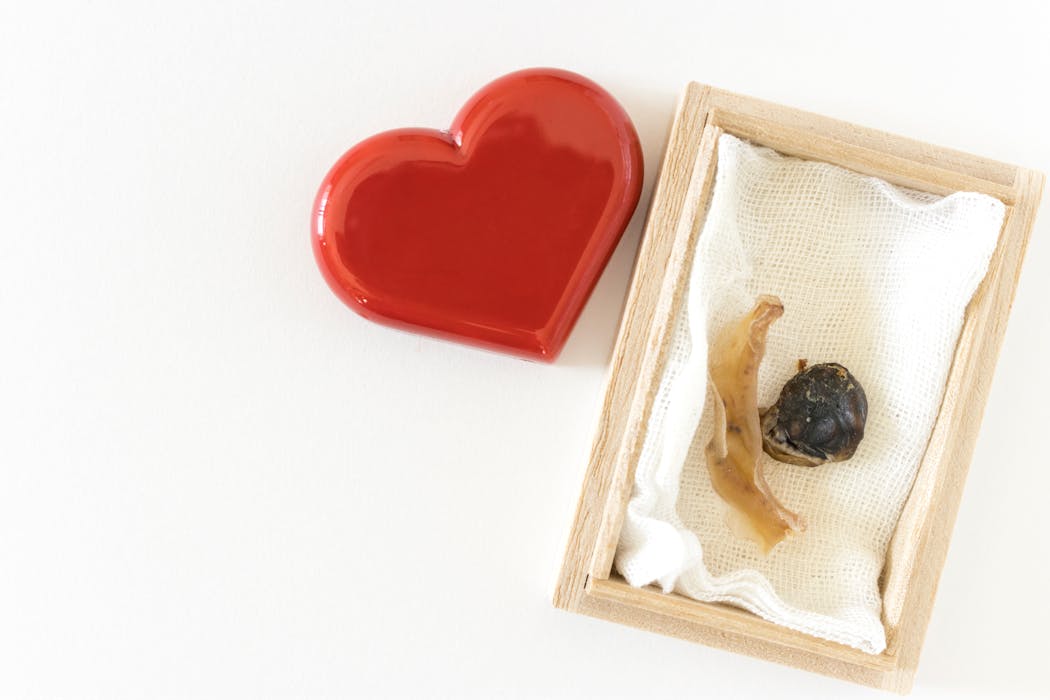
 Some parents keep their baby’s umbilical cord as a sentimental keepsake after birth.
pu_kibun/Shutterstock
From kneecap necklaces to umbilical cord keepsakes: the risks of keeping and consuming human tissue
Published: March 3, 2026 12.30pm GMT
Adam Taylor, Lancaster University
Some parents keep their baby’s umbilical cord as a sentimental keepsake after birth.
pu_kibun/Shutterstock
From kneecap necklaces to umbilical cord keepsakes: the risks of keeping and consuming human tissue
Published: March 3, 2026 12.30pm GMT
Adam Taylor, Lancaster University
Author
-
 Adam Taylor
Professor of Anatomy, Lancaster University
Disclosure statement
Adam Taylor does not work for, consult, own shares in or receive funding from any company or organisation that would benefit from this article, and has disclosed no relevant affiliations beyond their academic appointment.
Partners

Lancaster University provides funding as a founding partner of The Conversation UK.
View all partners
DOI
https://doi.org/10.64628/AB.jnaw39rmm
https://theconversation.com/from-kneecap-necklaces-to-umbilical-cord-keepsakes-the-risks-of-keeping-and-consuming-human-tissue-276470 https://theconversation.com/from-kneecap-necklaces-to-umbilical-cord-keepsakes-the-risks-of-keeping-and-consuming-human-tissue-276470 Link copied Share articleShare article
Copy link Email Bluesky Facebook WhatsApp Messenger LinkedIn X (Twitter)Print article
Celebrity outfits and endorsements often dominate social media, but Elton John recently drew attention for a very different reason. The musician has been spotted wearing jewellery made from his own kneecaps.
After a double knee replacement in 2024, he asked his surgeon if he could keep his patellae, the bones at the front of the knee, and later worked with jeweller Theo Fennell to turn them into wearable pieces.
While jewellery made from kneecaps is unusual, it raises a broader question: what happens to tissue once it leaves the body, and why do some people want to keep it?
Elton is not alone in wanting to hold on to parts of the body. Many people keep baby teeth or their children’s first lost tooth as sentimental objects. Social media is also full of stories about people preserving removed tonsils, adenoids, an appendix, or a newborn’s umbilical stump. Some of these are biologically inert keepsakes. Others carry medical and safety considerations.
In most cases, tissue removed during surgery is handled very differently. It is usually sent to a laboratory for testing, known as pathology, to confirm a diagnosis or check for disease. After that, it must be disposed of safely as clinical waste because it can carry biological risks. It is now relatively uncommon for patients to keep surgically removed tissue.
Handling human tissue can pose risks, especially for professionals working in operating theatres or pathology labs with unfixed tissue. “Unfixed” means the tissue has not been treated with chemicals to preserve it and kill microbes. Healthcare staff who use needles or sharp instruments are particularly vulnerable to exposure to blood-borne viruses such as hepatitis or HIV. Depending on the source, other pathogens may also be present, for example respiratory microbes in lung tissue.
Some keepsakes fall somewhere between harmless and medically relevant. Parents sometimes keep the umbilical stump after a baby is born. This small piece of tissue dries up and falls off naturally, usually within the first couple of weeks. If it is not kept clean and dry, it can become infected with a condition called omphalitis, meaning inflammation and infection of the stump.
Placenta
The most debated example of keeping human tissue comes after childbirth. Following delivery of the baby, the placenta is also delivered. This temporary organ connects the developing foetus to the uterus and acts as an interface for exchange of oxygen, nutrients and waste products between mother and baby, while keeping their blood supplies separate to prevent immune rejection and blood incompatibility.
Some people choose not only to keep the placenta but to consume it, a practice known as placentophagy. The idea comes from the belief that because the placenta nourishes the foetus during pregnancy, it must contain nutrients that can help the mother recover after birth. During pregnancy, nutrients such as calcium are transferred to the developing baby, and mothers can lose close to 4% of their bone mineral density. However, most nutrients stored in the placenta have already been passed to the foetus before birth.
Claims about the benefits of placentophagy are not strongly supported by scientific evidence. The nutrients present in placental tissue can generally be obtained through a balanced meal. Research in animal models has shown some positive effects, and similar findings have been reported in those studies, but these results have not been reproduced in humans.
People consume the placenta in various ways. It may be blended raw into smoothies, cooked into foods such as lasagne, steeped in high-strength alcohol to create a tincture, or dried and made into capsules, which is the most common approach, known as encapsulation.
Health risks
But there are also potential health risks. The placenta contains elevated levels of oestrogen, and high concentrations of this hormone in the bloodstream can increase the risk of thromboembolism, a condition in which blood clots form and travel through the circulation.
The placenta also acts as a filter during pregnancy, limiting the transfer of certain substances to the baby. Studies show that some heavy metals and other ions can accumulate in placental tissue, meaning levels may be higher in the placenta than elsewhere in the body.
In 2017, the CDC reported a case in which a baby developed repeated infections with group B Streptococcus agalactiae, a bacterium commonly found in the gut or vagina. Investigators traced the source of the infection to the mother consuming placenta capsules contaminated with the same bacterium. The process used to produce capsules reduces bacterial levels but does not completely remove them in all cases. Eating the placenta raw carries even greater risks, including exposure to bacteria such as E.coli.
Many animals eat their placentas after giving birth, largely to remove evidence that could attract predators and to reclaim nutrients. For humans, those same nutrients are easily obtained from a normal diet, and the medical benefits remain uncertain. At present, more robust studies are needed to determine whether placentophagy offers any genuine health advantages.
Whether transformed into jewellery, kept in a memory box or blended into a smoothie, once tissue leaves the body it moves from the personal and sentimental into the medical and biological. The meanings people attach to it vary widely, but the scientific questions about safety, benefit and risk remain the same.
- Placenta
- Strange Health
Events
Jobs
-
 Learning Designer
-
Simulation Education Manager and Facilitator
-
Visiting Professor - 2027 Australia-Korea Chair in Australian Studies at Seoul National University
-
Department Chair and Associate Professor/Professor of Media and Communication
-
1 year editorial cadetship
 Learning Designer
 Simulation Education Manager and Facilitator
 Visiting Professor - 2027 Australia-Korea Chair in Australian Studies at Seoul National University
 Department Chair and Associate Professor/Professor of Media and Communication
 1 year editorial cadetship
- Editorial Policies
- Community standards
- Republishing guidelines
- Analytics
- Our feeds
- Get newsletter
- Who we are
- Our charter
- Our team
- Partners and funders
- Resource for media
- Contact us
-
-
-
-
Copyright © 2010–2026, The Conversation