- Home
Edition
Africa Australia Brasil Canada Canada (français) Català España Europe France Global Indonesia New Zealand United Kingdom United States Skip to content Edition:
Global
Edition:
Global
- Africa
- Australia
- Brasil
- Canada
- Canada (français)
- Català
- España
- Europe
- France
- Indonesia
- New Zealand
- United Kingdom
- United States
Academic rigour, journalistic flair
 Nine
‘I want someone submissive’: Married At First Sight gives the manosphere a prime time slot
Published: March 4, 2026 2.12am GMT
Claudia Young, The University of Melbourne
Nine
‘I want someone submissive’: Married At First Sight gives the manosphere a prime time slot
Published: March 4, 2026 2.12am GMT
Claudia Young, The University of Melbourne
Author
-
 Claudia Young
PhD Candidate in Media and Communications, The University of Melbourne
Disclosure statement
Claudia Young does not work for, consult, own shares in or receive funding from any company or organisation that would benefit from this article, and has disclosed no relevant affiliations beyond their academic appointment.
Partners

University of Melbourne provides funding as a founding partner of The Conversation AU.
View all partners
DOI
https://doi.org/10.64628/AA.f7yaenkuk
https://theconversation.com/i-want-someone-submissive-married-at-first-sight-gives-the-manosphere-a-prime-time-slot-276974 https://theconversation.com/i-want-someone-submissive-married-at-first-sight-gives-the-manosphere-a-prime-time-slot-276974 Link copied Share articleShare article
Copy link Email Bluesky Facebook WhatsApp Messenger LinkedIn X (Twitter)Print article
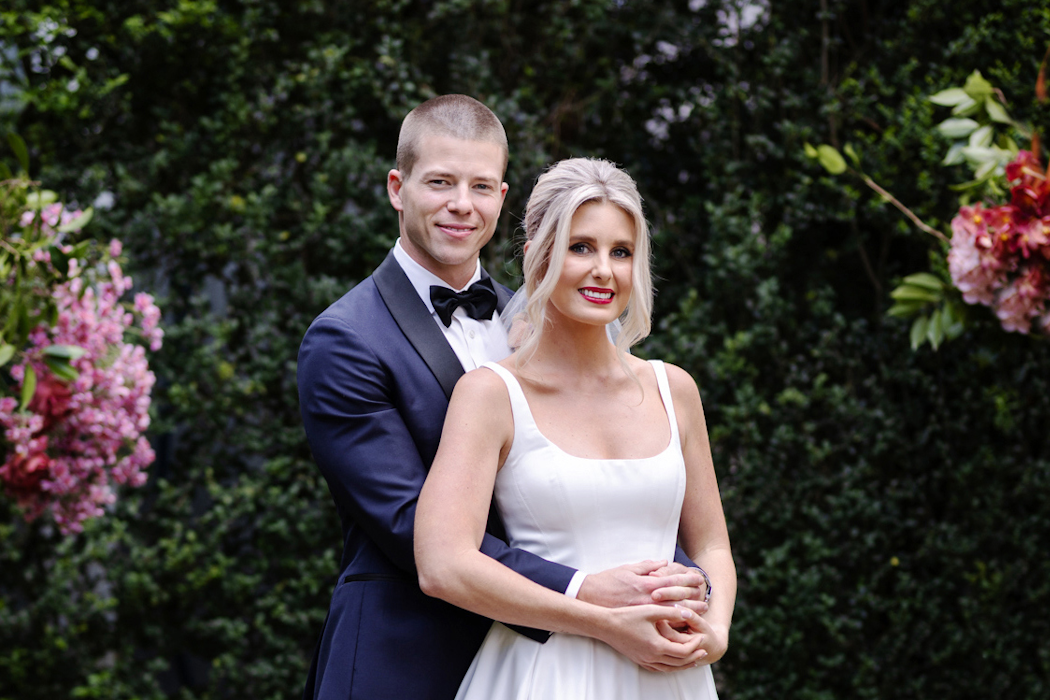
The current season of Married at First Sight is shaping up to be one of the most controversial yet, with the inclusion of Tyson Gordon demonstrating how the manosphere has breached containment.
While the producers and Channel 9 bear some responsibility for who they choose to feature on the show, the problem at hand is much larger than them.
Crash course on the manosphere
The “manosphere” emerged in the 1990s and early 2000s – but gained momentum during Gamergate in 2014. It’s made up of online subcultures – including incels, pick-up artists and “men’s rights activists” – characterised by their virulent misogyny.
Although specific ideologies vary, the manosphere is united by its opposition to feminism and its pseudo-scientific belief in gender essentialism: that gender is innate, and women and men are biologically wired to possess distinct traits.
This worldview sees men as inherently dominant and women as inherently submissive. It ultimately seeks to put both men and women into boxes that limit and control them.
Where these groups were once relegated to niche corners of the internet, in recent years they have been algorithmically amplified – in large part thanks to controversial “manfluencers” such as Andrew Tate – resulting in a wider spread of their beliefs.
Their ideas have found success particular with impressionable boys and young men, especially in a context of increased economic precarity, which the manosphere purports to have the answers to.
According to a 2024 survey of Australian men aged 16 to 34, 15% disagreed with the statement “women deserve equal rights to men” – up from 6% in 2019.
Read more: The ‘Lost Boys’ of Gen Z: how Trump won the hearts of alienated young men
From Trump’s appearances on manosphere-adjacent podcasts in the lead-up to the 2025 election, to Elon Musk’s frequent allusions to the “red pill”, the manosphere’s influence on politics and culture is impossible to ignore.
The manosphere infiltrates Australian TV
Married at First Sight (MAFS) is one of Australia’s most popular reality television shows.
Billed as a “social experiment”, the premise is simple: two strangers “marry” each other when they meet for the first time at the altar.
They proceed to live together, undergoing various challenges designed to test their relationship (and manufacture drama), ostensibly mimicking the hurdles they might face as a couple in the real world. At a weekly “commitment ceremony”, participants can choose to stay, or leave.
This season, one of the featured couples is Tyson Gordon and Stephanie Marshall. While both are avowedly “anti-woke”, Tyson in particular has received backlash from both the audience and his trial wife for his rigid expectations.
In addition to not wanting a “feminist who hates men”, he expresses his distaste for women with “a high body count”.
This is a well-trodden line in the manosphere, where a woman’s worth is determined by the number of sexual partners she has had. Men, of course, aren’t held to the same standard. At the same time, when Stephanie tells Tyson she’s never been in a relationship he worries she might be too “frigid”.
On paper, Stephanie is everything Tyson has asked for. Even so, he is put off by her independence and career-focused attitude and quickly dismisses her: “I want […] someone that is submissive and not masculine”.
The normiefication of fringe views
Tyson is far from the first man in the MAFS franchise to uphold patriarchal views. Every season, one or two self-identified “alpha males” are cast to sow controversy and boost ratings. However, Tyson’s turn of phrase demonstrates the direct influence of the manosphere.
Even if he held misogynistic beliefs before the popularisation of Tate and his ilk, they have nonetheless given him the language to articulate his views. Stephanie recognises this: “It’s giving manosphere,” she says after their wedding.
Despite push-back from Stephanie, other cast members and the audience, Tyson’s casting represents the “normiefication” of the manosphere.
Normiefication precedes normalisation; it exposes the beliefs to a broader audience, but does not necessarily indicate their acceptance. Nonetheless, the exposure itself contributes to the shift of the “Overton window” (the range of views and opinions seen as acceptable by the majority of a population at a given time) towards a culture in which sexist perspectives are deemed legitimate.
By framing women who challenge him as “masculine”, Tyson resurfaces regressive tropes feminism has long fought to overcome – and which the manosphere is working to revive.
A bigger problem than MAFS
Channel 9 and the producers of MAFS have an ethical duty to protect their participants from harm.
In 2025, the series came under fire for normalising behaviour associated with intimate partner violence. It seems they haven’t learnt their lesson. The pursuit of ratings continues to come at the expense of women.
This is unlikely to change until something horrific happens. In 2021, United Kingdom regulator Ofcom introduced stronger protections for reality television participants following a series of reality star deaths.
The mainstreaming of the manosphere doesn’t begin or end with MAFS. It is indicative of a broader political and cultural trend in which misogyny is being reinstated as an ideological norm. MAFS is helping expedite this process, along with online platform algorithms and far-right political projects.
Combating these narratives is difficult. While improved media literacy may help, it’s only one piece of a complicated puzzle. It is important we continue to push back against such beliefs in whatever way we can, lest women’s civil and political liberties are further eroded.
- Australian TV
- Sexism
- Misogyny
- Reality TV
- Married at First Sight
- Manosphere
- Media sexism
- Culture and society
- Andrew Tate
- Red Pill
Events
Jobs
-
 Operational Product Owner
-
Learning Designer
-
Visiting Professor - 2027 Australia-Korea Chair in Australian Studies at Seoul National University
-
Department Chair and Associate Professor/Professor of Media and Communication
-
1 year editorial cadetship
 Operational Product Owner
 Learning Designer
 Visiting Professor - 2027 Australia-Korea Chair in Australian Studies at Seoul National University
 Department Chair and Associate Professor/Professor of Media and Communication
 1 year editorial cadetship
- Editorial Policies
- Community standards
- Republishing guidelines
- Analytics
- Our feeds
- Get newsletter
- Who we are
- Our charter
- Our team
- Partners and funders
- Resource for media
- Contact us
-
-
-
-
Copyright © 2010–2026, The Conversation