 Your Photo-Filled Guide to Seeing the Best Tulips in and Around Amsterdam This Season
Amsterdam
Travel
Parks
Outdoor
Cultural Traditions
by
Nickolaus Hines
Mar 2, 2026
Your Photo-Filled Guide to Seeing the Best Tulips in and Around Amsterdam This Season
Amsterdam
Travel
Parks
Outdoor
Cultural Traditions
by
Nickolaus Hines
Mar 2, 2026
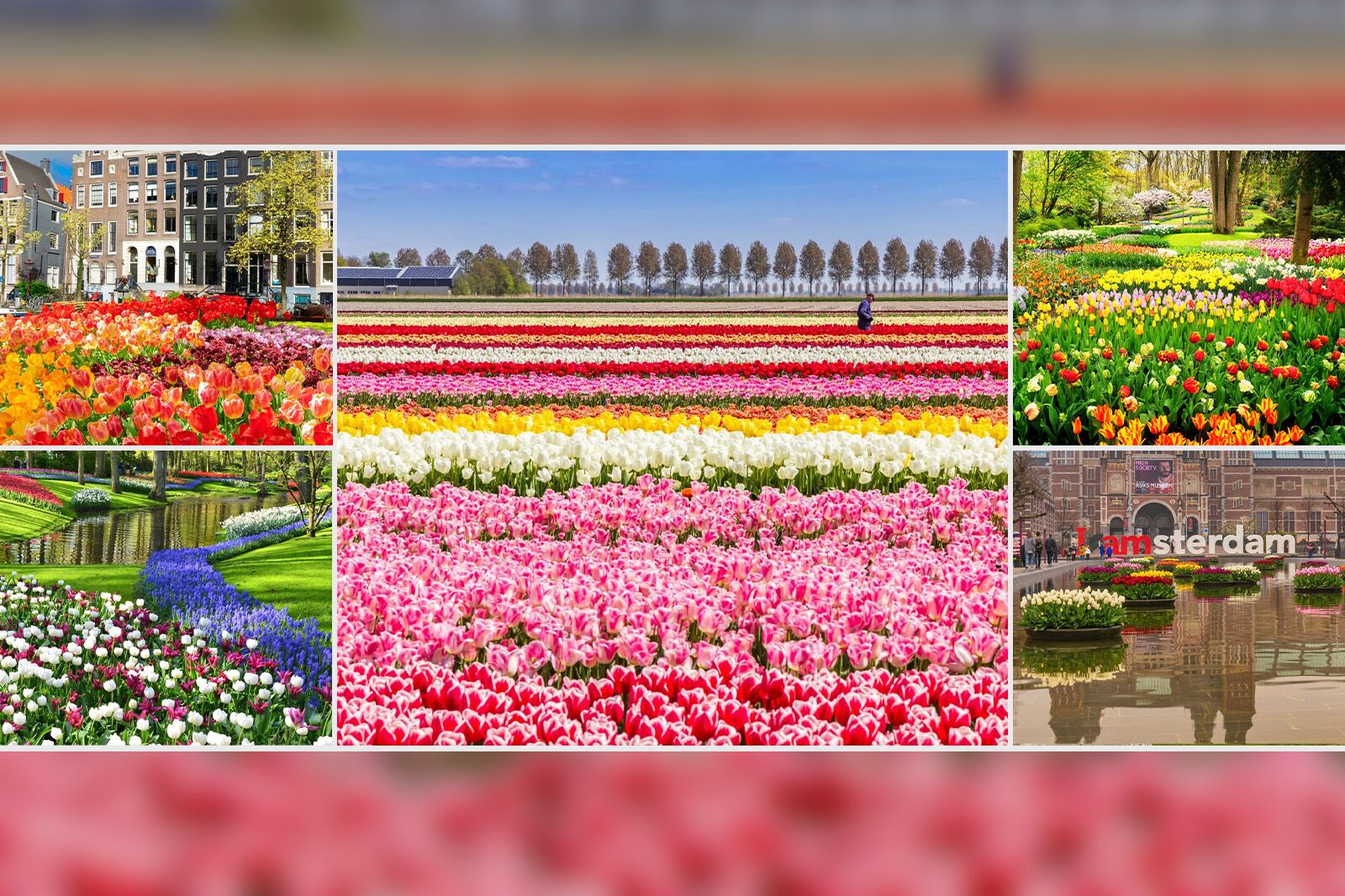
There’s nothing like tulip season in Amsterdam. The Netherlands is world famous for its tulips and becomes a colorful patchwork of flower markets, gardens, and fields every spring.
Tulips are native to the Middle East and Central Asia. They were planted in Holland by the late 1500s and, within decades, became a high-priced status symbol. By the 1630s, certain rare bulbs were being bought and resold at rapidly rising prices, sometimes changing hands several times before they were even planted.
Prices collapsed in 1637 in what became known as Tulipomania, though the country’s attachment to the flower never disappeared. Centuries later, the Netherlands remains the world’s largest exporter of flowers and plants and a global center of the bulb trade.
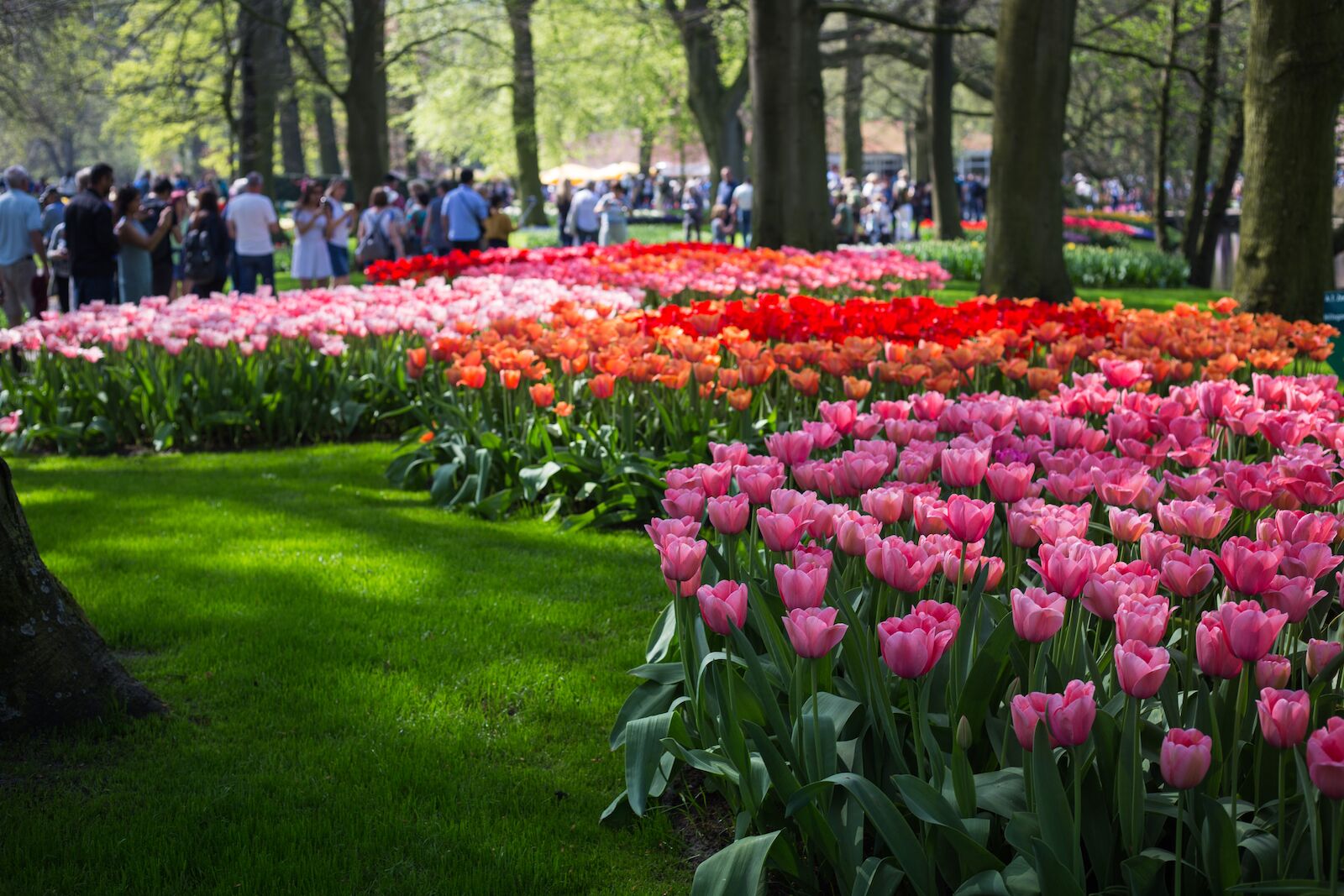
Photo: Foxphotoss/Shutterstock
It’s not just tulips, of course. Crocuses arrive in March, followed by daffodils and hyacinths. Tulips come later and tend to reach peak bloom in mid-April, lasting into early May in and around Amsterdam, depending on the weather. Cool nights help bring the tulips out, and the Netherlands’ moist, low-lying soil provides ideal growing conditions, particularly in the reclaimed polders that define much of the landscape.
While tulips fill Amsterdam in spring, most large-scale bulb production happens outside the city. Flevoland, northeast of Amsterdam, is the country’s largest growing region. Closer to the capital, the best-known fields stretch between Haarlem and Leiden through the Bollenstreek, with Lisse at its center. Keukenhof, also in Lisse, is where more than seven million bulbs bloom each spring, and in nearby Aalsmeer the world’s largest flower auction handles millions of stems each day.
Here are the best ways to see tulips in and around Amsterdam.
Tulips in Amsterdam
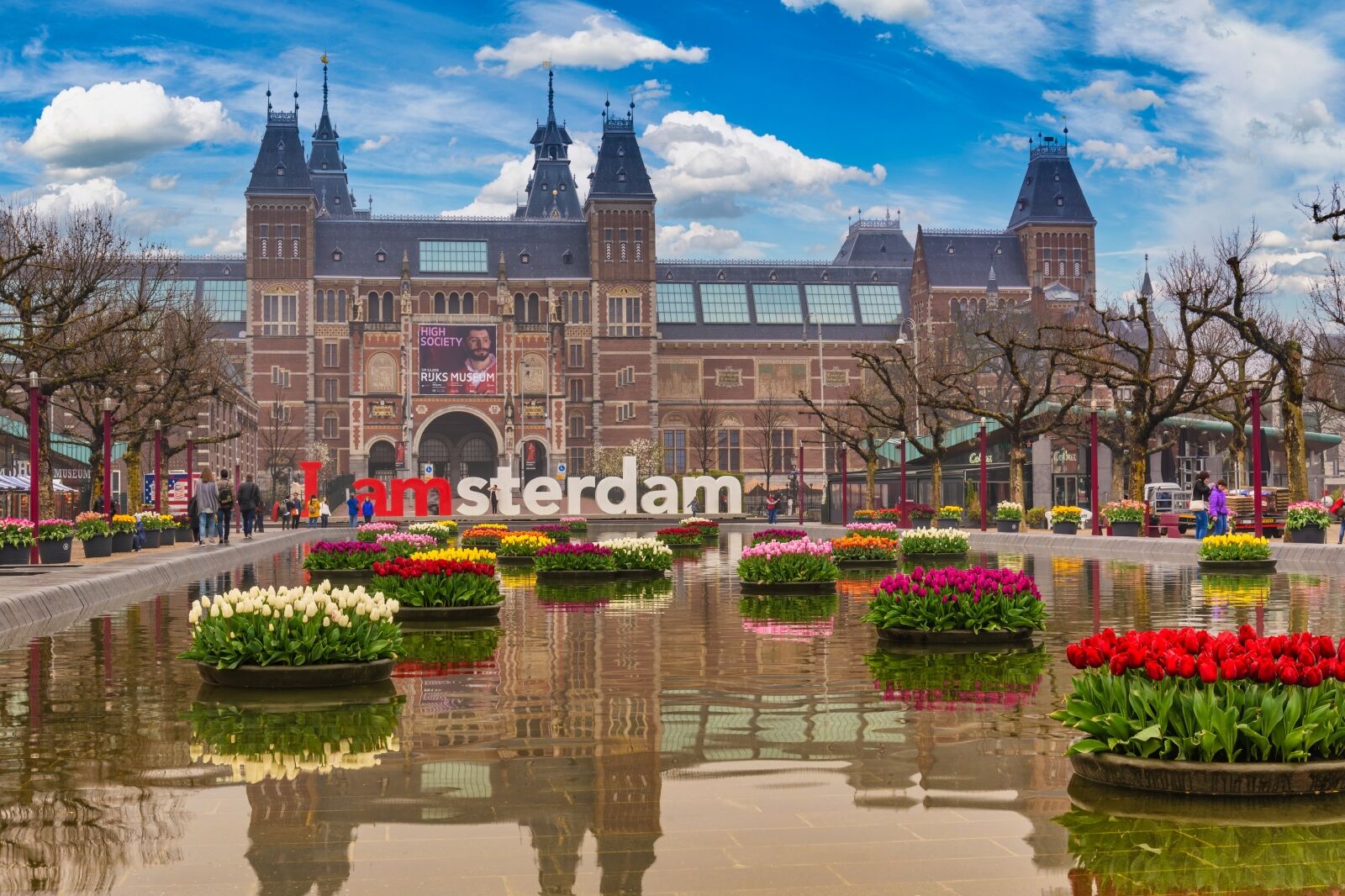 Photo: Noppasin Wongchum/Shutterstock
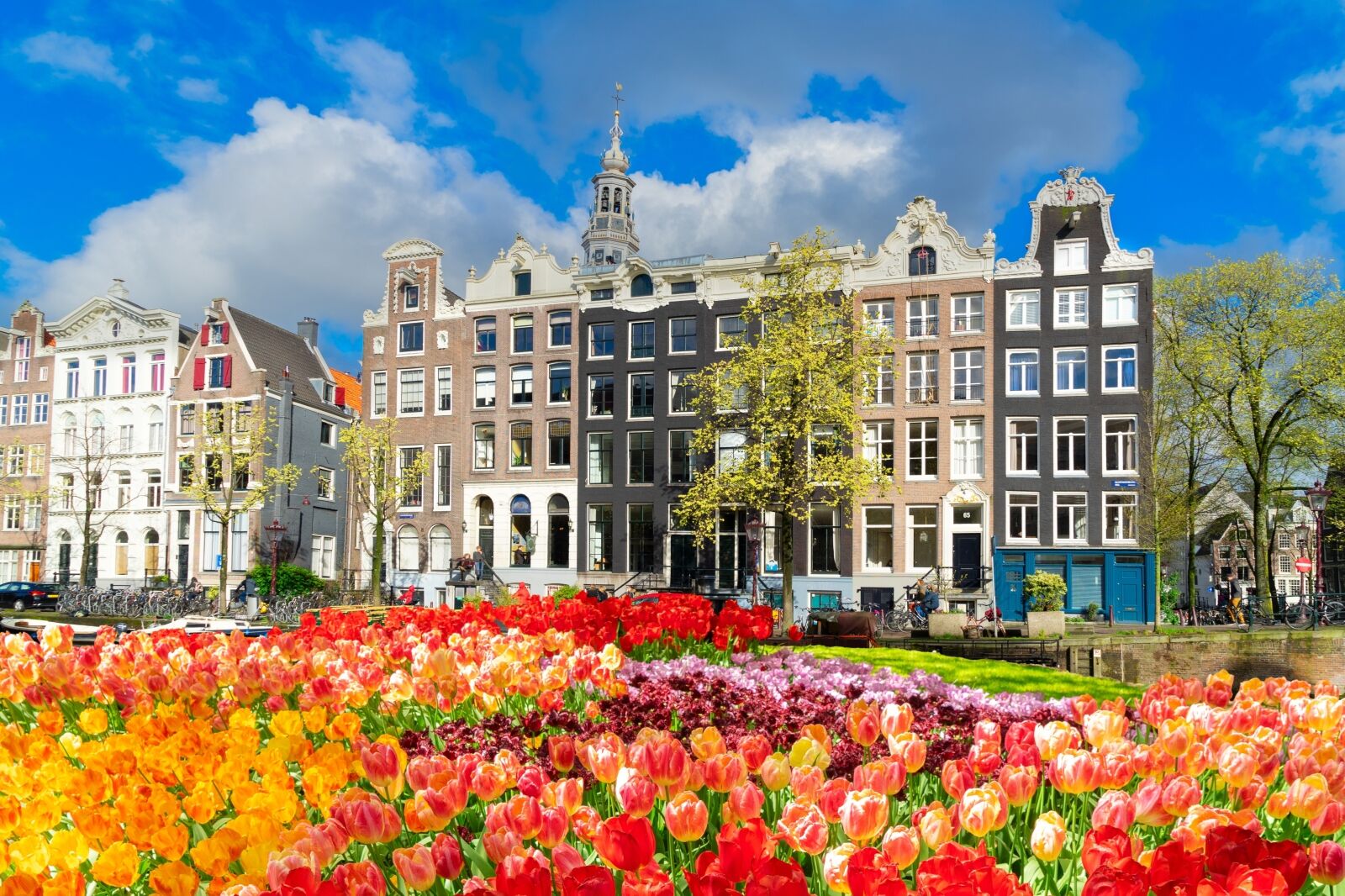 Photo: Neirfy/Shutterstock
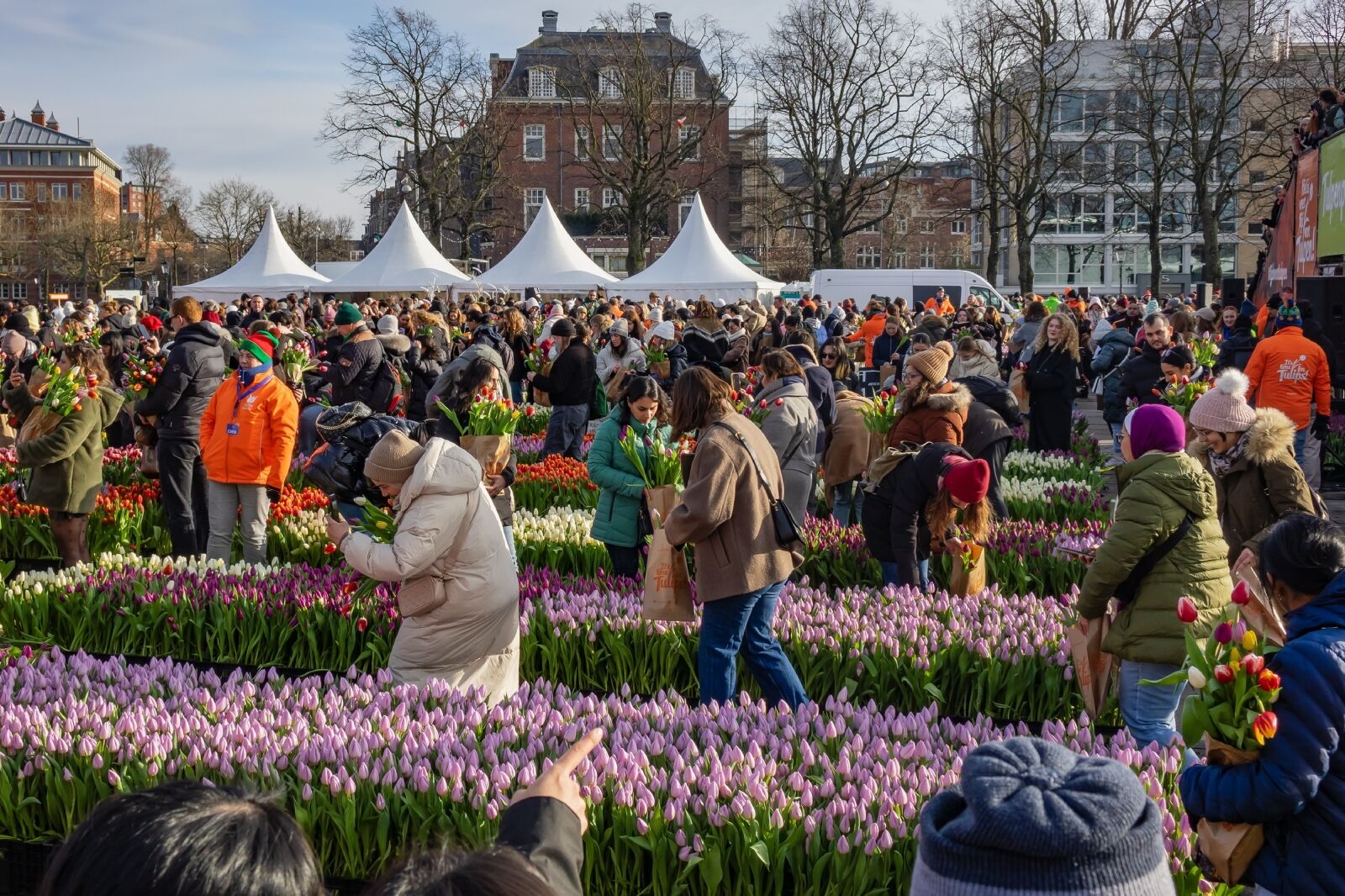 Photo: Kiev.Victor/Shutterstock
Where: Various locations across central Amsterdam, including Museumplein, Dam Square, and public gardens citywide.
When to go: Mid-March through early May during tulip season; blooms typically peak in April. Visit during daylight hours for the best displays.
The city marks the start of tulip season each January with National Tulip Day on Dam Square, when a temporary garden of thousands of tulips is installed for a single day and visitors are invited to gather a small bouquet for free. It’s a symbolic kickoff and sets the tone for what follows in spring.
From mid-March onward, tulips appear across Amsterdam as part of the annual Tulp Festival, which celebrates tens of thousands of blooms in public spaces throughout the city. Displays pop up in museum courtyards, along canals, outside hotels, and in neighborhood squares. Museumplein and the gardens around cultural institutions tend to have some of the densest plantings.
Bloemenmarkt, the floating flower market on the Singel canal, operates year-round. During tulip season it’s crowded, and many of the bulbs sold are packaged for export rather than locally grown, but it remains one of the most recognizable flower stops in the city. It’s worth a brief walk-through if you’re already nearby.
For a deeper look at the flower’s history in the Netherlands, the Amsterdam Tulip Museum in the Jordaan traces tulip cultivation from the Ottoman Empire through Tulipomania and into the modern export industry. Admission is about $6.
You won’t find commercial-scale fields in the city itself, but if you’re visiting during April, you don’t need to leave Amsterdam to see substantial displays. For larger, uninterrupted swaths of color, you’ll still want to head beyond the canal ring.
Keukenhof
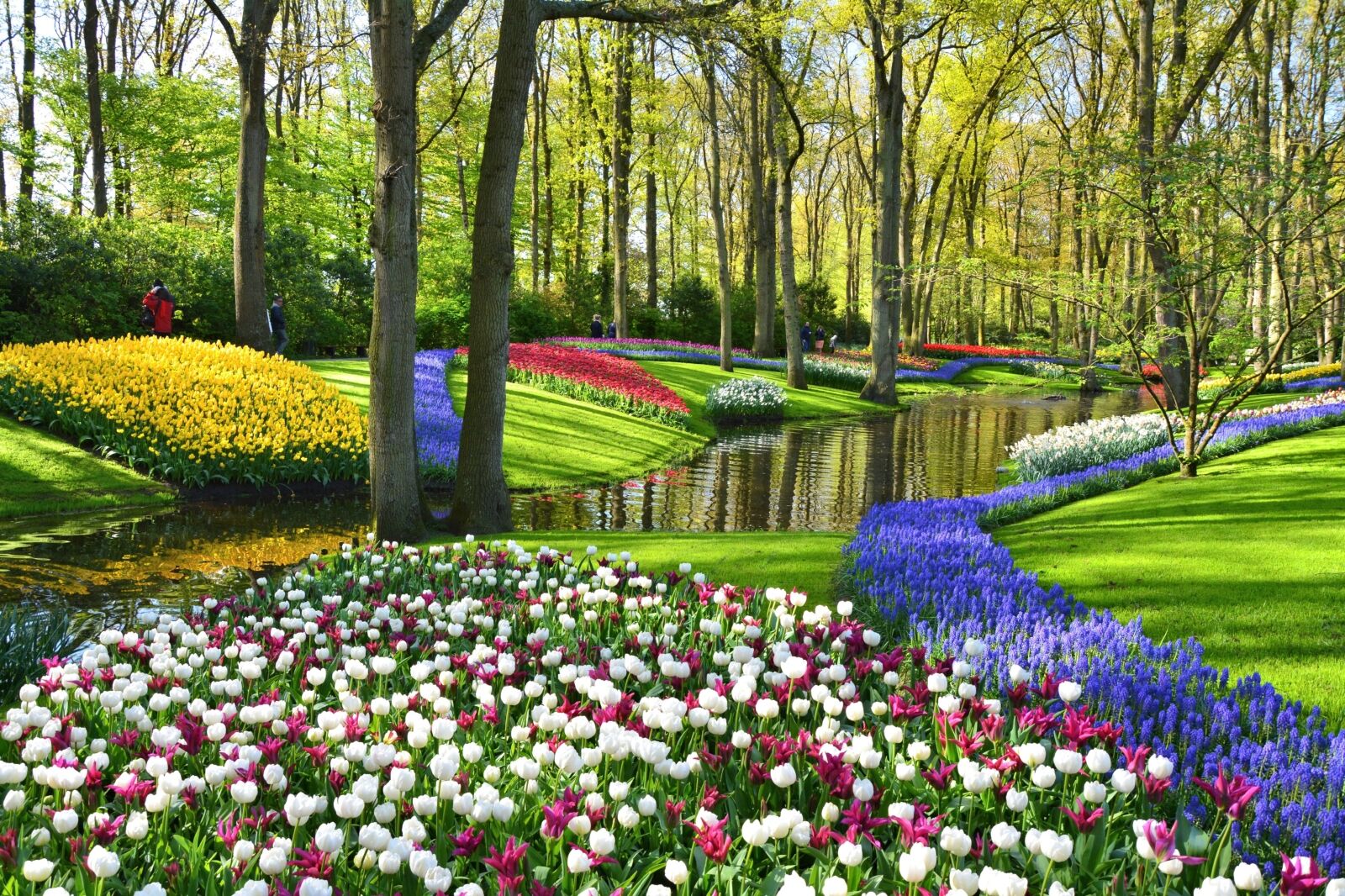 Photo: Studio Barcelona/Shutterstock
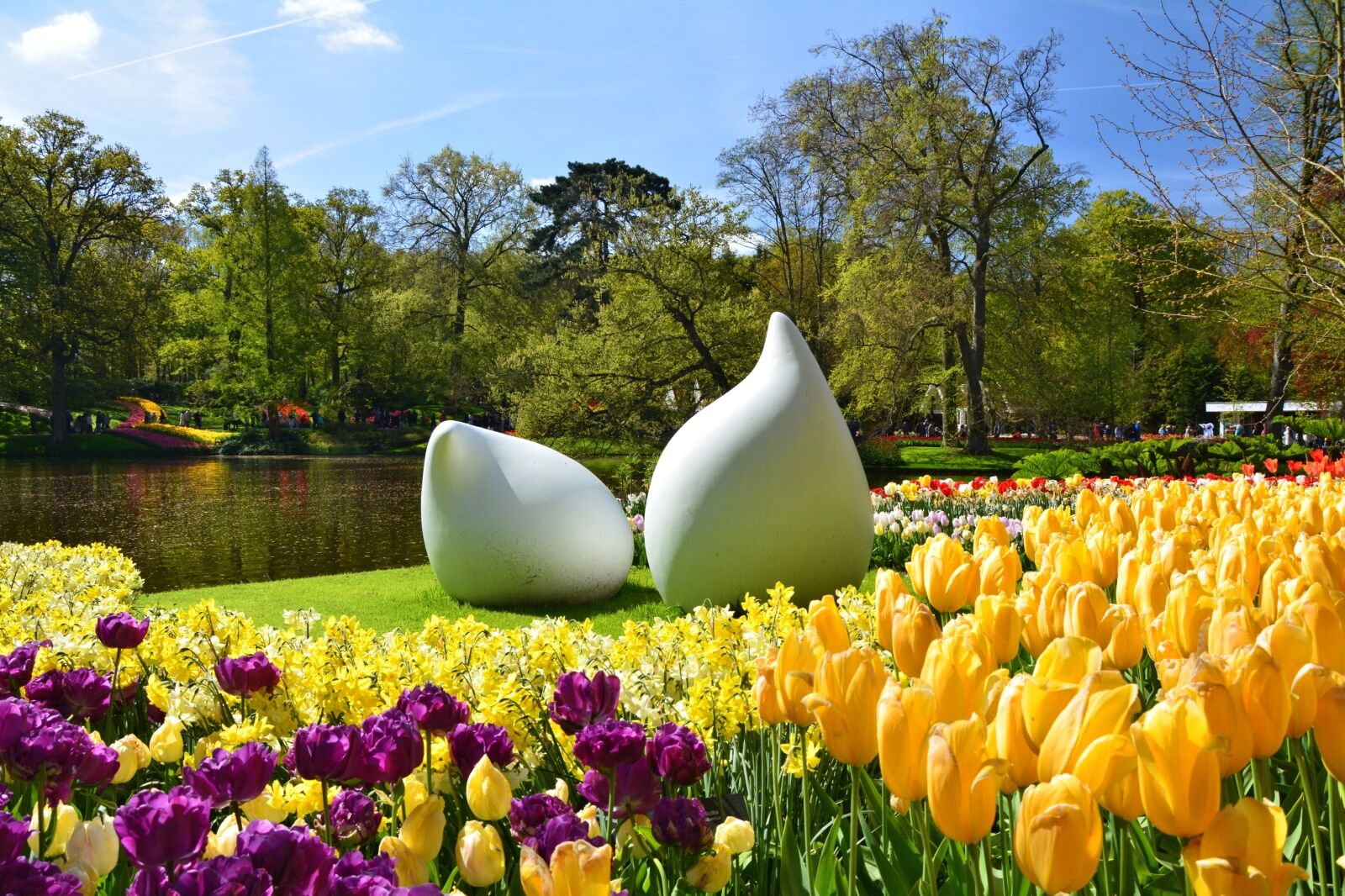 Photo: Studio Barcelona/Shutterstock
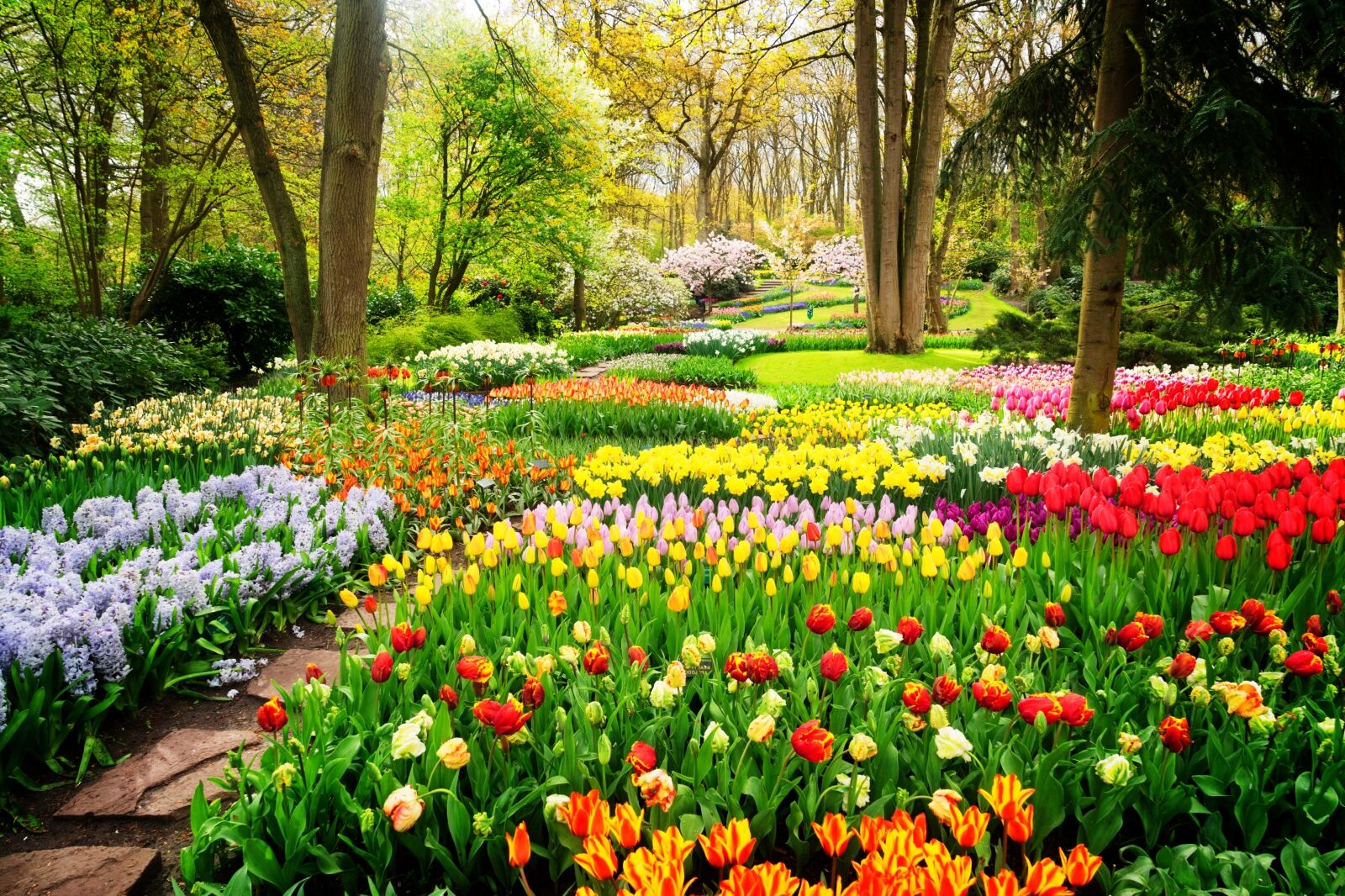 Photo: Neirfy/Shutterstock
Where: Stationsweg 166A, 2161 AM Lisse.
When to go: Open daily during the 2026 season from March 19 to May 10, 8:00 AM to 7:00 PM (last entry 6:15 PM). Weekdays before 10:00 AM or after 4:00 PM are noticeably less crowded.
More than seven million bulbs bloom here each spring, making Keukenhof the largest flower garden in the world. Along with tulips, you’ll see hyacinths, daffodils, lilies, orchids, and rotating indoor flower shows staged in the pavilions throughout the season. The planting is staggered, so different varieties come into peak bloom at different points between late March and early May, with mid-April typically offering the fullest tulip displays depending on the weather.
Keukenhof is about 40 minutes from Amsterdam by car. During the season, direct Keukenhof Express buses run from Amsterdam Schiphol Airport and Leiden Centraal station, which is usually the most straightforward option without a rental car. Driving is possible, but parking fills quickly on weekends.
Tickets must be purchased online in advance with a timed entry slot. Adult admission is about $24, children ages four to 17 are about $12, and children under four enter free. Weekend dates and peak bloom periods often sell out several days ahead.
It’s undeniably busy, especially on sunny weekends, but the scale and density of the plantings are difficult to replicate elsewhere. If you want curated displays and maximum variety in one place, this is the most comprehensive stop in the Netherlands during tulip season.
Royal FloraHolland
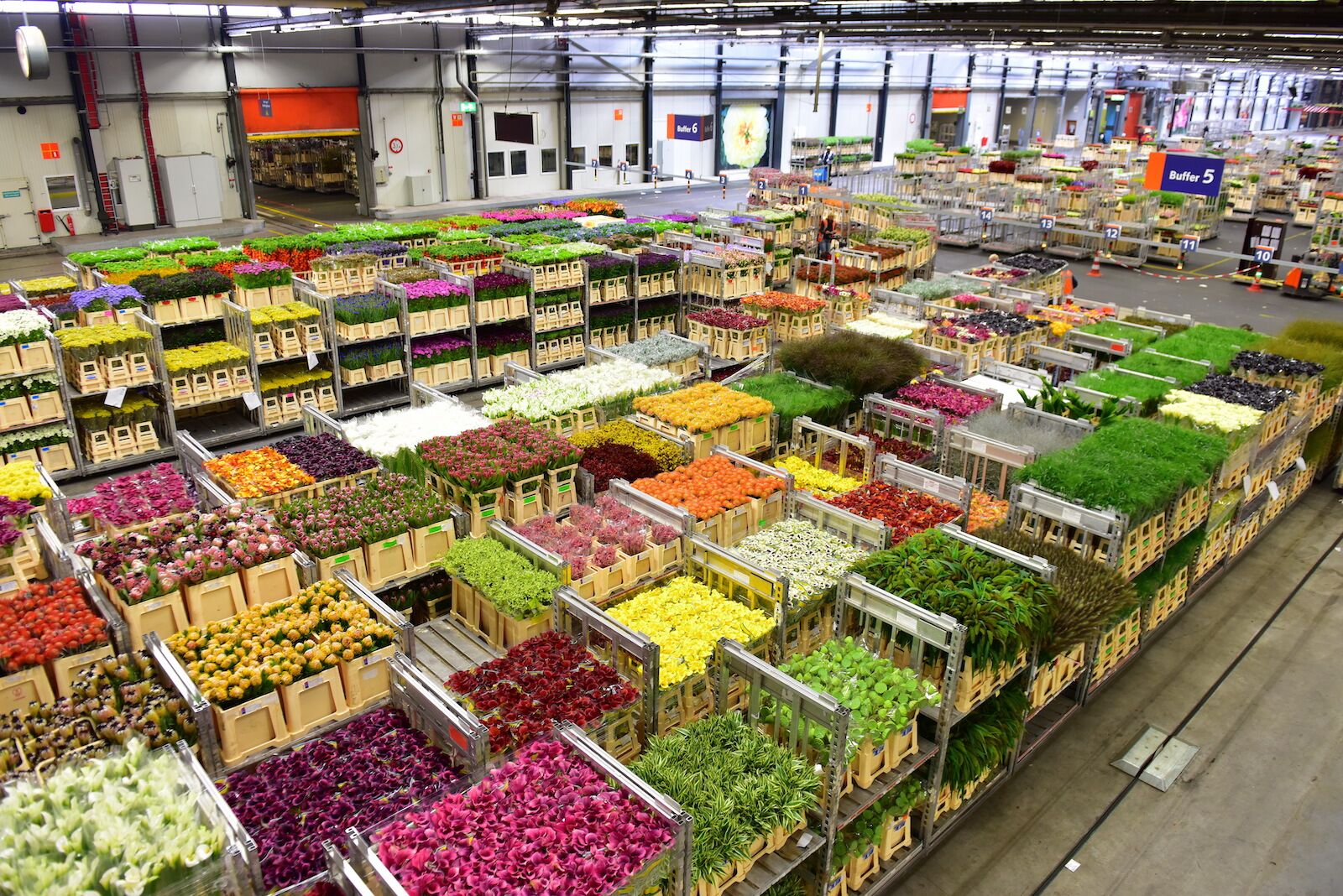
Photo: Jordan Tan/Shutterstock
Where: Legmeerdijk 313, 1431 GB Aalsmeer.
When to go: Weekday mornings, ideally right at opening (public visits generally run 7:00 to 11:00 AM, with shorter hours on Thursdays).
Around 20 million flowers and plants are traded every day across Royal FloraHolland’s auction houses, making it the largest flower auction in the world. The cooperative operates in Aalsmeer, Naaldwijk, Rijnsburg, Venlo, Bleiswijk, and Eelde, serving growers and buyers from dozens of countries.
Aalsmeer, about 30 minutes from central Amsterdam, is the only location set up for visitors. From a raised gallery above the warehouse floor, you can watch buyers bid at speed as carts of roses, tulips, and chrysanthemums roll through the building in near-constant motion. It’s an early start — the real activity happens in the morning — but that’s part of the appeal.
General admission is about $13 for adults and roughly $10 for children ages four to 11; children under four enter free. Tickets include access to the viewing area and an optional self-guided audio tour that explains how the auction system works.
Bollenstreek (Flower Strip)
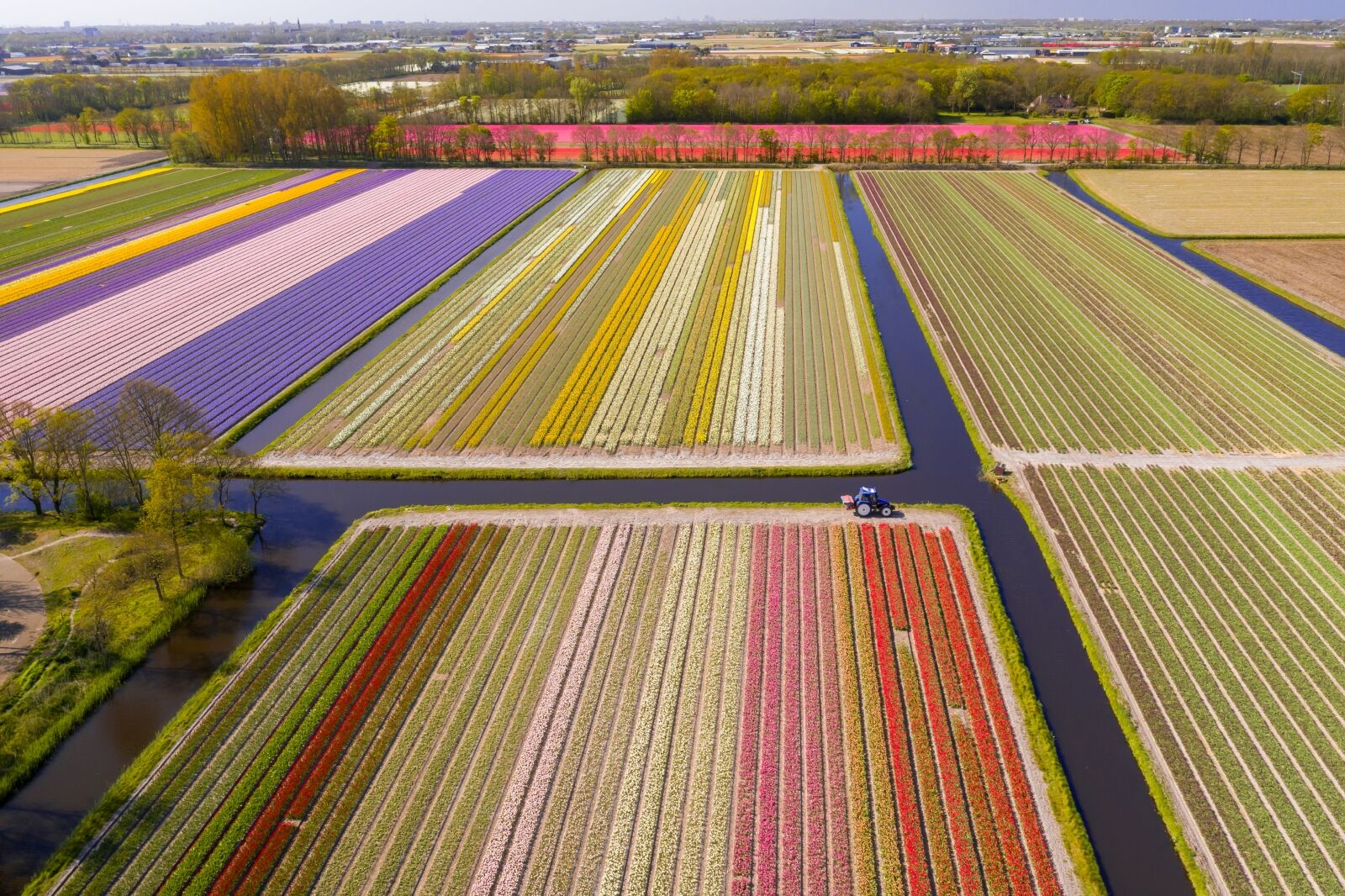 Photo: PhoTonie/Shutterstock
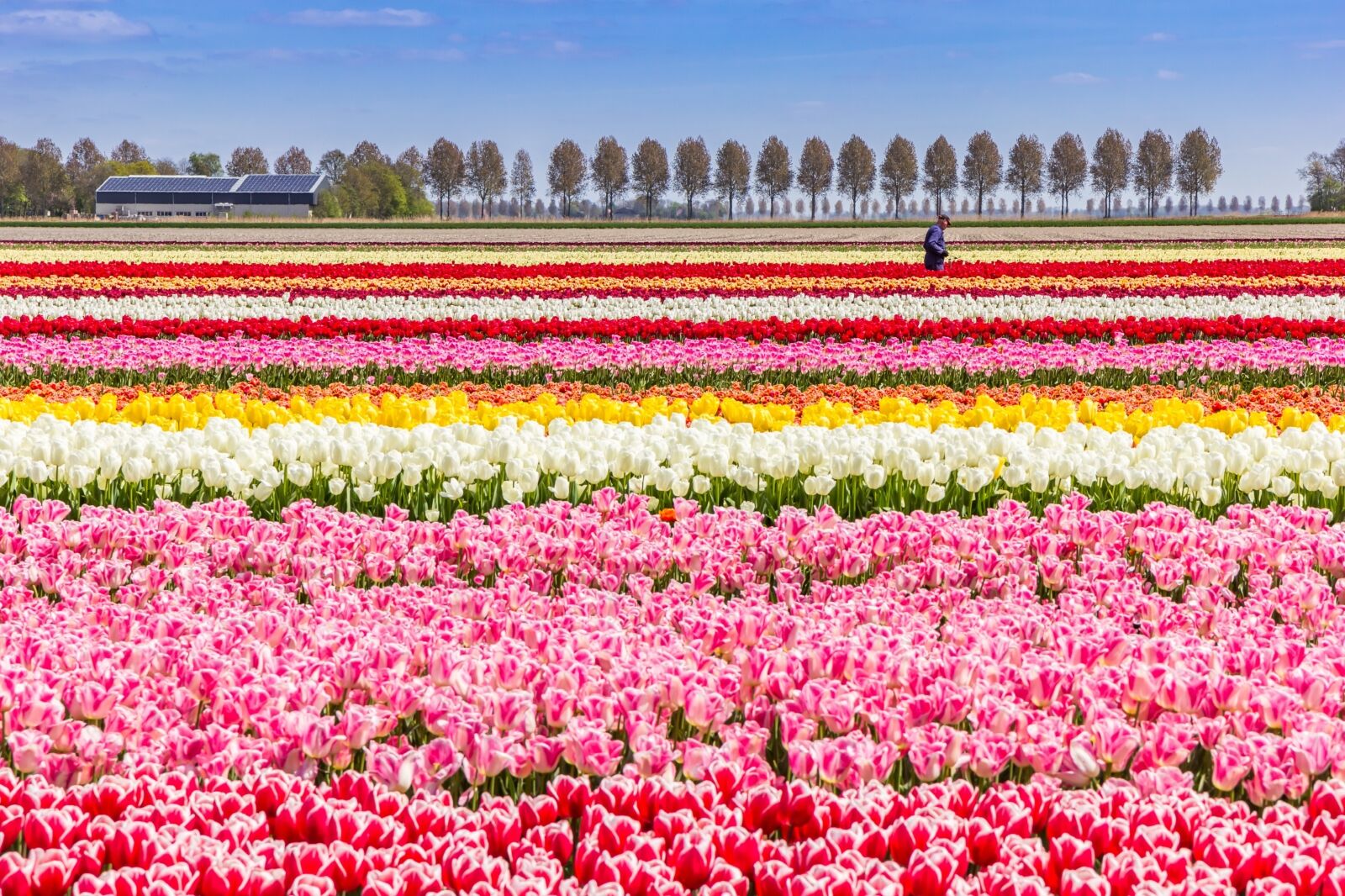 Photo: Marc Venema/Shutterstock
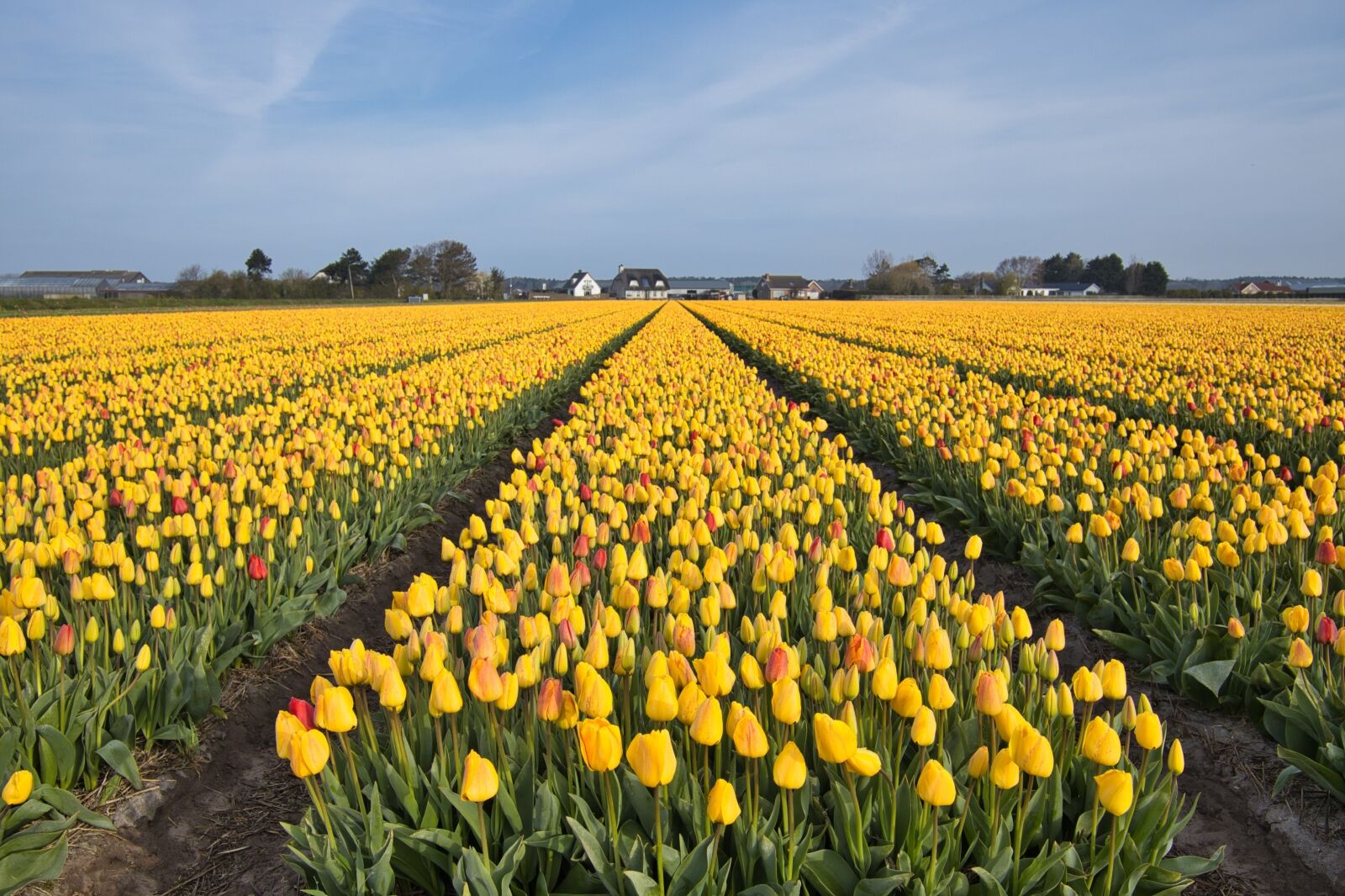 Photo: Tales by Pictures/Shutterstock
Where: The stretch between Haarlem and Leiden, roughly 12 miles through the bulb-growing region west of Lisse and Hillegom.
When to go: Mid-April is typically the most colorful time, though fields begin blooming in late March and can last into early May depending on the weather.
The Bollenstreek, or “Bulb Region,” is where the large commercial fields most people picture when they think of Dutch tulips are found. Commercial fields of tulips, hyacinths, and daffodils run alongside rural roads between Haarlem and Leiden, with Lisse and Hillegom at the center of it. The landscape changes week to week as different varieties come into bloom and others are topped for bulb production.
Cycling is the most practical way to move through the area. Rental shops in Haarlem, Leiden, and near Keukenhof cater specifically to spring visitors, and clearly marked routes wind past the fields. Driving works as well, though narrow country roads and roadside parking can create congestion on sunny weekends.
Most of the fields are working farms, not attractions, and they are private property. Visitors are welcome to admire and photograph from the road, but walking into the rows damages bulbs and has become a growing problem during peak season.
Visit a picking garden to gather your own tulips
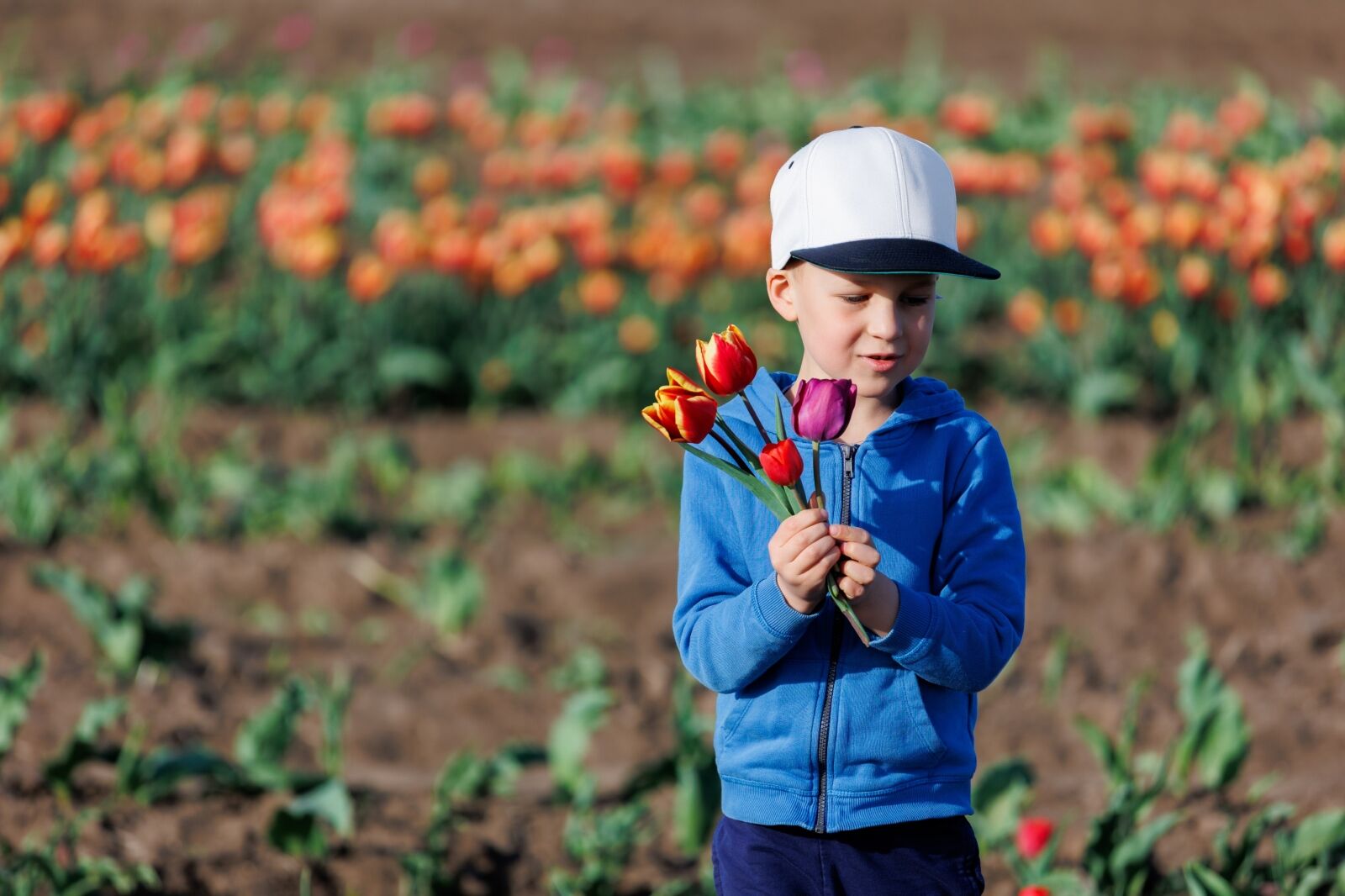
Photo: K-FK/Shutterstock
Where: Hillegom and Lisse, in the heart of the bulb-growing region south of Haarlem.
When to go: Late March through early May, with the widest selection typically available in April.
For those who want more than a photo, several farms in the Bollenstreek open sections of their property each spring for visitors to cut their own flowers. In Hillegom, Annemieke’s Pluktuin, a seasonal picking garden, allows you to select tulips directly from designated greenhouse rows and outdoor beds, paying per stem. Near Lisse, De Tulperij has a similar operation with dozens of varieties planted specifically for visitors.
These are not commercial production fields but curated plots set aside for the public, which means you can walk between the rows without damaging crops. Prices are typically charged per stem, and availability depends on how quickly varieties are cut, so earlier in the day often means a broader selection. Most operate on limited seasonal hours and may close in poor weather, so it’s worth checking current opening times before heading out. 