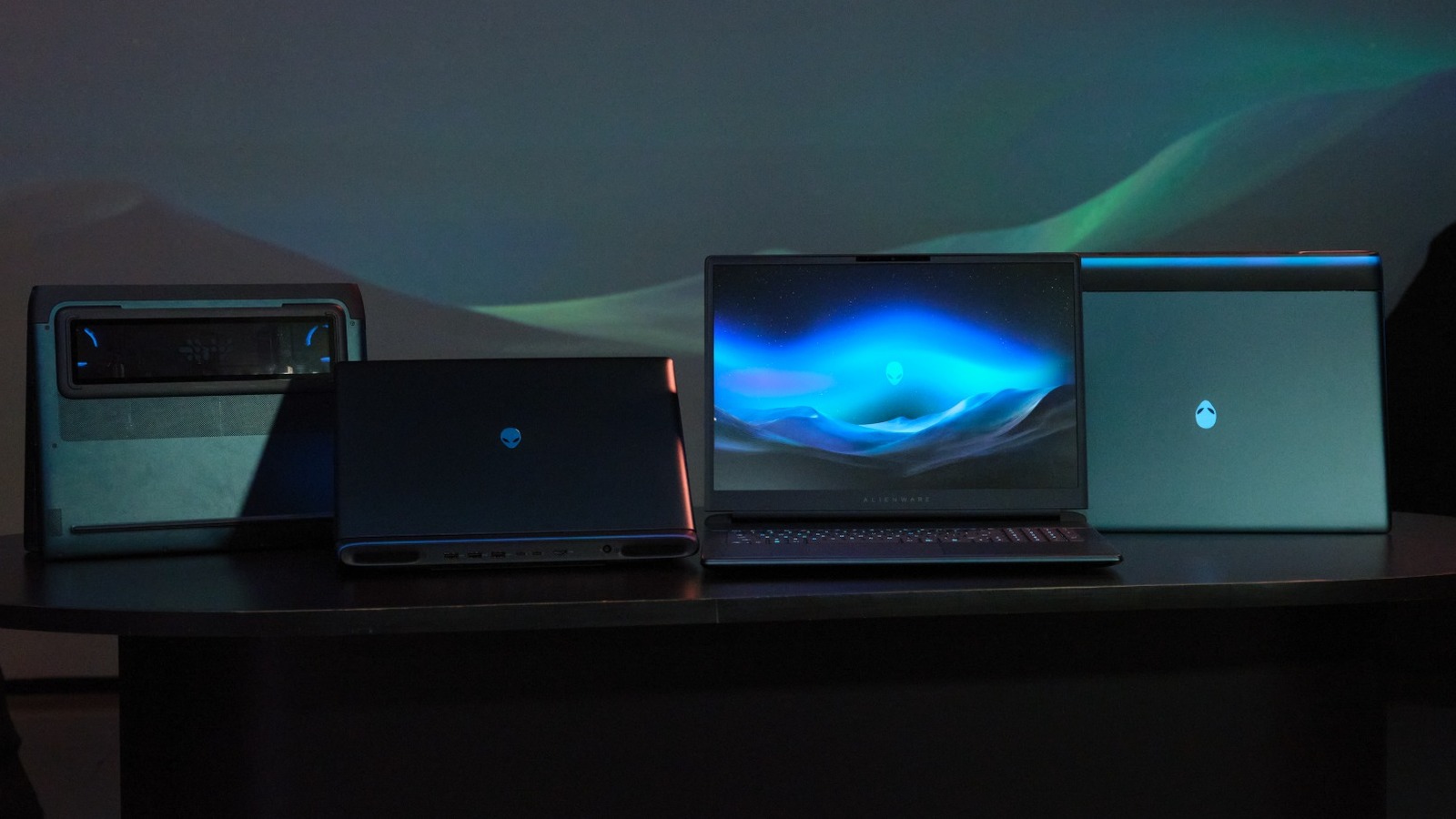
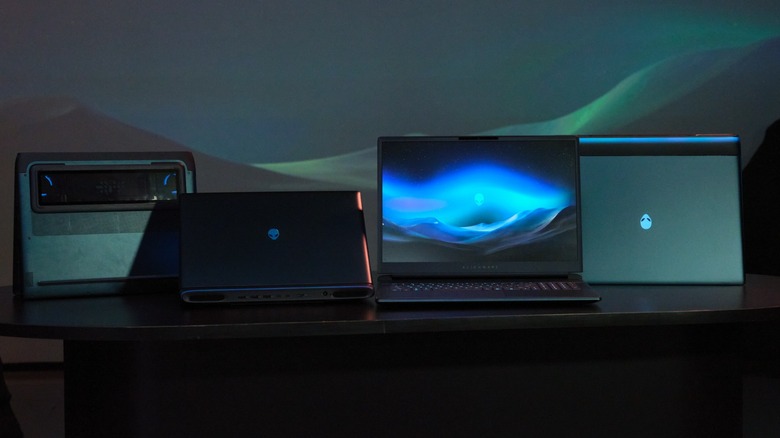
 Alienware
When considering gaming on a laptop, there are two names that consistently pop up: Razer and Alienware. The latter got its start in 1996 under a different name, Saikai, and quickly made a name for itself in the gaming community. However, it didn't start building laptops until 2002, a good three years before Razer popped up. Razer, on the other hand, got its "For gamers. By gamers." reputation for its various accessories, not launching its first laptop until 2012. None of these facts qualify either brand as being superior, though.
To determine that, you need to get your hands dirty and look under the hood of these laptops. Gamers want/need specific features to play their best and get the most out of their favorite games. That means peak resolution, refresh rate, processing power, and graphics. The clincher, though, comes down to the price because unless you're Elon Musk or Jeff Bezos, you're not likely to be made of money, so having all the best components in a laptop doesn't even matter if you can't afford it.
With Dell bringing the XPS laptop back from the dead and revealing it's adding to the Alienware lineup at CES 2026, we thought it was the right time to compare these two brands so those in the market for a new gaming laptop can make an informed decision. For reference, we limited our comparison to Alienware's Area-51 laptops, pitting its flagship model against Razer's flagship (and only) lineup.
Display
 Razer
Razer
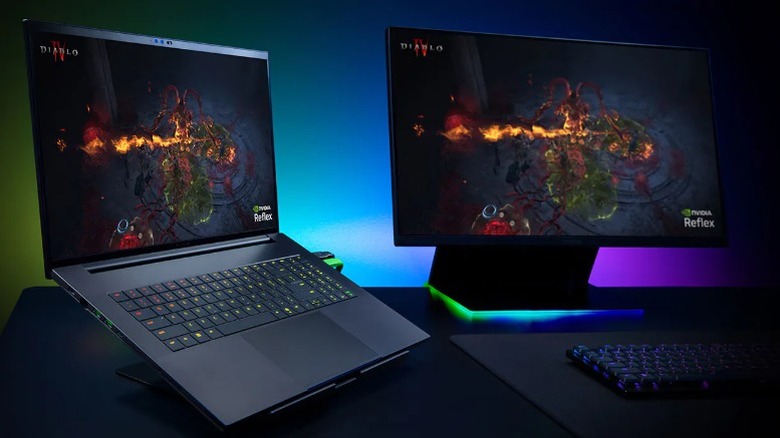
The first thing anyone is going to notice with their laptop, especially gamers, is the quality of the screen. No matter what kind of game you play, whether it's fast-paced "Call of Duty: Warzone" or something more chill and relaxing like "Stardew Valley," you want a display that looks nice. The Razer Blade 18 can support ultra-high definition (UHD) resolution up to 3840 x 2400, with a 240 Hz refresh rate. If you lower the resolution to FHD+ (1920 x 1200), you can get up to 440 Hz. So if you are playing a fast-paced first-person shooter, your gameplay is going to be smooth and seamless.
Going with Razer's 16-inch laptop, you'll get an OLED QHD+ (2560 x 1600) display with a refresh rate of 240 Hz. Alienware's Area-51 18 resolution doesn't quite get the UHD that the Razer Blade 18 does, but it can get up to a refresh rate of 300 Hz, which is good regardless of resolution. Its 16-inch model gets the same resolution but can only get a maximum refresh rate of 240 Hz.
So you get a little more flexibility with Razer, but it really comes down to how much you value the refresh rate. If you want higher frame rates — while your friends regurgitate the human eye versus FPS myth — there's enough connectivity on the laptop to hook up an external gaming monitor, but then you're sacrificing the laptop's portability.
Graphics card and CPU
 Razer
Razer
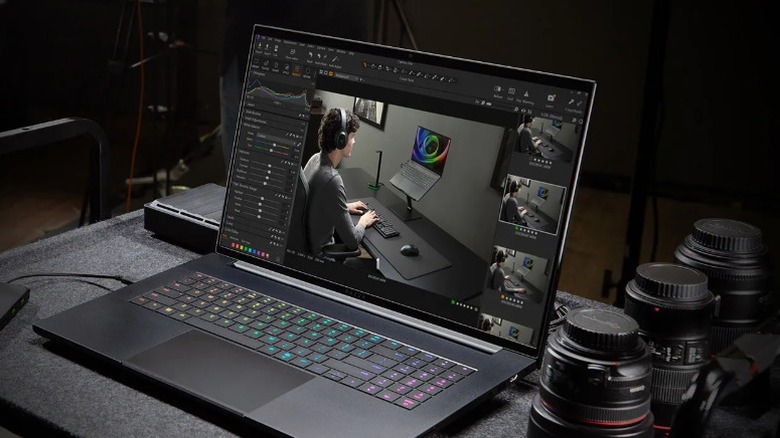
When it comes to performance, there are a few things a gamer is going to want to pay attention to, with the first being a computer's GPU since that does the heavy lifting when they boot up "Call of Duty: Warzone" and "Marvel Rivals." Both Alienware and Razer load their rigs with the newest pieces of hardware, such as Nvidia's 50 series cards.
While you can't customize a laptop the same way you can a desktop, upgrading individual pieces as time goes on, you can customize a lot when you initially purchase a laptop from either Razer or Alienware. Both brands' 18-inch laptops can support the RTX 5090 with 24 GB GDDR7 VRAM. Going down to their 16-inch models, however, only the Alienware laptop supports a 5090, whereas the Razer Blade 16 can only support up to a 5080. You likely wouldn't notice too much of a visual difference between the RTX 5080 and 5090, but your laptop would be prepared for future AAA games with the 5090 because of its 24 GB GDDR7 VRAM versus the 5080's 16 GB.
When it comes to the CPU, the 18-inch models from each brand are identical. They both use the Intel Core Ultra 9 275HX Processor. If you're more of a Team Red gamer, you'll have to stick with Razer, as the Razer Blade 16 and 14 both use the Ryzen AI 9 365 Processor. Alienware only uses Intel, and the lowest-tier processor it uses is the Intel Core Ultra 7 processor 255HX, which edges out the AMD CPU in performance just a bit with its faster clock speed.
RAM
 NMStudio789/Shutterstock
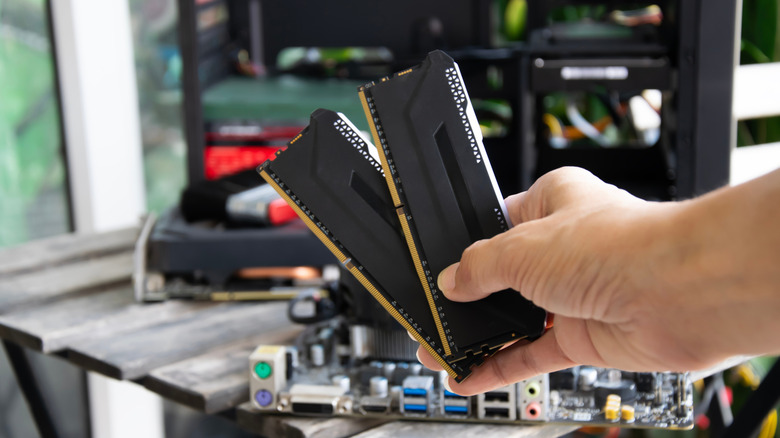
The cost of individual RAM sticks lately is so out of control, it's probably better to go the laptop or pre-built route. One of the nice things about both Razer and Alienware is that they give you plenty of options to choose from for your configuration. Razer tries to be helpful, but it could be a little detrimental to your wallet because it will swap out components if its website determines a different configuration would work better.
For example, if you're building a Razer Blade 16 and only want a 1 TB SSD, but you want 64 GB of RAM — yes, that's overkill — the website will automatically swap out the 1 TB for two 2 TB SSDs. So just be aware. Alienware does the same thing with a few of the components, but it's less likely because it has more options.
Anyway, the Razer Blade 16 only supports 16 or 32 GB of RAM. The Alienware 16 Area-51, on the other hand, supports 16, 32, or 64 GB. Move up to the Razer Blade 18, and you can get either 32 GB or 64 GB. It's the same for the Alienware 18 Area-51, but you have a little more flexibility because you can choose the RAM's speed if you opt to go with 32 GB. You can go with 6,400 MegaTransfers per second (MT/s) or 7,200. You're locked into 6,400 MT/s if you go with 64 GB.
It all comes down to price
 Alienware
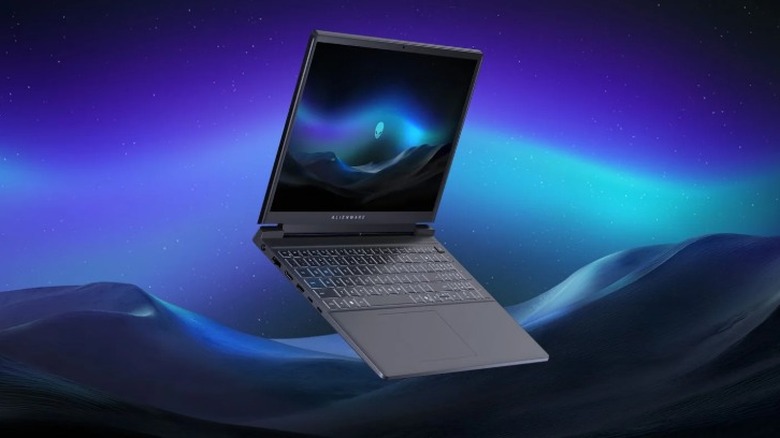
There's no denying that these two brands produce premium gaming laptops that rival many pre-built desktops, and that comes with a hefty price tag. Luckily, both Razer and Alienware let you fully customize what you want. Going as inexpensive as possible, you can get a Razer Blade 16 for about $2,200. That configuration comes with the AMD Ryzen AI 9 365 (you get no choice there), RTX 5060, 16 GB memory, and 1 TB SSD. The Area-51 16 with nearly identical specs — the Alienware comes with an Intel Core Ultra 7 processor 255HX – comes in at around $2,119, about $81 cheaper.
Pump up the specs with the best you can put in both of them, and that gets you a Razer Blade 16 for about $3,500 (now with a 5080 and 32 GB memory) and an Area-51 16 for roughly $3,519 (now with a Core Ultra 9 275HX, RTX 5080. When you look at the 18-inch models, though, it's a different story, with Razer giving you more bang for your buck.
Loading up both the Razer Blade 18 and Area-51 18 with a Core Ultra 9 275HX, RTX 5080, 32 GB memory, and 1 TB SSD, you get the Razer for about $3,300 and the Alienware one for about $3,670, keeping Razer in the top spot. If you want the beefiest machine, you can upgrade to a 5090, putting the Razer Blade 18 at about $4,000 and the Area-51 18 at about $4,600.