 Jacktamrong/Shutterstock
We may receive a commission on purchases made from links.
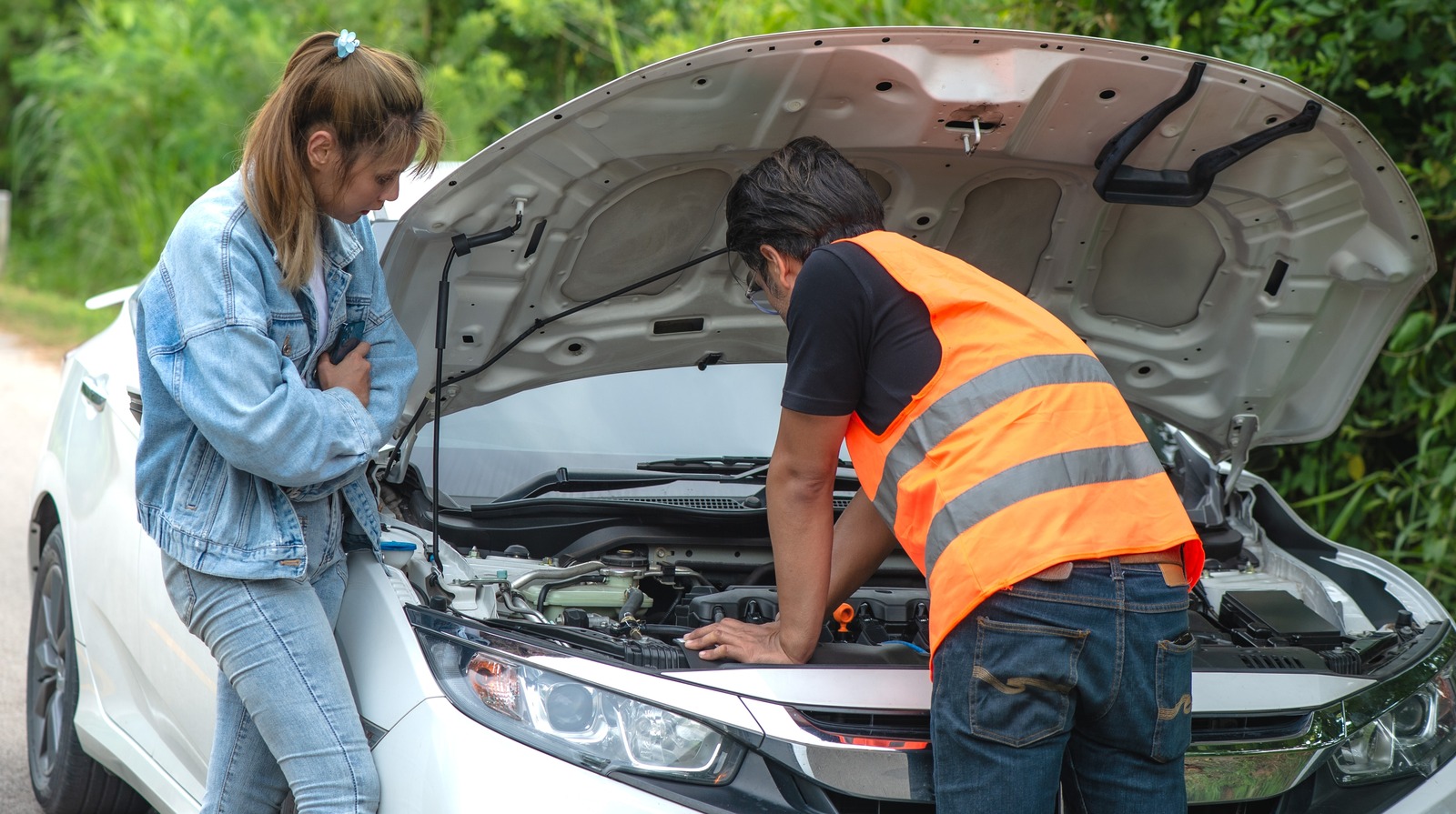
No matter the type of car you drive, whether a diesel truck, a hybrid SUV, or a turbocharged sedan, a vacuum system is really important. The vacuum created by the pistons' movement plays a much bigger role than most drivers assume; it controls most basic engine functions. Think of pulling the fuel-air mixture into the cylinders, regulating airflow, controlling engine sensors, and even assisting your brake system.
As such, if there is a vacuum leak, either caused by a crack or hole in the seals, hose, gaskets, or PCV valves, your engine will still run, but let's say... poorly. In fact, while driving, you'll probably experience unexpected stalling, rough idling, and poor performance. Even worse, a check engine light might glow on your dashboard.
Given that the symptoms of a vacuum leak overlap significantly with those of bad spark plugs or diesel fuel injector failure, you'll want to make a proper diagnosis. After all, unlike oil and coolant leaks, which are easy to detect, vacuum leaks can be challenging to detect, which is why we recommend using one of the best vacuum leak testers. A model like the AutoLine Pro EVAP Smoke Machine Leak Tester, which retails for $86 on Amazon, offers excellent value for detecting leaks in systems such as hoses, lines, seals, EVAP systems, exhaust, and more.
Sure, when it comes to locating vacuum gaps, smoke testing is often considered the gold standard in repair shops. But it's far from the only way to spot where a vacuum leak is coming from. Ahead, we'll explore old-school methods that experienced pros and DIYers claim to be effective today.
Here's how to detect vacuum leaks without a smoke tester
Perhaps the oldest trick for telling whether your car has a vacuum leak is the old visual-and-hearing test. Generally speaking, even if you change your oil religiously, maintain your engine's cooling system, or replace spark plugs, your car's performance will eventually deteriorate as it ages. This is mainly because certain parts, such as gaskets, hoses, and seals, will eventually wear out, potentially leading to vacuum leaks.
For this reason, if your car starts to stall, especially after performing engine care 101, you'll want to virtually inspect the vacuum hoses and lines for cracks or damage. If they're not quite visible, start the engine, let it idle, and listen for a hissing or a whining sound. However, it's worth noting that this approach might not be entirely effective, as engine noise may mask the hissing of vacuum leaks.
If that doesn't work, you'll want to turn your attention to plain or soapy water. For this DIY, spray water around the suspected areas (say, the intake manifold gaskets, vacuum lines, and injector seals). If the engine idles or bubbles form around the suspected sections, that's a clear sign of a leak. Alternatively, you can opt to use a carb cleaner or WD-40 in place of soapy water. A word of caution, though, you'll want to think twice before using these products. Though they're quite useful in detecting leaks, they are also highly flammable. This means that they could easily ignite a fire, especially if you accidentally spray them on a hot surface.
How to fix a vacuum leak
 Tricky_Shark/Shutterstock
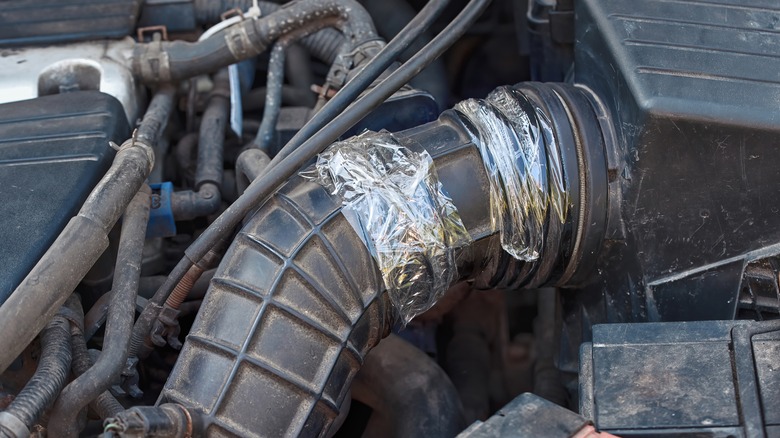
While finding a vacuum leak is usually tricky, fixing it is relatively simple. To do so, you'll want to identify the cause of the leak first. If vacuum lines, tubes, or seals are to blame, you'll want to replace them. Of course, taking your car to a service center is one way to do this, but if you're armed with the right tools and know-how, you can do so in a few minutes or a few hours. Just make sure that you purchase OEM products that match the size of your damaged hose. Also, when replacing the lines, seals, and tubes, make sure that you follow your vehicle's manual.
If you're dealing with a damaged intake manifold or gasket, it's wise that you seek the help of an automotive pro. Sure, if you're comfortable performing complicated auto repair jobs, and you want to save money by avoiding a trip to the mechanic, you can try to replace the damaged intake manifold and gaskets yourself. However, given that a single small mistake can trigger a cascade of engine problems, the safest way to rectify the problem is to defer to a professional mechanic.