 Crobertson/Getty Images
As a homeowner, there's a lot to keep track of if you want everything within your house operating correctly. Alongside a host of other things, as it turns out, your water heater needs your attention to last longer and save you money. A key element of water heater care is the all-too frequently overlooked step of routine draining. While many tend to handle this task once a year, and others do it considerably less often than that, the fact of the matter is that this should be done twice a year, once in the spring and once in the fall.
If you've allowed this chore to fall by the wayside for some time, there's no better time than the present to get back on track. The reason water tank draining is done is to remove accumulated sediment and mineral build-up from the tank, as allowing this to sit can have serious — and expensive — consequences. The added sediment at the bottom of the tank will reduce heating efficiency, forcing the tank to work harder to warm water up. Naturally, this can shorten the life of the tank and increase energy costs. Speaking of tank lifespan, corrosion can occur due to excess buildup, and sediment can block the pressure release valve needed to prevent overheating or rupturing.
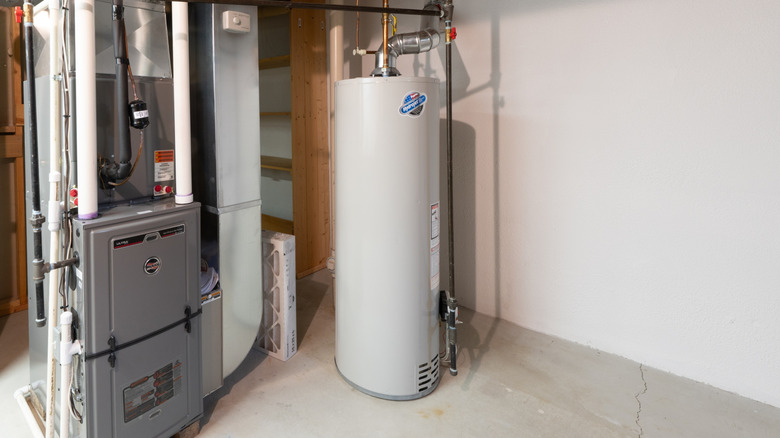
So, how do you go about draining a water heater? It only takes a few items and a few steps to get this task done right.
How to drain a home water heater
 J.A. Dunbar/Shutterstock
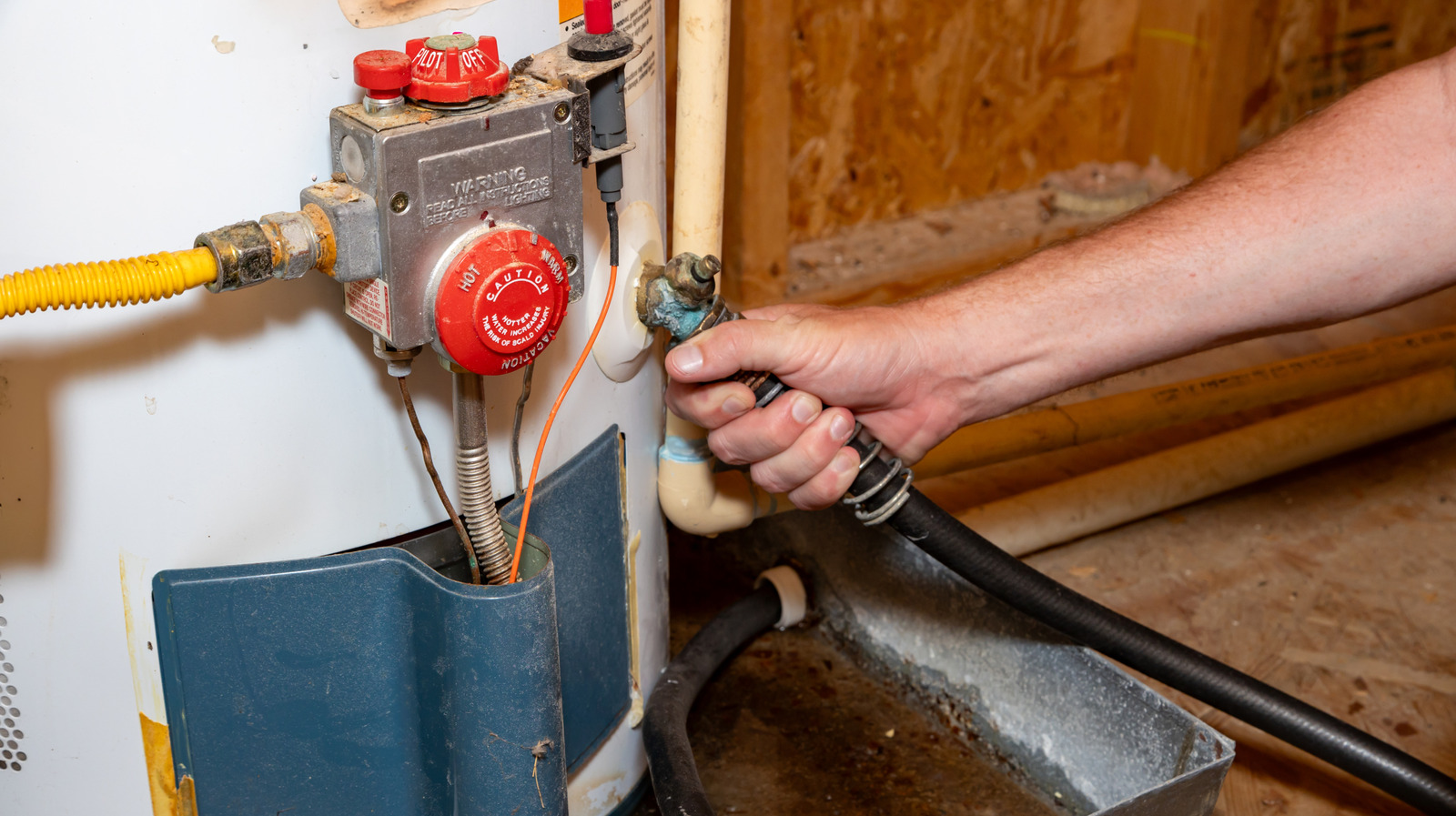
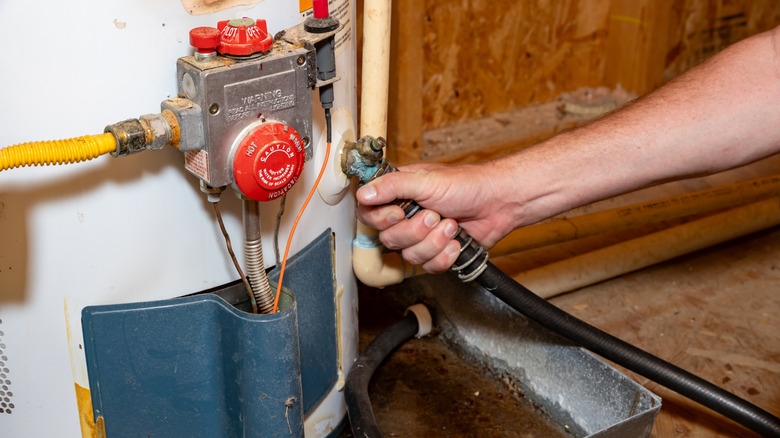
All in all, draining a water heater isn't complicated. All you'll need is garden hose for drainage, a screwdriver or water heater drain valve key to get the water flowing, and a drain pan or bucket can help with drips.
1. Turn the water shutoff valve at the top of the tank to cut off the water flow.
2. Turn off the power to your tank. Electrical tanks will need to be shut off via your home's electrical panel, while gas units can be turned to "pilot" on their thermostat or have their gas supply cut off.
3. It's a good idea to give the water in your heater time to cool off. It's recommended that the water sits at least a few hours, or overnight if you'd prefer to be extra safe.
4. Take one end of your hose and place it outside or your floor drain. The other end connects to the drain valve at the bottom of the tank.
5. Turn on a nearby sink, specifically the hot side, to alleviate pressure in the system. The drain valve can now be opened to empty the tank.
6. Once drained, keep the drain valve open and reopen the cold water to flush remaining sediment from the system.
7. With the water running clear, close the drain valve and remove the hose. Turn the water on to refill the tank and once it's full, the heat can be turned back on.
There are plenty of gadgets that can save you money on water and electricity, though taking care of the appliances in your home is a huge in these regards, too. Routinely draining your water tank is great for energy costs, water safety, and the prolonged physical integrity of the unit.