- AI Platforms & Assistants
Self-help in the palm of your hand
When you purchase through links on our site, we may earn an affiliate commission. Here’s how it works.
 (Image credit: Mark Manson)
Share
Share by:
(Image credit: Mark Manson)
Share
Share by:
- Copy link
- X
- Threads
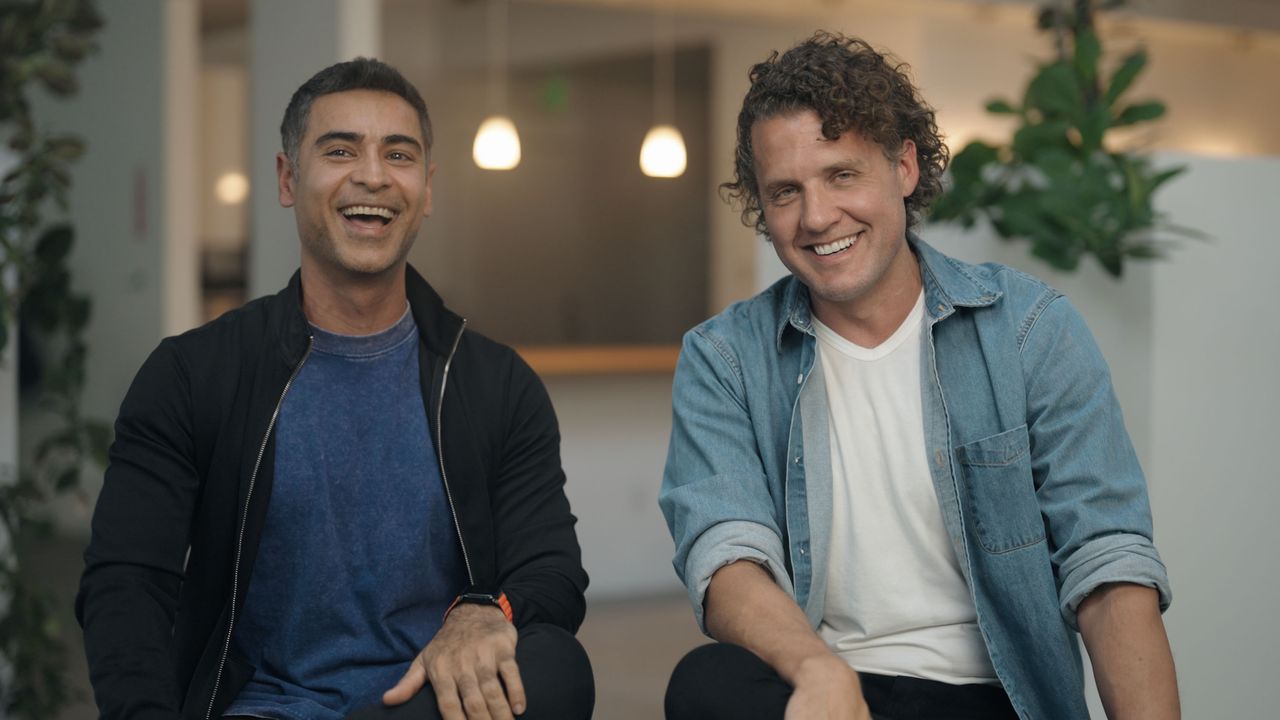
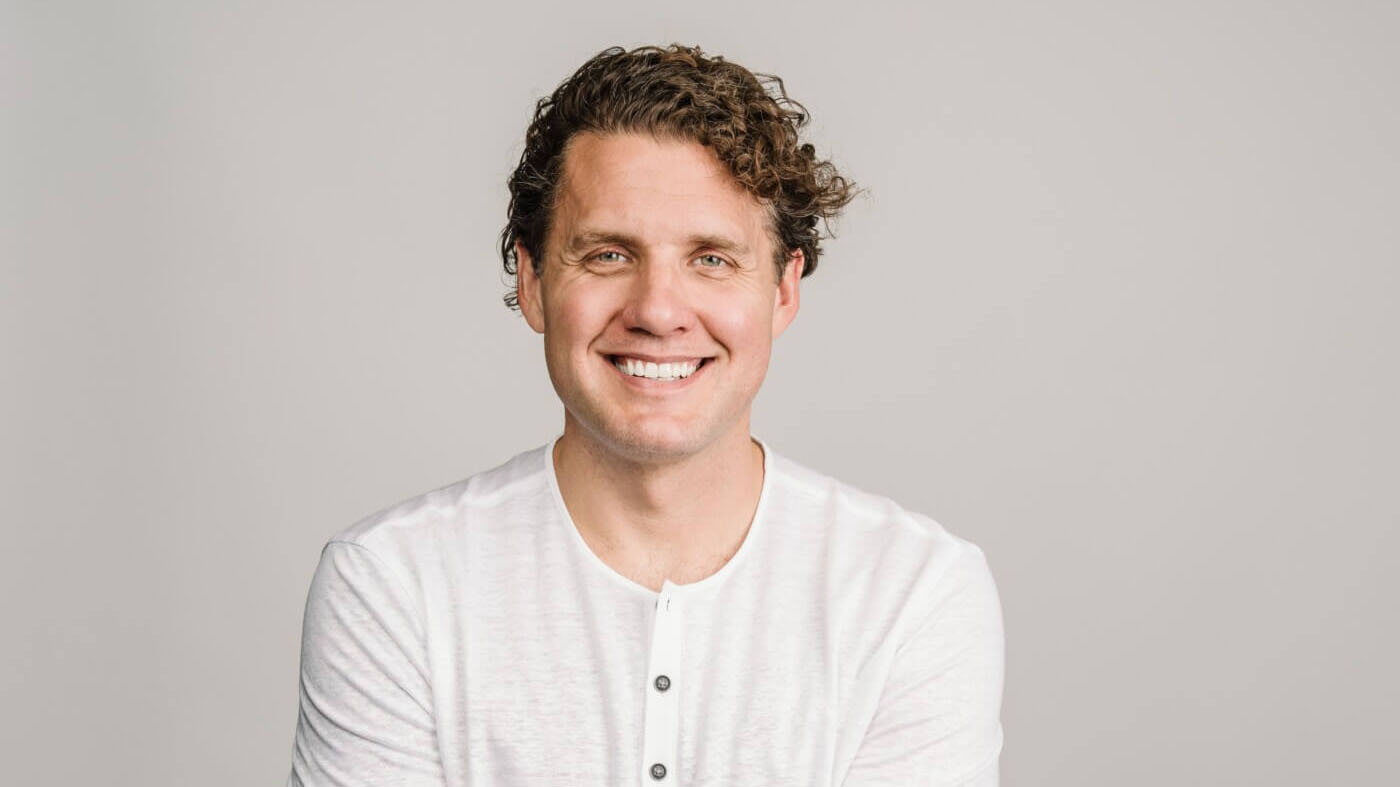
Mark Manson, author of the classic self-help book The Subtle Art of Not Giving a F*ck, might just be done with writing books. For good. Along with Raj Singh, an AI entrepreneur, he’s just launched a new app called Purpose. It’s an app for your phone that you chat with, just like you would with ChatGPT, except it’s an AI mentor specifically engineered for your personal growth.
I’ve tried Purpose, and it’s bizarrely insightful, producing mic-drop moments within minutes. It gets to know you, and before long, it’s clarified your life situation, and you’re working together on the simple steps you need to improve things. I wanted to find out more, so I contacted both the men behind Purpose to ask them a few questions, and they were kind enough to talk to me over Zoom.
“The biggest weakness of self-help is that it has to speak in very broad strokes,” Mark explains. “And then you kind of just hope the audience can figure out how to apply it to their own life. And I think what excites me so much about AI and the opportunities with Purpose is that you can now scale that personalization.”
You may like-
 How ChatGPT can help you look after your wellbeing
-
 We're entering a new age of AI moderation, but it may be too late to rein in the chatbot beast
-
 People are falling in love with ChatGPT, and their reasons may shock you
He’s right. While traditional therapy is completely focused on the individual, self-help books tend to be written in generalities because the author has to serve as many people as possible. With an AI app on your phone, the advice can be tailored exactly to the individual.
“We can address their personality, their values, their fears, their insecurities. It’s such an incredibly powerful opportunity that I don’t think has existed before,” Raj explains.
After a few initial questions about what motivated me, what my values were, and what areas of my life felt underdeveloped, Purpose came back with some insights into my life that felt genuinely on point. It gently delved deeper in a way that didn’t feel too pushy or intrusive. If a person had asked me those questions, would I have found it invasive?
“I think there’s a kind of hidden advantage to it being an AI,” muses Mark. “I’ve personally noticed that when I use it, it asks me questions that, if a human asked the same thing, I’d be like, ‘Where do you get off asking something like that?’ But because it’s an AI, I just take it at face value and actually think about it. It’s very interesting.”
Get daily insight, inspiration and deals in your inboxContact me with news and offers from other Future brandsReceive email from us on behalf of our trusted partners or sponsorsBy submitting your information you agree to the Terms & Conditions and Privacy Policy and are aged 16 or over.
The therapist in the room
Of course, AI doesn’t come without its controversies. There have been a few high-profile cases in the news involving teenagers who engaged in self-harm, or worse, after prolonged interactions with poorly moderated AI chatbots. I wanted to know how thoroughly Purpose had been tested to deal with these kinds of situations.
“Every time we see one of these horrifying AI headlines, we test Purpose – and so far it has responded exactly as we designed it to,” says Raj. “In scenarios involving potential self-harm, Purpose will shut down the conversation and make it clear that this isn’t something it can help with as an AI mentor. It encourages the user to seek professional support and provides hotline numbers and resources for mental health services.”
Every time we see one of these horrifying AI headlines, we test Purpose – and so far it has responded exactly as we designed it to.
Raj Singh
Raj and Mark are careful to position Purpose not as a therapist, but as a mentor – and that distinction is central to how the app is designed. “If you come to Purpose with a classic therapy-level issue, like wanting to unpack trauma or experiencing intense emotional distress, it will explicitly say, ‘This isn’t what I’m for,’” explains Mark. “It recommends finding a professional and can help point you toward resources to do that.”
You may like-
How ChatGPT can help you look after your wellbeing
-
We're entering a new age of AI moderation, but it may be too late to rein in the chatbot beast
-
People are falling in love with ChatGPT, and their reasons may shock you
“That was very intentional. Building an AI for therapy means signing up for the hardest cases imaginable,” he adds. “AI is still very new, and everything is evolving so quickly. We had to ask ourselves whether we wanted to take on those responsibilities, or whether we could do more good by focusing on coaching and mentoring – people with what I jokingly call ‘high-quality problems,’ like navigating work, relationships, or burnout. That’s why we consciously chose this lane.”
“A lot of people cry”
Purpose’s user reviews on the Apple App Store tell a compelling story. “This tool has changed my life in one short week,” says one. Another adds, “If you are stuck, this app will give you the small nudge you may be looking for.” I wondered what sort of feedback the team has been getting during testing.
“It’s pretty wild, honestly,” says Mark. “A lot of people cry. The product isn’t perfect yet, and the AI isn’t perfect, so it doesn’t hit with everybody. But when it hits, it really hits. People reach out and say, ‘It told me things within the first ten minutes that nobody has ever noticed about me before.’ We’ve had people say it put into words things they’ve been struggling with for five or ten years.”
“Forty-one percent of our members say Purpose has been life-changing – not just helpful,” adds Raj.
Are there new features or philosophical angles they’d be excited to explore in a future version of the app?
“We have an accountability system coming,” explains Mark. “Our goal is to launch it by New Year’s for obvious reasons. That’s the biggest thing on the roadmap, and I think it’s going to completely change how people use the app. Right now, everything is really focused on insight and perspective – have you thought about this, have you considered that? The accountability system will allow users to ask the AI, ‘Okay, we agreed that I should lose 10 kilos. How should I go about this?’ The AI will then generate an action plan over, say, the next two months, check in with you, and keep you accountable.”
As a Purpose user, I’m looking forward to the accountability feature, although it also makes me a bit nervous because it sounds like I’ll actually have to stop being a self-help tourist and do the actual work.
So what does the future hold for self-help? Does Mark Manson see AI changing the self-help landscape over the next few years?
My sneaking suspicion is that people are just going straight to ChatGPT.
Mark Manson
“100%,” Mark says emphatically. “We’re already seeing it. Engagement with written and video self-help content is down across the board – not just for us, but for pretty much the whole industry. My sneaking suspicion is that people are just going straight to ChatGPT. It used to be that if you were struggling with anxiety or trying to get over a breakup, you’d watch a video on YouTube. Now people are just asking ChatGPT, and I think that’s going to continue. It’s the personalization. You get advice directly tailored to your life situation. I sensed that shift last year, and that was what lit the fire under me.”
In that sense, Purpose feels less like another shiny AI experiment and more like a sign of where self-help is heading next. It’s moving away from mass-market motivation and toward something quieter, more personal, and more accountable. If the future of the genre really is an always-available AI mentor that lives in your pocket, knows your habits, gently calls you out, and refuses to let you hide behind inspirational quotes, it’s easy to see why Mark Manson might be done writing books. For better or worse, the self-help conversation is moving off the page – and onto your phone, where it can talk back.
Follow TechRadar on Google News and add us as a preferred source to get our expert news, reviews, and opinion in your feeds. Make sure to click the Follow button!
And of course you can also follow TechRadar on TikTok for news, reviews, unboxings in video form, and get regular updates from us on WhatsApp too.
 The best business laptops for all budgetsOur top picks, based on real-world testing and comparisons
➡️ Read our full guide to the best business laptops1. Best overall:Dell Precision 56902. Best on a budget:Acer Aspire 53. Best MacBook:Apple MacBook Pro 14-inch (M4)
TOPICS AI Apple Graham BarlowSocial Links NavigationSenior Editor, AI
Graham is the Senior Editor for AI at TechRadar. With over 25 years of experience in both online and print journalism, Graham has worked for various market-leading tech brands including Computeractive, PC Pro, iMore, MacFormat, Mac|Life, Maximum PC, and more. He specializes in reporting on everything to do with AI and has appeared on BBC TV shows like BBC One Breakfast and on Radio 4 commenting on the latest trends in tech. Graham has an honors degree in Computer Science and spends his spare time podcasting and blogging.
Show More CommentsYou must confirm your public display name before commenting
Please logout and then login again, you will then be prompted to enter your display name.
Logout Read more How ChatGPT can help you look after your wellbeing
 We're entering a new age of AI moderation, but it may be too late to rein in the chatbot beast
 People are falling in love with ChatGPT, and their reasons may shock you
 OpenAI’s rumored ‘always on’ AI device sounds terrifying – but Sora 2 shows it doesn’t care about boundaries
 5 ChatGPT prompts based on expert productivity hacks from viral self-help books
 Prompt styles to get the most out of ChatGPT 5.2
Latest in AI Platforms & Assistants
Prompt styles to get the most out of ChatGPT 5.2
Latest in AI Platforms & Assistants
 Apple Music app in ChatGPT
 Apple just took spatial photos to another level with this mind-blowing AI tool
 ChatGPT has apps now – here are the 5 best ones you should try first
 I tested Gemini 3 Flash against Google Search
 How Gemini in Google Maps makes travel more flexible
 Unitree's new app store reminds us that you can make a robot do anything — if you have the code
Latest in Features
Unitree's new app store reminds us that you can make a robot do anything — if you have the code
Latest in Features
 Meta just u-turned on the best VR announcement it ever made — and might have handed the win to Android XR
Mark Manson on the problem with self-help and why his AI app is different
Meta just u-turned on the best VR announcement it ever made — and might have handed the win to Android XR
Mark Manson on the problem with self-help and why his AI app is different
 What we know about Samsung, LG, Hisense and TCL's imminent next-gen RGB TVs
 Samsung seems to be focusing on foldables in 2026 – here are 3 possible reasons why
 Investing in this one simple skill in The Witcher 3 has made my 10-year anniversary playthrough so much better — and it needs to be in The Witcher 4
 iOS 26 leak reveals the 7 upgrades coming to your iPhone next year – here's what to expect
LATEST ARTICLES
iOS 26 leak reveals the 7 upgrades coming to your iPhone next year – here's what to expect
LATEST ARTICLES- 1Oracle has one last Ampere hurrah - new cloud platforms offer up to 192 custom Arm cores, and aren't OCI exclusive, unlike Graviton or Cobalt
- 2Apple Music app in ChatGPT
- 3It's about time! Microsoft finally kills off encryption cipher blamed for multiple cyberattacks - RC4 bites the dust at last
- 4This new ‘smallest’ subwoofer packs deep bass into a 10-inch cube
- 5It's not just RAM getting more expensive - the tools to make chips are set to explode in cost too, experts warn