 Adam Doud/SlashGear
In the consumer space, tablets are largely used as content consumption devices or productivity machines. The latter typically requires a mouse and a keyboard, so unless you're like me who has an obsession with finding the perfect portable keyboard (and has a shelf full of examples) then you probably lean more toward the former. Some creativity is possible but it becomes harder when you need to rely on a virtual keyboard and/or finger taps.
It's for this reason that tablets usually skew all the way toward one end or the other of the consumption/productivity spectrum, with little in between. Finding something in that deserted middle area can be a challenge. Tablets priced in the area between $200 and $800 or more have a tendency to be too good at content, but not good enough for work.
The OnePlus Pad Go 2 (which will cost you around $400) is one such device — mostly. It falls in that open territory and it makes you wonder where it'll excel and where it'll fall behind the bigger, better alternatives. I've been testing a OnePlus Pad Go 2 review sample provided by OnePlus for around two weeks and these are my thoughts.
Hardware is very solid
 Adam Doud/SlashGear
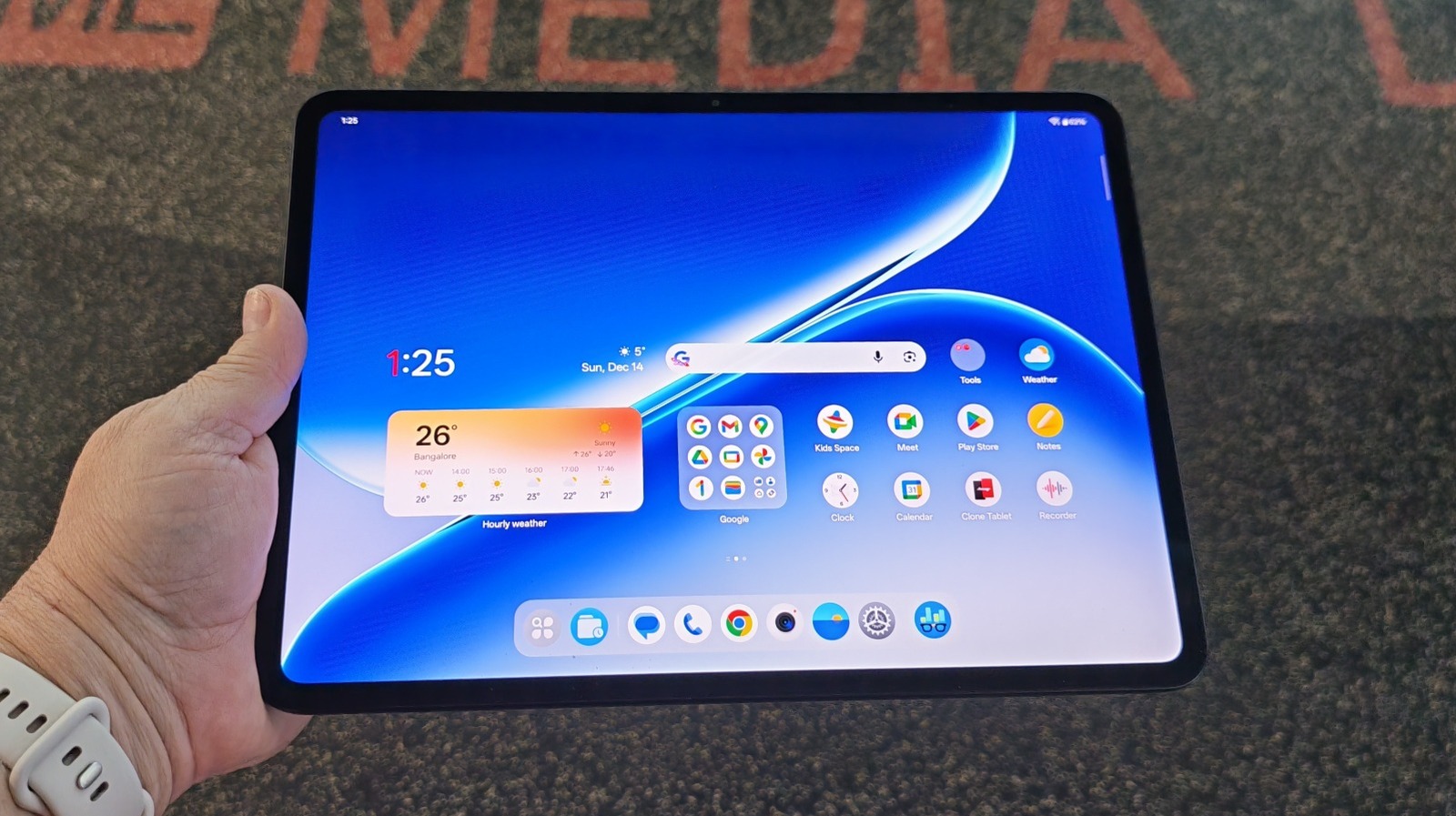
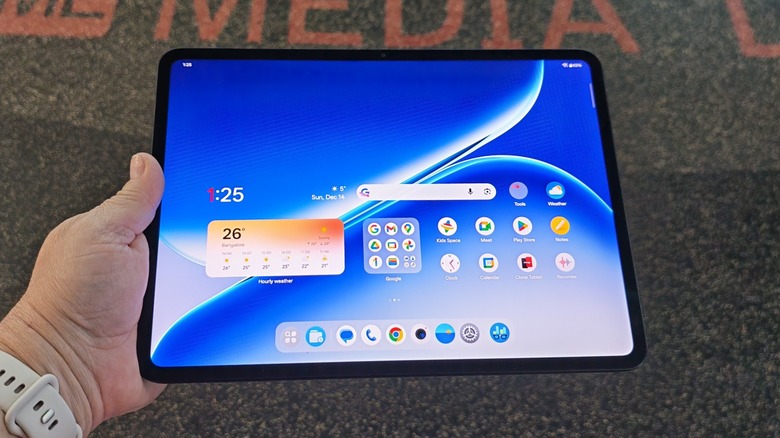
The hardware on the tablet looks really good on the surface. The 12.1-inch display is large, spacious, and beautiful. It's an LCD panel, which is normally not my favorite. This display however is gorgeous with the kinds of deep blacks normally reserved for AMOLED screens. The colors are vibrant as well. This is a tablet built for watching movies and TV. It's also a 2.8 K display, which falls short of 4K (obviously) but is still quite pixel dense. The display also has a refresh rate of up to 120 Hz.
The 7:5 aspect ratio takes some getting used to, but considering every OnePlus tablet we've reviewed here has the same, maybe you're used to it by now. I'm more of a 16:9 kind of guy, which is better for side-by-side apps, but overall, I have no complaints. The 7:5 aspect ratio is closer to a square which makes the tablet more comfortable for activities like reading, which is definitely a plus.
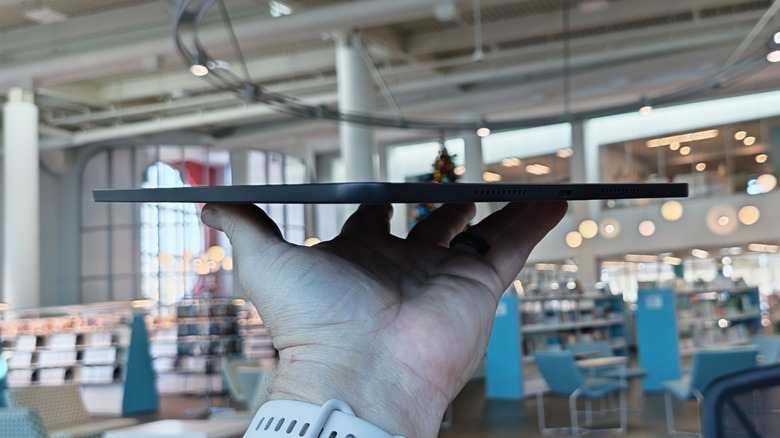
Another plus to the tablet is its weight, which checks in at under 600 grams (around 1.3 pounds). That makes it usable for reading and holding for a long time. It's also very svelte at just under 7mm. These combine to make the tablet very portable and easy to toss into a bag, if you have a larger bag.
Questionable speakers
 Adam Doud/SlashGear
Of course, if this is going to be a tablet for watching movies, you'll want great speakers. You don't get those here. The speakers can get very loud, which is good, but they skew toward the high end of the spectrum which is not so good. The speakers border on ear-piercing very quickly when you turn them up.
I tested the speakers with my usual slot of musical selections including Lindsey Stirling's "Roundtable Rival," the Scorpions' "Alien Nation," and a variety of music in between those extremes. I also watched a few episodes of "The Highlander" — my current binge — and you just don't get any bass at all out of the speakers. You can tell that bass should be present — a song like Metallica's "One" certainly has its fair share, but the staccato thumps of the double bass pedal sound like fingers tapping on a table, rather than the deep hits that they're supposed to be.
Open Canvas got nerfed
 Adam Doud/SlashGear
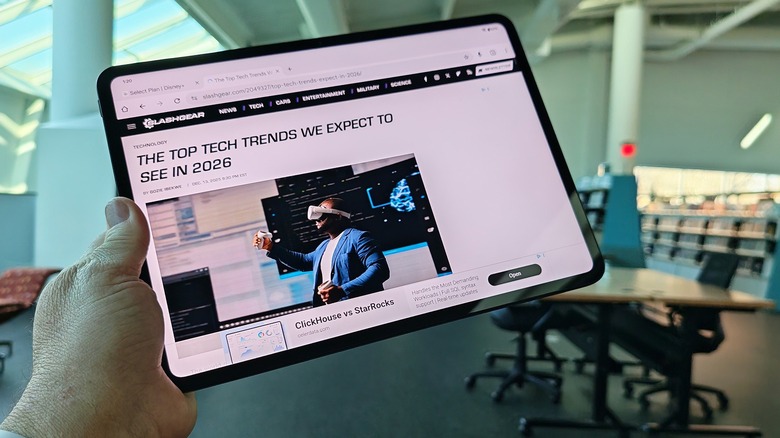
The big thing that OnePlus has had going for it in this space was Open Canvas, which was snapped up by Google in the recent past. Open Canvas allows you to open two apps side-by-side in a 90/10 configuration. Essentially this allows you to have one app take up most of the screen with a column down the side which allows you to shrink your current window and switch to another app.
The older version of this allowed for three apps to open this way, typically in a two-on-top, one on the bottom configuration which was absolutely sublime. The OnePlus Go Pad 2 is limited to simply side-by-side apps which is almost heartbreaking. Google liked the idea of Open Canvas and the 90/10 multitasking, so it built it into Android. Now any tablet can do that, which takes away some of this tablet's shine.
Sharing is caring
 Adam Doud/SlashGear
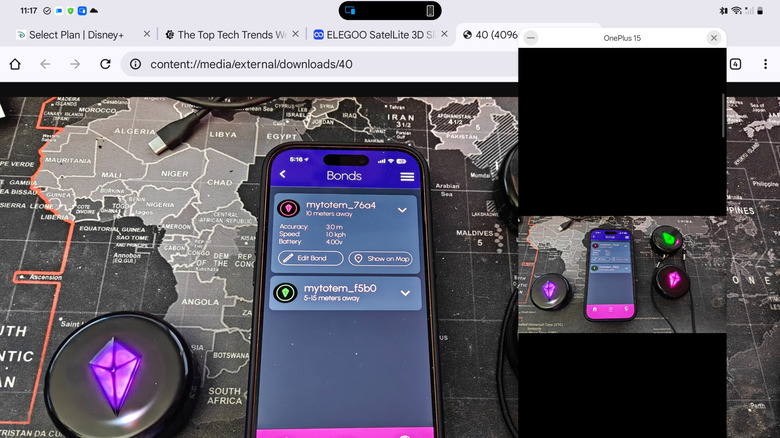
On the other hand, if you're rocking both this tablet and a OnePlus phone, you can cast your phone's screen to this tablet which can be handy for multitasking, answering calls and texts, or just simply getting some information from your phone. You can also copy and paste text between devices, drag and drop photos and more, which is really slick.
When you cast your device, you get a floating window which mimics and controls your phone screen. Taps on the window activate apps on the phone, etc. When you minimize the window, you get a small floating icon that you can tap to bring it back. What I'd like to see is if the floating window behaved more like an app where you can dock it next to a tablet app and move data between them, or even if you could set the software to just section off a portion of the screen dedicated to the phone and open apps in the remaining space.
Also, this is implemented through settings, which is fine, but I'd also like the ability to start a cast from the tablet's home screen without touching my phone at all. I understand the security concerns there, but a method for bypassing them — like typing the PIN or something, wouldn't be hard to implement. That would be great, at least for my workflow. I'm not saying this implementation isn't great, but more options are better.
Performance and battery
 Adam Doud/SlashGear
On the battery side of things, this tablet has a 10,050 mAh battery which is pretty good considering the size and thickness of the tablet. The battery lasts for a long time. I'm not the type to use a tablet 24/7 like I use a phone, but I didn't have to charge the tablet very often — about every two or three days on average. The tablet itself charges at 33W which seems on the slow side, considering how fast OnePlus phones charge, but I won't complain too much about it.
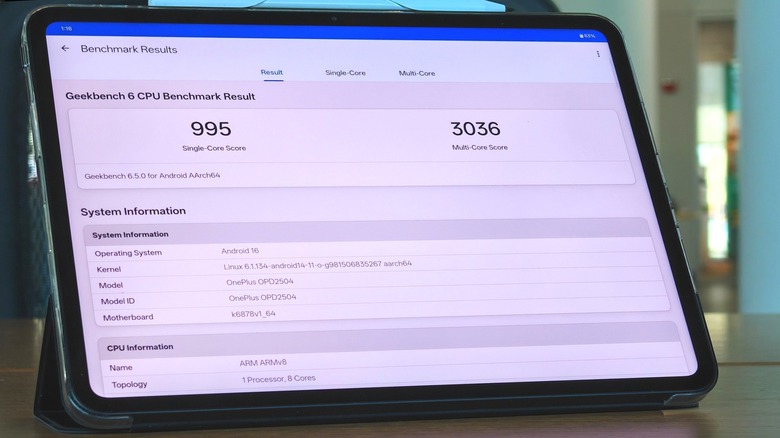
As for performance, it's suboptimal. The MediaTek 7300-Ultra processor and 8 GB of RAM manage some of the more basic tasks well enough, but don't plan to do much gaming on this. Geekbench checks in at 995/3,036 single/multi-core scores which is fine but certainly not impressive. You don't need a ton of power to watch movies or YouTube, so in that sense the tablet is fine, but not amazing.
Why is this tablet?
 Adam Doud/SlashGear
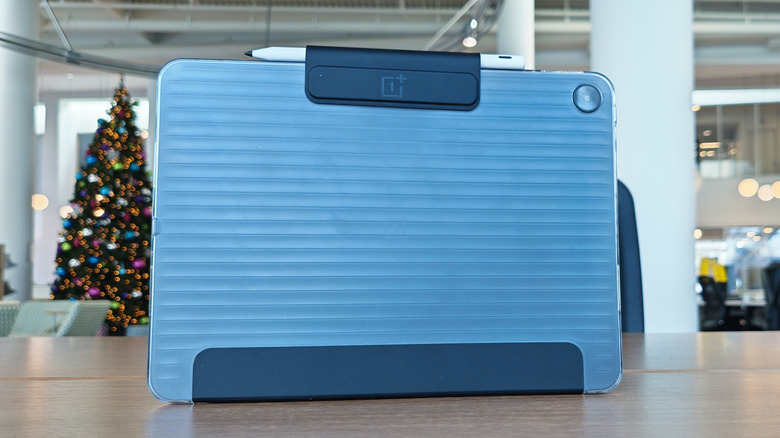
Given all that, an argument could be made that this tablet should skew more toward the productivity end of the spectrum. The speakers make it less than great for watching movies and TV, while the size of the tablet is suboptimal for reading. You can do those things, but it just feels like it's not built for them.
It's also not much of a productivity tablet. It's hard to wrap my head around the fact that I can open more apps on the OnePlus Open than I can on this tablet. I'm just not sure why OnePlus compromised this tablet so much. I suspect it might be because of the processor, and if that's the case, that tosses productivity out the window.
So, this tablet exists somewhere in the middle space. It feels like it's mainly for OnePlus die-hards, because that's where people will find the most use. I admit, the ability to cast your phone to your tablet is intriguing. I'd like that process to be more refined, however.
Pricing, availability, and verdict
 Adam Doud/SlashGear
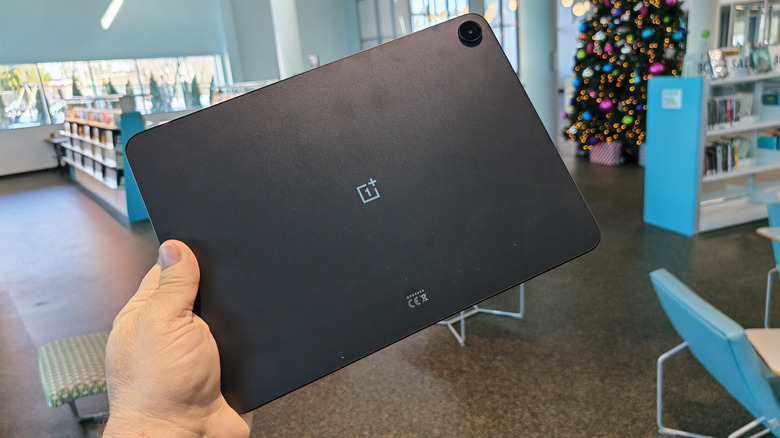
The OnePlus Pad Go 2 can be purchased from OnePlus's website for $399.99, which is a price that according to OnePlus is "subject to market conditions." I'm not certain what exactly those market conditions are, but it may have something to do with the fact that memory costs more than processors these days. You can buy the tablet from OnePlus.com starting on December 26th, in case you're looking for a place to spend that holiday money. You can also buy from Amazon or Best Buy starting in January of next year.
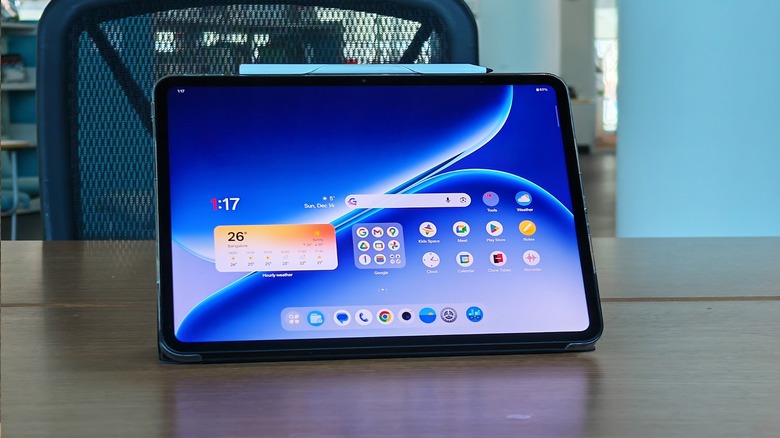
If you buy from OnePlus's website for a limited time you can get a free folio case on a first come, first served basis while supplies last. OnePlus is also offering a 10% discount for students and a bundle of 30% off on Pad Go 2 accessories.
But it's a tablet for the OnePlus faithful, which are plentiful in number, for sure. But if this was meant to be a budget option, it's not really hitting any "budget" qualifiers. It's not even cheaper than the iPad (currently available at around $350 for the most basic model), though this tablet could be considered "better" by some standards. It's long-lasting, and slightly bigger, but it'll take more than that to upset the tablet king in effectively every other arena. Overall, it would be fair to say that at best I'm not optimistic about this tablet and at worst, I'm disappointed.
