
 Farknot Architect/Shutterstock
With smartphones getting bigger and laptops slimming down over the years, the market for tablets hasn't been the easiest for manufacturers to traverse. Apple, however, is an exception to this trend. The iPad has dominated the space for so long that it's become the go-to tablet choice for many. The current lineup is easy to decipher, and with iPads being available at different price points, there's an option for just about everyone.
We crowned the entry-level model the best iPad you can buy in 2025, as long as you're looking for a tablet for general use that has great battery life and solid performance. Sitting near the top of the lineup are the iPad Air and iPad Pro models — starting at $599 and $999, respectively. That's quite the price difference, but it's fair considering the iPad Pro is targeted towards professionals and power users with specific requirements. The iPad Air offers a middle ground between the base and Pro iPad models.
A key difference between the iPad Air and the iPad Pro is performance. The Air is fitted with Apple's M3 chip, which debuted with the MacBooks released in late 2023. The iPad Pro, on the other hand, features the latest M5 chip that was unveiled in October 2025. Apart from obvious on-paper spec differences like this, there are a handful of other quieter distinctions between the two models — which you might want to take note of if you're eyeing either of these iPads.
iPad Pro's display tech might surprise you
 Apple
Apple
Both the iPad Air and iPad Pro ship in 11-inch and 13-inch models, but that's where the similarities end. Though it's a given that the expensive iPad is going to provide a superior display, many consumers who are window shopping might not appreciate just how big of a jump there really is going from the Air to the Pro. The iPad Air ships with an IPS LED screen — which is crisp enough, but unfortunately still sports a 60Hz refresh rate. Compared to the iPad Pro's 120Hz panel, this will be the first difference you'll spot.
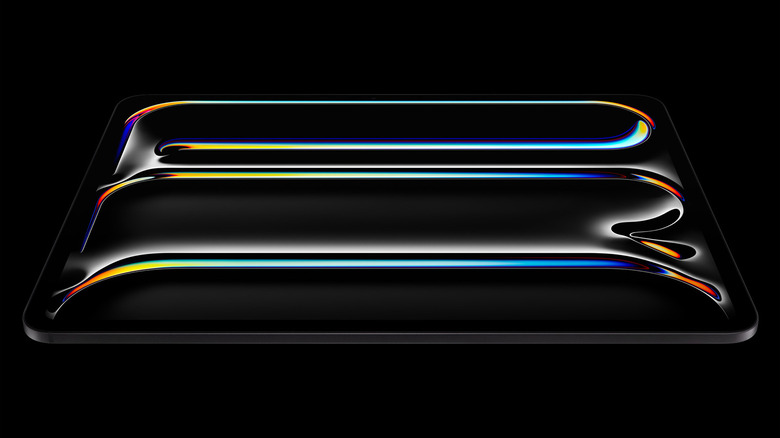
A ProMotion screen isn't the only upgrade — the iPad Pro features Tandem OLED technology, which utilizes two OLED panels for improved brightness and color accuracy. OLED displays have a significantly better contrast ratio compared to traditional LCD and LED displays, which are backlit and therefore don't produce the deepest of blacks. The "Ultra Retina XDR" display, as Apple likes to call it, has been widely praised. We delved into how Tandem OLED is an innovative solution to the usual drawbacks of OLED technology in our review of the 2024 iPad Pro M4.
Both iPad models have a near-identical pixel count, but the iPad Pro has a much brighter display with up to 1600 nits of peak brightness when displaying HDR content. It's also the only iPad model that lets you upgrade to nano-texture glass, which dials down reflections and hides smudges.
Notable connectivity and audio upgrades
 Mr.Mikla/Shutterstock
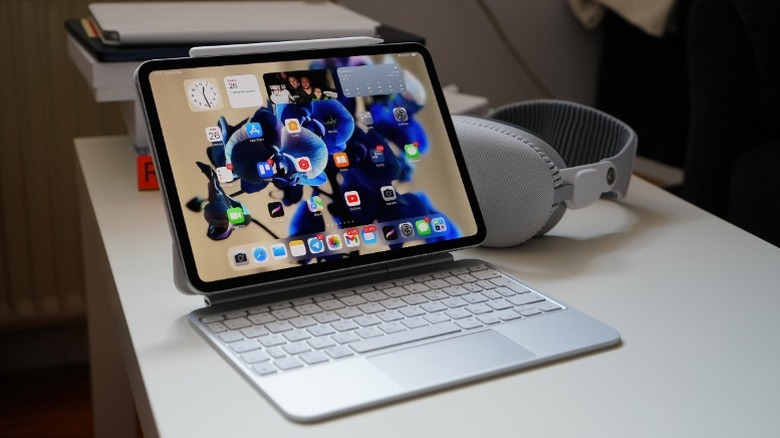
Thankfully, you get USB-C for charging and connectivity regardless of which iPad you're buying in 2025. However, the USB-C port on the iPad Pro comes with Thunderbolt 3 support, while the one on the iPad Air is rated for USB 3 speeds. The 10 Gbps port on the iPad Air is plenty fast for most tasks, but professionals might appreciate the 40 Gbps USB 4 port that the iPad Pro ships with. Fast portable SSDs are a popular accessory for video editing workflows, and only the iPad Pro will be able to get the best out of them.
Since you do get USB-C on both models, you can hook them up to an external display with ease. Connectivity isn't the only hidden difference — the audio experience is worth comparing between the two iPad models as well. The iPad Air has a stereo speaker configuration that produces respectable sound, but the iPad Pro has four speakers that provide for a more immersive experience. It also comes with four "studio-quality" microphones, while the iPad Air only has two.
This is likely a byproduct of the iPad Pro being marketed towards audio and video editors. Although professional workflows will almost always rely on dedicated headphones and external microphones, the audio upgrades that the iPad Pro brings should translate into a better multimedia experience overall. Pair that with its OLED display, and you'll want the iPad Pro experience if you watch a lot of movies.
The M5 is powerful, but the M3 is no slouch either
 Apple
Apple
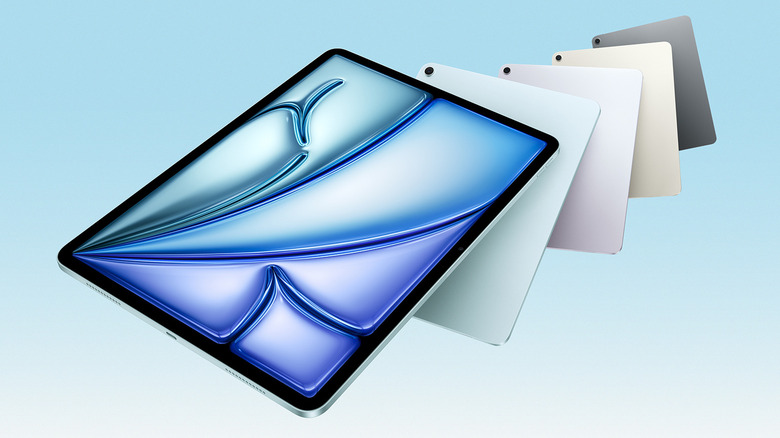
Unlike the MacBook Air and Pro laptops that typically see the same chipset family upgrades, usually within a six-month window, the iPad Air and Pro tablets tend to follow a different upgrade cycle. While the iPad Pro gets the latest and greatest, Apple ships the iPad Air with slightly older silicon. On paper, this does give the iPad Pro a clear edge in performance, but don't let the M3's prowess fool you — it is a desktop-grade chip, after all.
In fact, in our review of the 2022 iPad Air that shipped with the M1 chip, we mentioned how embedding such a powerful processor in an iPad would effectively lengthen its life. Though not primarily marketed for this purpose, the iPad Air can absolutely crunch 4K video editing. Therefore, it can handle everything else that's less intensive, like editing documents or working with spreadsheets, with great ease.
The new Apple Games app available on iPhone and iPad serves as a central hub for your installed games, and the M3 just so happens to be an impressive performer for gaming. Triple-A titles like "Death Stranding" and "Red Dead Redemption" make good use of the power that both the iPad Air and iPad Pro deliver. In short, unless you need the performance boost that the iPad Pro brings, the iPad Air with its M3 chip remains a fantastic choice that can still handle intensive apps and games.