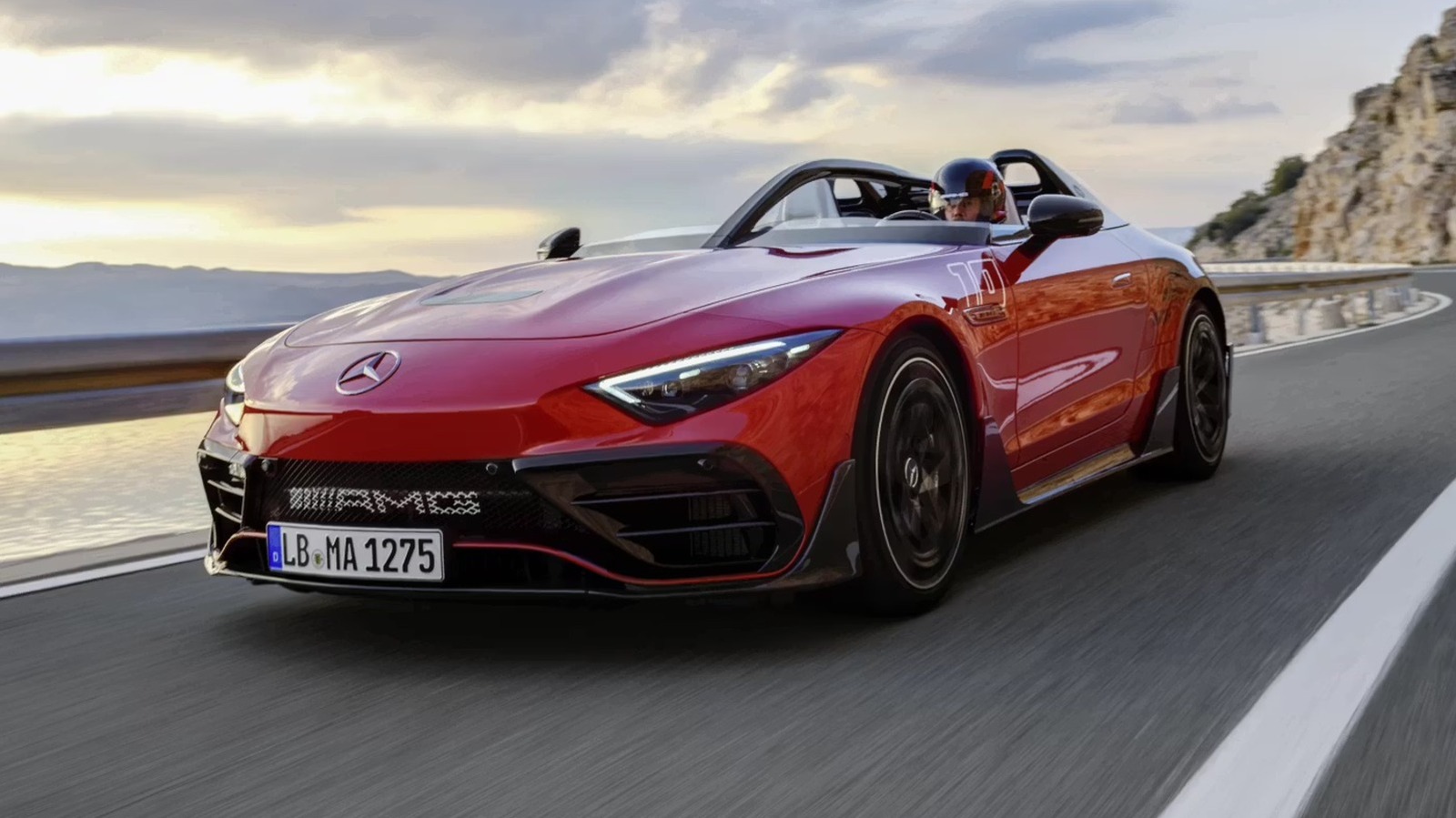
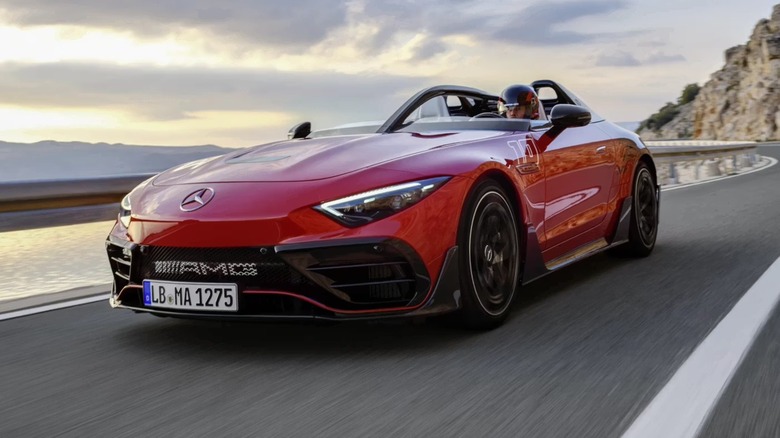
 Mercedes AMG
In the 1960s, two Daimler-Benz engineers, Hans Werner Aufrecht and Erhard Melcher, were creating the Mercedes-Benz 300 SE racing engine. Their work was interrupted when Daimler-Benz decided to end its motorsport push due to a ripple effect stemming from the Le Mans Disaster in 1955. Aufrecht and Melcher were disappointed, but they didn't give up, and continued working on the 300 SE racing engine on their own. In 1965, the engine went on to win 10 times at the German Touring Car Championship.
This win was not enough for either Aufrecht or Melcher; the former left Daimler-Benz and convinced the latter to start a racing-engine company with him in 1967. The company was called AMG, with the "AM" part of the initialism taken from the founders' last names, and the "G" coming from Großaspach, where Aufrecht lived, and where the engineers had perfected the 300 SE engine. A few years later, in 1971, an AMG-tuned Mercedes 300 SEL 6.8, nicknamed the "Red Pig" because of its bright red color, went on to win the 24 Hours of Spa. This car became one of the most successful models in Mercedes history, and popularized the AMG brand as a reputable name in the car modification industry. Mercedes and AMG continued to collaborate until 1999, when DaimlerChrysler AG (as the Mercedes Group was known at the time) bought a majority stake in AMG.
The difference between Benz and AMG is under the hood
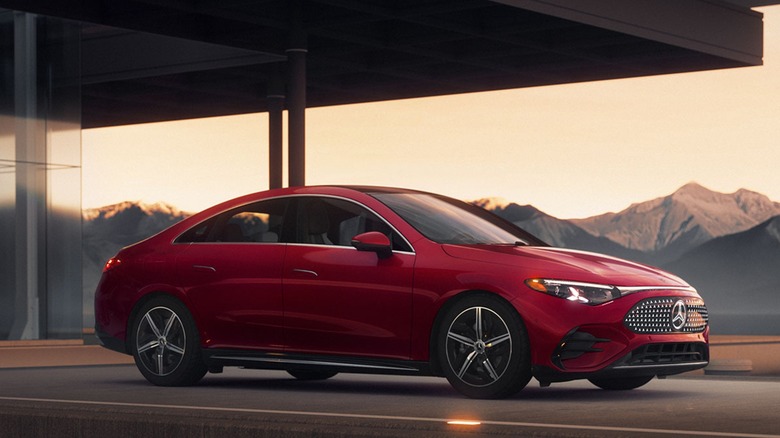 Mercedes
Today, the AMG tag denotes Mercedes-Benz's performance brand, Mercedes-AMG. You see, Mercedes is fundamentally a luxury brand — typical models have engines and drivetrains tuned for smooth power delivery and efficiency for a wide range of drivers. AMG models, in contrast, are purpose-built for performance. They possess more powerful engines, mostly hand-assembled under the "One Man, One Engine" approach, in which a single engineer builds and signs each engine.
AMG engines usually produce significantly more horsepower and torque than their Mercedes-Benz versions. For example, the 2025 Mercedes-AMG C43's engine boasts almost 200 more horsepower than its Mercedes-Benz variant; in the same way, the AMG variant of the 2025 GLA class gets you almost 100 more horsepower than its Benz counterpart.
Chassis and suspension tuning are also upgraded in AMG variants to match the engine power. Many AMG models feature sports suspension systems and strong brakes to improve handling, cornering response, and stability at higher speeds. These features make AMG vehicles feel tighter and more responsive on twisty roads or track environments, a different vibe from the more comfort-biased setup typical in regular Mercedes-Benz cars. Even the steering, transmission, differential, and drive shaft are typically upgraded in AMG models, so drivers feel more connected and in control while driving dynamically — how else would you drive if you owned one of the fastest AMG models?
There are also price and stylistic differences
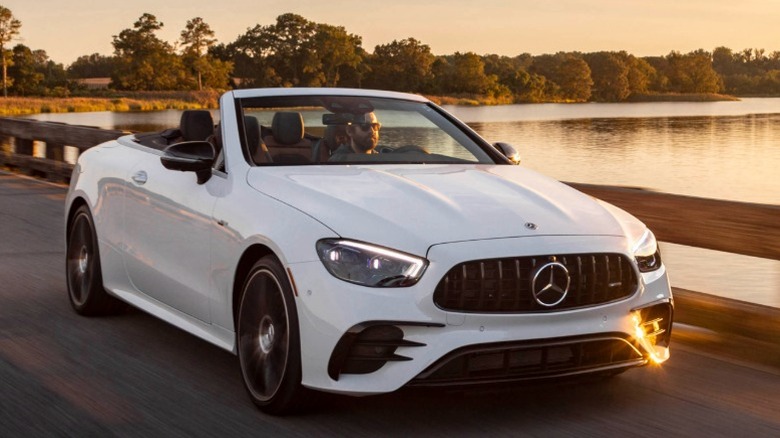 Mercedes Benz
Some of the most expensive Mercedes cars ever are AMGs, and AMG versions are typically pricier than Benz variants of the same model. Mercedes-AMG even lets buyers customize their sports cars to their tastes; they can configure the engine, exterior, interior, multimedia, drivetrain, and chassis. All these configurations also come with price tags that may add thousands of dollars to the AMG's original cost.
So, original AMG buyers can make stylistic changes to their vehicles to make them look sportier through factory-done customization — but so can original Mercedes-Benz buyers. Some Benz models have an AMG Line package; Mercedes allows buyers to add mods that make them look like AMG versions, from wheels and fenders to more sporty interiors. These mods, however, do not affect performance, and AMG Line package vehicles typically do not sport more horsepower or torque than their Benz variants. Still, it's a good way to get an AMG-looking car without the hole that an actual one would drill in your pocket in terms of mod costs and insurance payments.
In summary, the difference between Mercedes-Benz and Mercedes-AMG is the performance that AMG variants come with — and the sporty look that comes with that performance. Mercedes, however, allows Benz owners to get this sporty look on their cars by offering factory aesthetic mods through AMG Line trims. These cars don't drive like AMGs, but they sure look like they do.