- News
- World
- Americas
- US politics
The Department of Homeland Security has branded self-deportation a ‘dignified’ route out of the country. But advocates warn those who choose to do so may not be able to return for years — or at all. Kelly Rissman reports
Saturday 20 December 2025 23:26 GMT- Bookmark
- CommentsGo to comments
Bookmark popover
Removed from bookmarks
Close popover
 CloseTrump on plans to pay illegal immigrants $1000 to self-deport
Sign up for the daily Inside Washington email for exclusive US coverage and analysis sent to your inbox
Get our free Inside Washington email
Get our free Inside Washington email
Email*SIGN UPI would like to be emailed about offers, events and updates from The Independent. Read our Privacy notice
The Department of Homeland Security recently released a holiday ad relaying a familiar message with a tinge of festive nostalgia.
Accompanied by crooner Perry Como’s Christmas classic, “Home for the Holidays,” a black-and-white montage showed people grabbing what appeared to be gifts for loved ones — stuffed animals and playing cards — before they stepped onto planes.
“This holiday season, give yourself the gift of home with the CBP Home app,” read the ad’s caption.
Since President Donald Trump returned to the White House — and implemented his mass deportation agenda — the CBP Home app has been touted by administration officials as a “dignified” way for immigrants to self-deport.
Immigrants without criminal convictions are eligible to use the app in exchange for a $1,000 “stipend,” free airfare, and avoiding encounters with Immigration and Customs Enforcement, according to DHS.
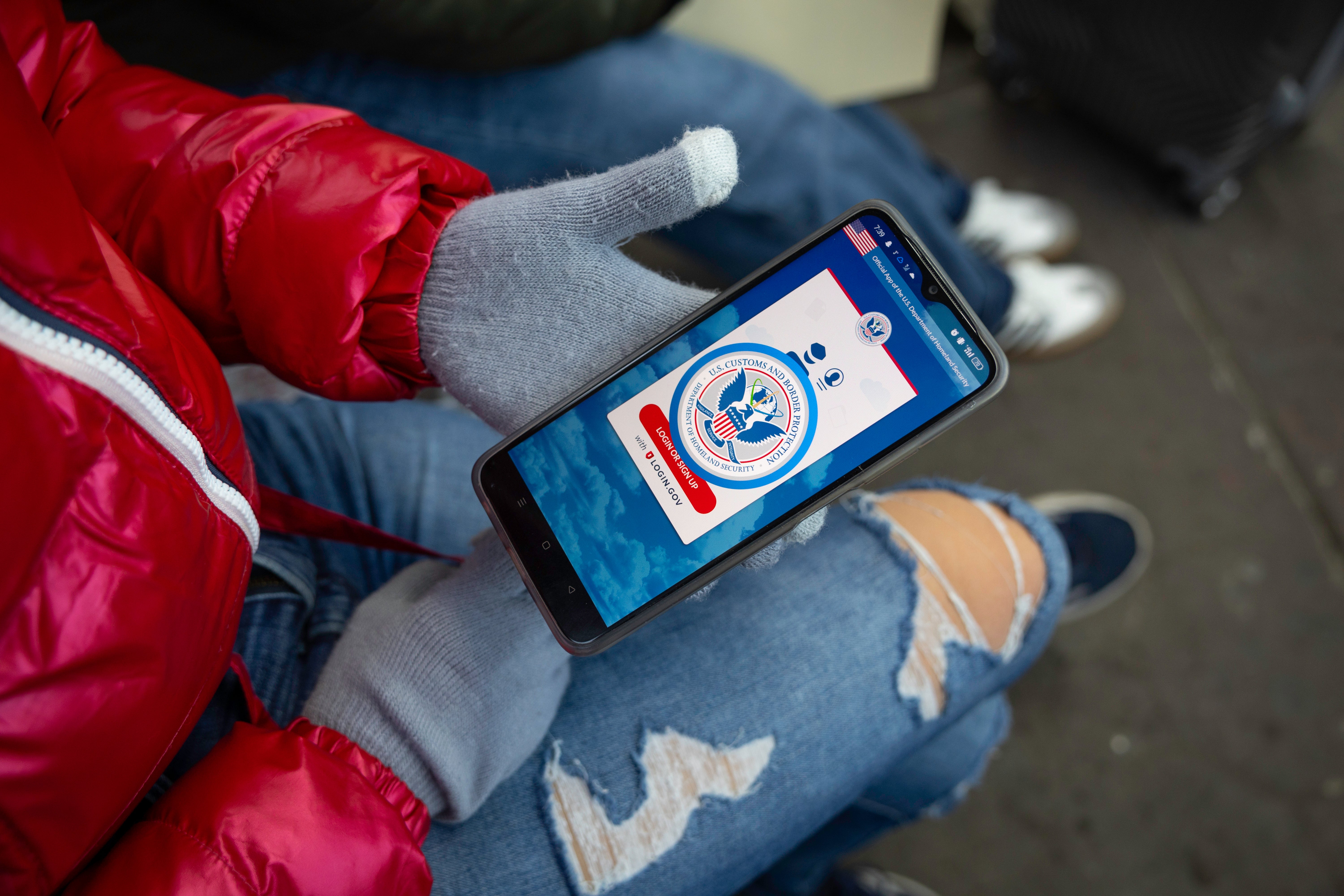 open image in galleryAn immigrant from Venezuela tries to access CBP Home App. The government spends less on self-deportations compared to involuntary deportations. But for migrants, the reality of leaving voluntarily is not risk-free (Getty Images)
Once a user downloads the CBP Home app, they choose the language they want to use, and then can select on one of two choices: “I’m Ready to Leave the U.S.” or “Verify I Left the U.S.” The user then fills out their personal information, takes a selfie, and then submits that information. The app then asks users if they want to add others to their “group.” At the end of the prompts, a message pops up saying “someone will reach out to you soon” and that the user will receive an email about next steps. The app also touts the $1,000 “exit bonus.”
But immigration law experts warn that many migrants are being directed towards the app without a full understanding that self-deportation is not risk-free.
Desires to avoid “horrific” conditions at detention centers, uncertain outcomes in lengthy immigration cases, and unpredictable, frightening ICE raids appear to be fueling self-deportations, but using the app may still result in immigrants being detained by federal agents and separated from family members for long periods, legal experts say.
In some cases, immigrants may never be allowed to return to the U.S.
The government has spent more than $200 million to advertise CBP Home — and nearly 38,000 people have used the app to leave the U.S. from March, when the self-deportation feature launched, up to November 25, according to internal DHS data seen by The Independent.
“Self-deportation is a safe and dignified way for lawbreakers who are here illegally to leave,” a DHS spokesperson said in a statement.
Not only do self-deportations boost Trump’s numbers – he has said he wants 1 million immigrants out of the country each year – but the administration has argued that the strategy is saving taxpayers money. The government spends $3,500 per individual self-deportation, the DHS spokesperson said. That marks “80 percent savings” on the $17,000 that the government spends on arresting, detaining and removing a person, the official added.
But critics argue there are other prices attached, both financial and personal, that the administration’s cost analysis doesn’t appear to take into account.
For one, immigrants are thought to contribute nearly $580 billion per year in taxes.
Researchers at the Peterson Institute for International Economics found that Trump’s mass deportation plan could significantly impact the U.S. economy, reducing the employment rate by as much as 7 percent and lowering GDP by as much as 7.4 percent by 2028. The researchers noted that these deportations would not only result in losing workers, but also losing consumers.
“In addition to the moral issue of rounding up millions of people, and disrupting their families, workplaces, and livelihoods, Trump’s ‘America first’ proposal for mass deportations would raise prices, cost jobs, and harm the US economy,” the researchers said.
 open image in galleryShackled immigrants board a plane to be removed from the U.S. The Trump administration has branded self-deportations as a ‘dignified’ way to leave the U.S., compared to law enforcement action (REUTERS)
Since Trump took office, 2.5 million immigrants have left the U.S., DHS said. Some 605,000 people were involuntarily deported while 1.9 million have voluntarily self-deported.
It is unclear whether that figure includes self-deportations through the CBP Home app as well as voluntary departures — a court-approved process that allows immigrants to leave the U.S. at their own expense to avoid a deportation order, making it easier to return. The Independent has asked DHS for more information.
So far this year, judges have granted more than 28,000 voluntary departure applications, according to data from nonprofit TRAC. Over the Biden administration’s four years, just over 29,000 people left the U.S. via voluntary departures.
Experts say immigrants using the app to self-deport potentially face another, more personal cost.
In May, Homeland Security announced the $1,000 stipend for “travel assistance” — which the American Immigration Lawyers Association described as “deceptive.” The association labeled the government’s self-deportation offer as a “deeply misleading and unethical trick.”
“[It] gives people the impression there are no consequences, such as being barred from returning in the future. No one should accept this without first obtaining good legal advice from an immigration attorney or other qualified representative,” the American Immigration Lawyers Association said in a statement at the time.
The National Immigration Project, a nonprofit that provides legal representation and support to immigrants, warned that in order to be able to return to the U.S. after self-deporting, one must have a “basis for returning,” like a spouse or parent who is a U.S. citizen or permanent resident.
“For many people, there may be no basis for returning to the United States on a permanent basis; even for those who do have a qualifying relative, the backlogs for these visas are very long for some countries and family relationships,” the group warned.
Once leaving the country, undocumented immigrants face 3-year or 10-year bars from entering the U.S. depending on how long they lived in there.
 open image in galleryProtesters clash with federal immigration agents in Chicago (REUTERS)
Others — including those who have returned to the U.S. without permission after being deported — face a permanent bar, according to the nonprofit.
Advocacy groups have also warned that immigrants with ongoing cases could still be given a deportation order even if they opt to self-deport, making it more difficult to return to the U.S.
“Even if you use the CBP Home app to tell DHS that you are leaving, you are at risk of receiving a deportation order from immigration court in your absence after you have left that will bar you from returning to the United States. Leaving the country will mean immigration applications you have submitted will be considered abandoned and will make it harder for you to gain future immigration benefits,” nonprofit Refugees International said on its website.
There are also reportedly instances in which immigrants, who have used the CBP Home app to self-deport, were still detained by federal immigration agents.
“We've heard of a couple cases of people using the app to try to facilitate their return to their home country, but they still end up getting detained, either while they're waiting for their flight out of the country or while they are physically trying to leave the country,” Vanessa Dojaquez-Torres, an attorney with the American Immigration Lawyers Association, told Wired.
In Chicago, one Venezuelan asylum seeker said they had struggled to leave the U.S. after opting to self-deport using the app, fearing the worst from the increasingly aggressive ICE raids in the city.
The migrant, a 25-year-old mother of two, told ProPublica that she was told by someone working at the CBP Home app program that if she used the app she could be on a flight to Venezuela the following month. When her departure date passed, she made several calls to the program, with one program worker eventually telling her there could be a delay obtaining her travel documents.
Waiting with packed bags, she said she registered on the app twice more. She said she still hadn’t been given any flight information.
“I feel so scared, always looking around in every direction,” she told ProPublica. “I was trying to leave voluntarily, like the president said.”
More about
Donald TrumpDepartment of Homeland SecurityimmigrantsImmigrationJoin our commenting forum
Join thought-provoking conversations, follow other Independent readers and see their replies
Comments