- Technology
- Artificial Intelligence
LLMs like Chat GPT come with major social costs — including child labor — that we can't ignore. Do we really need progress that's built on the suffering of others?
12 Comments Join the conversationWhen you purchase through links on our site, we may earn an affiliate commission. Here’s how it works.
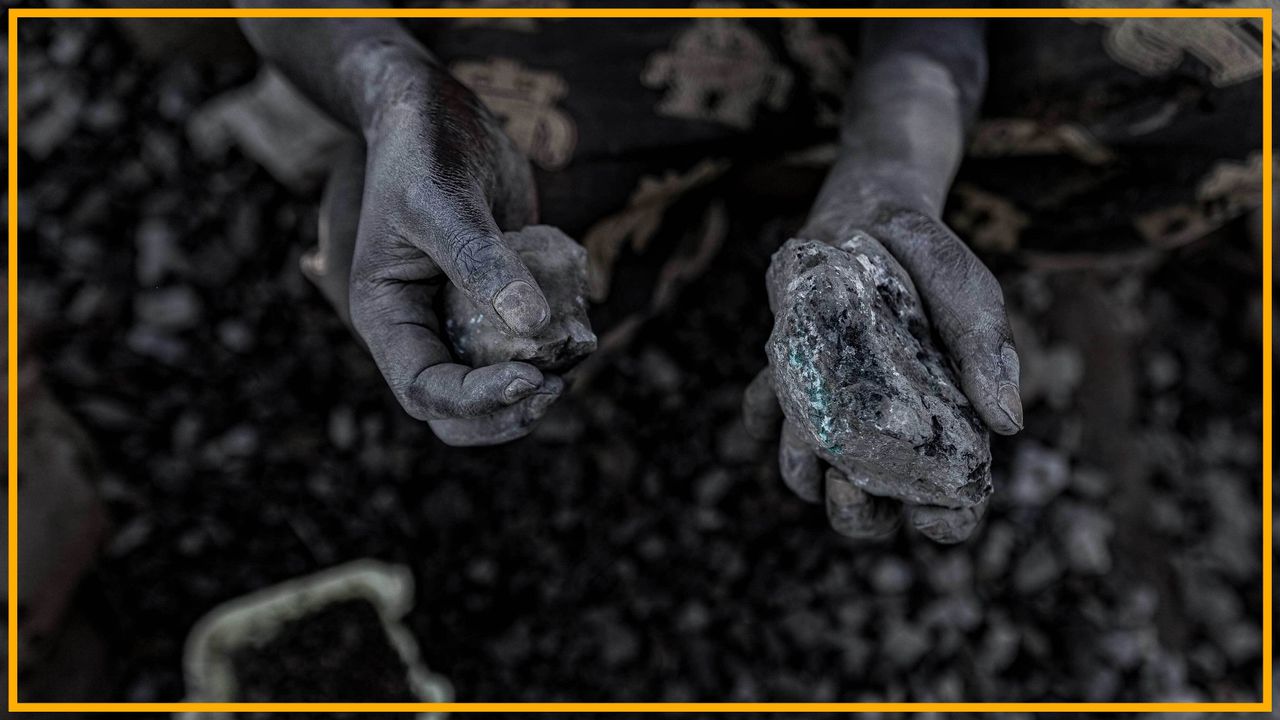
 In Kolwezi, Democratic Republic of Congo, children work at artisanal cobalt and copper mines, digging with their hands in what can be horrific conditions.
(Image credit: Michel Lunanga/Getty Images)
In Kolwezi, Democratic Republic of Congo, children work at artisanal cobalt and copper mines, digging with their hands in what can be horrific conditions.
(Image credit: Michel Lunanga/Getty Images)
Behind the output of Large Language Models like Chat GPT lies a journey with complex environmental and social impacts, from the extraction of minerals by children in the Democratic Republic of the Congo, to training systems that expose people to violent and degrading imagery in countries like Nigeria, and to vast, resource-guzzling data centers in regions where energy, water and access to transmission infrastructure is cheap. This means that the AI boom has the potential to create new resource production and consumption economies — likely in communities which are already marginalized or have been subject to previous resource booms and busts.
Yet, these costs are rarely recognized and they raise profound questions about sustainability, not just from a mineral resource point of view, but also in the broader, moral sense — do we want to build a society that profits off the suffering of the world's most marginalized? Will this end up fracturing societies and lead to the politics of resentment?
 Akhil BhardwajAssociate Professor of Strategy and Organization at the University of Bath
Akhil Bhardwaj is an Associate Professor of Strategy and Organization at the University of Bath, UK. He studies extreme events, which range from organizational disasters to radical innovation.
 Grete GansauerAssistant Professor in the Haub School of Environment and Natural Resources at the University of Wyoming
Dr. Grete Gansauer is an Assistant Professor in the Haub School of Environment and Natural Resources at the University of Wyoming. She is an economic geographer and interdisciplinary public policy researcher focused on regional policy and effects of sustainability transitions in rural and natural-resource producing contexts.
The journey that powers the texts and images produced by AI begins with rare earth minerals used in computer chips. Rare earth minerals are "rare" because they are found in small isolated pockets in Earth’s crust and are difficult to extract through physical and chemical processes.
You may like-
 Why do AI chatbots use so much energy?
-
 Why OpenAI’s solution to AI hallucinations would kill ChatGPT tomorrow
-
 AI slop is on the rise — what does it mean for how we use the internet?
China currently dominates global rare earth production in mining and processing; the U.S. is second for mining, but it lacks the infrastructure to process rare earths once they are out of the ground.
Many critical minerals, such as lithium and cobalt, are also important for AI processing and storage. Unlike rare earths that are designated due to their chemical properties, the critical minerals designation is a political one assigned to minerals of key strategic, geopolitical, or national security importance.
Many of these minerals are found in regions that are currently ravaged by war (for example, Ukraine has some of Europe’s largest stores of lithium and Russia, is the world’s largest producer of uranium. Others, such as cobalt, are in regions like the Congo, where many of the mines are controlled by Chinese interests.
Setting aside the geopolitical concerns — although these are certainly very important — concerns also arise about labor practices. Many of these mines use artisan mining, which often is a euphemism for child labor — artisan mining can involve children digging for minerals with their hands. These minerals are then mixed with those extracted from industrial mining, making traceability impossible. Labor conditions can be horrific, with high death rates, often due to exposure to air and water pollutants that cause terminal illness.
Sign up for the Live Science daily newsletter nowContact me with news and offers from other Future brandsReceive email from us on behalf of our trusted partners or sponsorsBy submitting your information you agree to the Terms & Conditions and Privacy Policy and are aged 16 or over.Consequently, intensified resource production driven by the demands of AI and a highly digitalized economy could produce a new "resource curse" in peripheries of the Global North and the Global South. Wealth produced by local labor is extracted and used to prop up some of the most lucrative digital services industries in the world. The trap, then, is that communities whose material contributions are integrated into AI’s Global Value Chain will be again vulnerable to the same boom-and-bust dynamics that plague economies built on the production or extraction of other resources, like oil or diamonds..
Beyond the extraction of mineral wealth, many AI models require considerable training — and humans need to do that training. LLMs are trained on an increasingly large corpus of "tagged" data that contains violent and pornographic content. Setting aside the precariousness of gig work, the content itself can be highly disturbing and can result in traumatizing workers. Much of this work is carried out in countries like Nigeria and India where the cost of labor is low and where workers have little protection.
Once these models are trained, running them involves using massive data centers to cool the servers that process them. These server farms/data centers consume tremendous resources — both energy and water. Such centers are an emerging business frontier with major implications for land use change and resource impacts.
You may like-
Why do AI chatbots use so much energy?
-
Why OpenAI’s solution to AI hallucinations would kill ChatGPT tomorrow
-
AI slop is on the rise — what does it mean for how we use the internet?
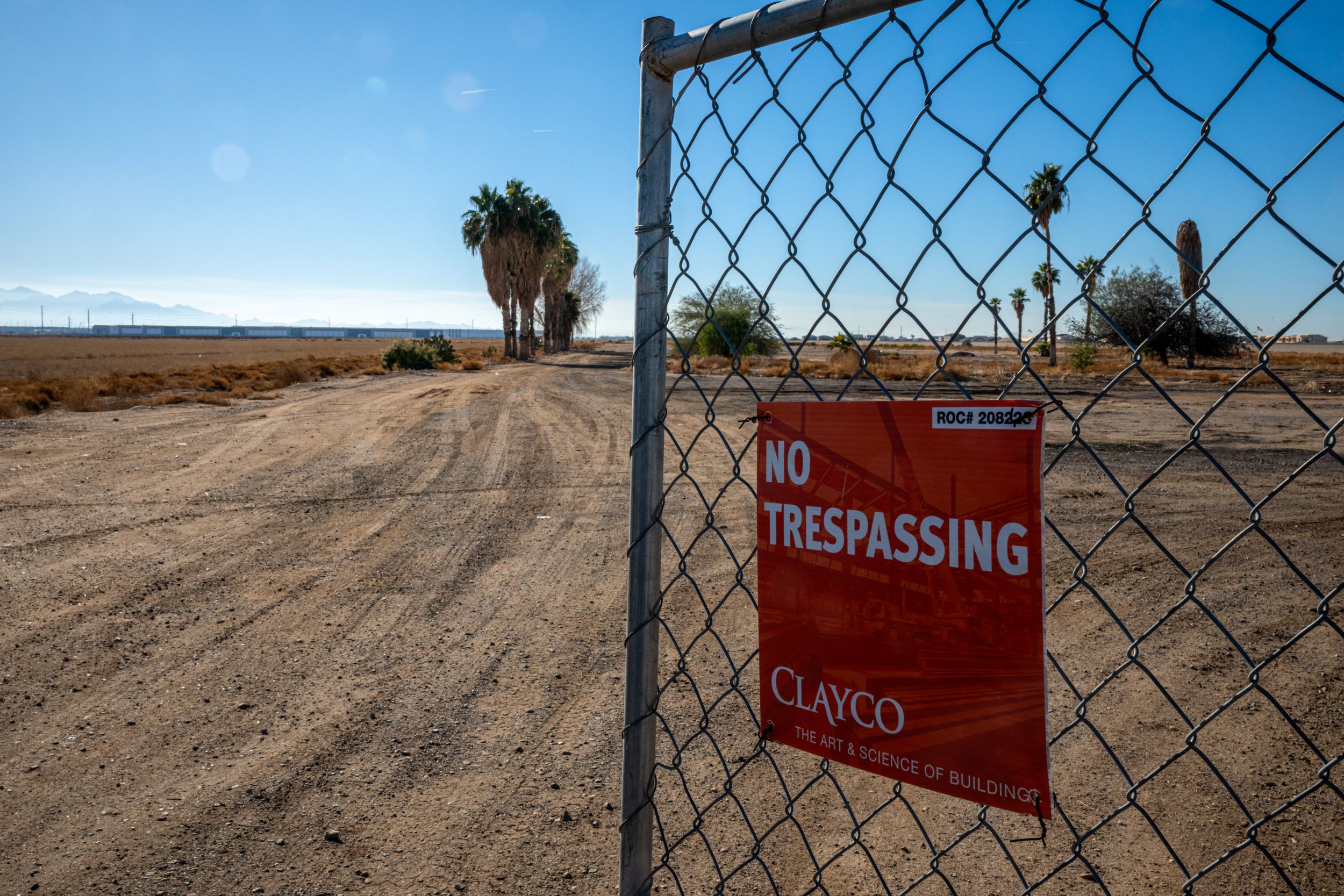
Private landholding firms are rapidly seeking resource frontiers with the most affordable mix of cheap land, cheap water, cheap energy, and cheap access to transmission infrastructure, proximity to population-dense centers and cheap-but-skilled labor. However, such a geographic unicorn is difficult to find.
Many data centers are located in or being prospected in water-scarce regions such as Nevada and Arizona, where labor and land is cheap. This trend appears to holds true globally. In addition to cheap land, deserts have low humidity, thus reducing the likelihood of metal corrosion. These centers also challenge the capacity of local electricity grids, and because energy is often purchased wholesale or "premarket," can drive rates up for the average consumer. Researchers have estimated that using AI to write an email consumes half a liter of water.
More opinion—Climate change is real. It's happening. And it's time to make it personal.
—The US is on track to lose its measles elimination status in months. RFK needs to go.
—There is such a thing as 'settled science' — anyone who says otherwise is trying to manipulate you
While there is a massive push to embrace the use of LLMs worldwide, especially with the lure of economic and labor efficiency gains and other potential benefits — including employing it for seeking information and writing as well as automating repetitive tasks, we must be fully aware of the material and social costs it imposes. Do you need ChatGPT to write that email? Do you really need to generate an image of a cat riding a banana?
Regardless of how we might answer these questions, it does appear that we need to fundamentally re-asses what it means to be sustainable — claiming to be sustainable while embracing and promoting LLMs is, to say the very least, suspect.
And do we really want the progress LLMs can bring if it's built on the suffering of others? This is a question that we, as a society, need to answer urgently.
Opinion on Live Science gives you insight on the most important issues in science that affect you and the world around you today, written by experts and leading scientists in their field.
Akhil BhardwajAssociate Professor of Strategy and Organization at the University of BathAkhil Bhardwaj is an Associate Professor of Strategy and Organization at the University of Bath, UK. He studies extreme events, which range from organizational disasters to radical innovation. Akhil is interested in the epistemological problem of understanding the underlying dynamics that lead up to these events. He also studies how thinking can be improved as well as the implications of AI adoption in the context of strategic management, entrepreneurship, and high-risk systems. His work is philosophically grounded in pragmatism. Prior to joining academia, Akhil has worked as an engineer and manager at CAT., Inc and consulted as a SOX compliance analyst in the U.S.
You must confirm your public display name before commenting
Please logout and then login again, you will then be prompted to enter your display name.
Logout Read more Why do AI chatbots use so much energy?
 Why OpenAI’s solution to AI hallucinations would kill ChatGPT tomorrow
 AI slop is on the rise — what does it mean for how we use the internet?
 Some people love AI, others hate it. Here's why.
 'There's no shoving that genie back in the bottle': Readers believe it's too late to stop the progression of AI
 AI could use online images as a backdoor into your computer, alarming new study suggests
Latest in Artificial Intelligence
AI could use online images as a backdoor into your computer, alarming new study suggests
Latest in Artificial Intelligence
 When an AI algorithm is labeled 'female,' people are more likely to exploit it
 Popular AI chatbots have an alarming encryption flaw — meaning hackers may have easily intercepted messages
 Experts divided over claim that Chinese hackers launched world-first AI-powered cyber attack — but that's not what they're really worried about
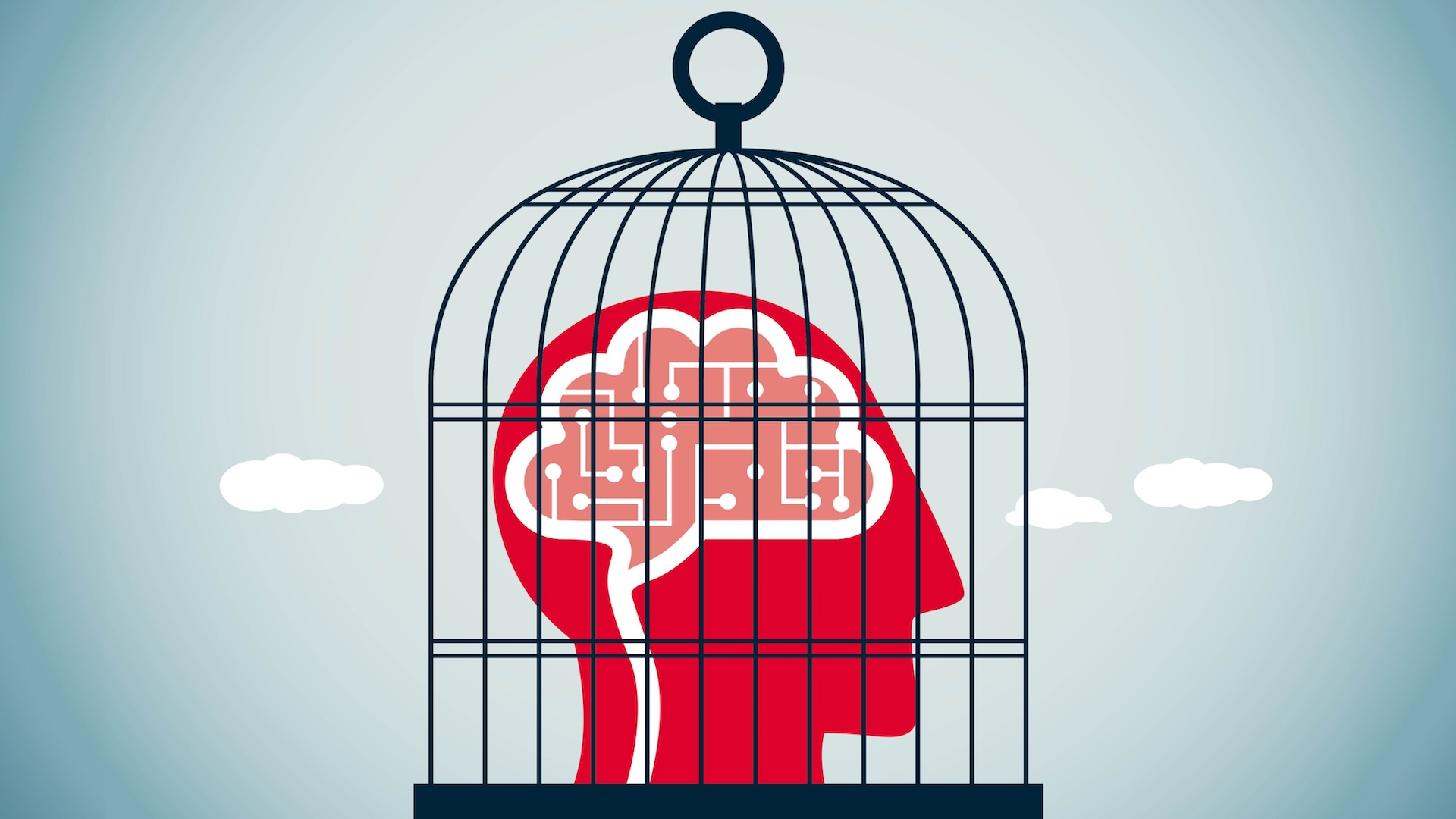 Switching off AI's ability to lie makes it more likely to claim it's conscious, eerie study finds
 The more that people use AI, the more likely they are to overestimate their own abilities
Some people love AI, others hate it. Here's why.
Latest in Opinion
Your AI-generated image of a cat riding a banana exists because of children clawing through the dirt for toxic elements. Is it really worth it?
The more that people use AI, the more likely they are to overestimate their own abilities
Some people love AI, others hate it. Here's why.
Latest in Opinion
Your AI-generated image of a cat riding a banana exists because of children clawing through the dirt for toxic elements. Is it really worth it?
 Climate change is real. It's happening. And it's time to make it personal.
 'Hot knives and brute force': King Tut's mummy was decapitated and dismembered after its historic discovery. Then, the researchers covered it up.
 The US is on track to lose its measles elimination status in months. RFK needs to go.
 Are humans still evolving? An anthropologist breaks it down.
 Time may be a psychological projection, philosopher argues
LATEST ARTICLES
Time may be a psychological projection, philosopher argues
LATEST ARTICLES 1Lost Indigenous settlements described by Jamestown colonist John Smith finally found
- 2Strangely bleached rocks on Mars hint that the Red Planet was once a tropical oasis
- 32,400-year-old 'sacrificial complex' uncovered in Russia is the richest site of its kind ever discovered
- 4Ethereal structure in the sky rivals 'Pillars of Creation' — Space photo of the week
- 5What was the loudest sound ever recorded?
