- Space
- Space Exploration
The recent launch of a Soyuz rocket carrying three astronauts to the International Space Station has caused significant damage to Russia's only launch pad capable of sending humans into space.
0 Comments Join the conversationWhen you purchase through links on our site, we may earn an affiliate commission. Here’s how it works.
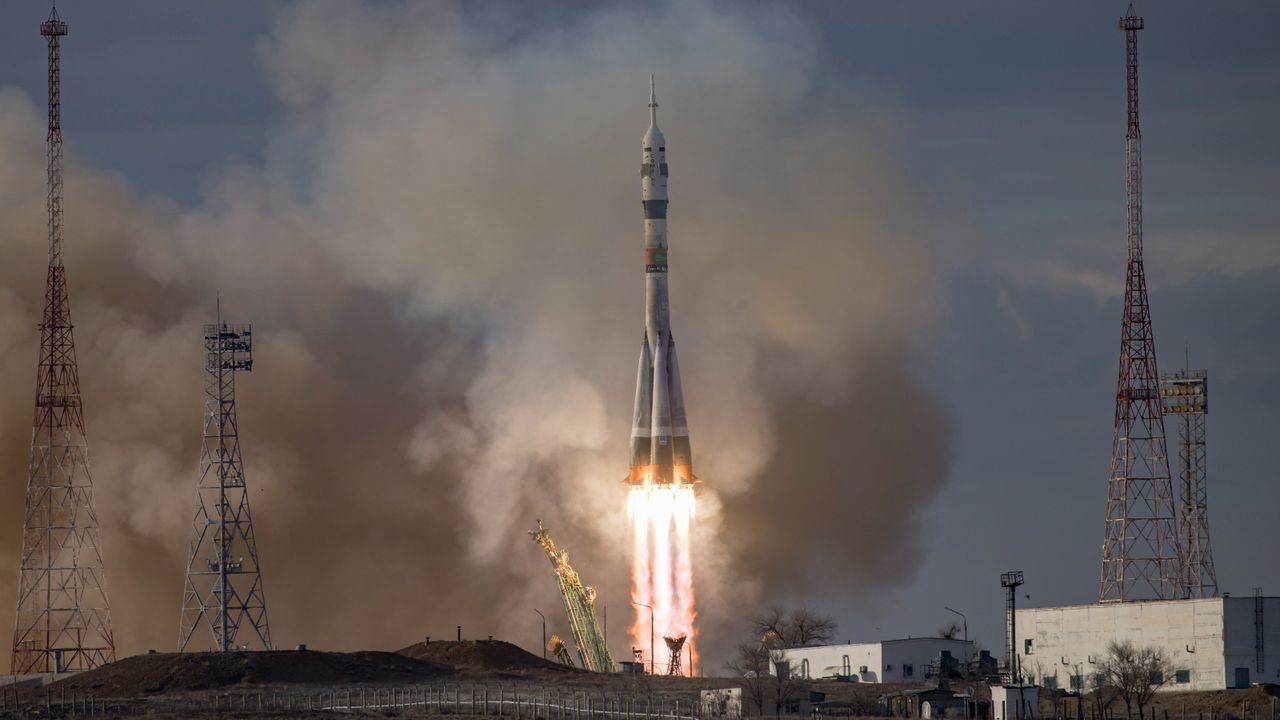
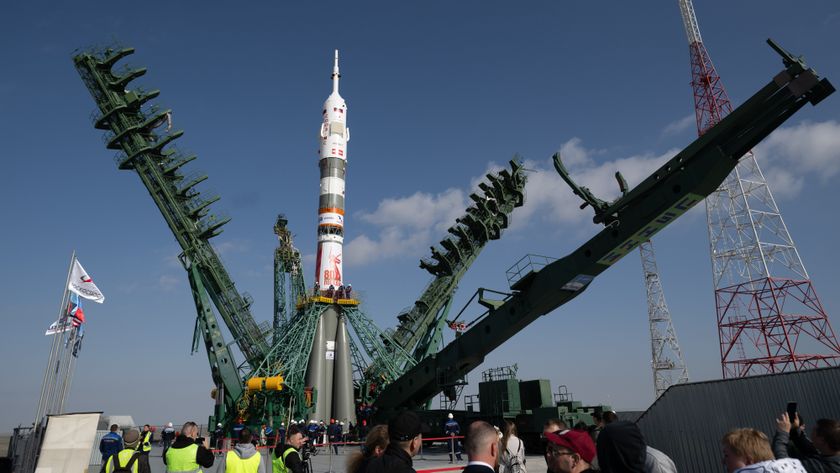
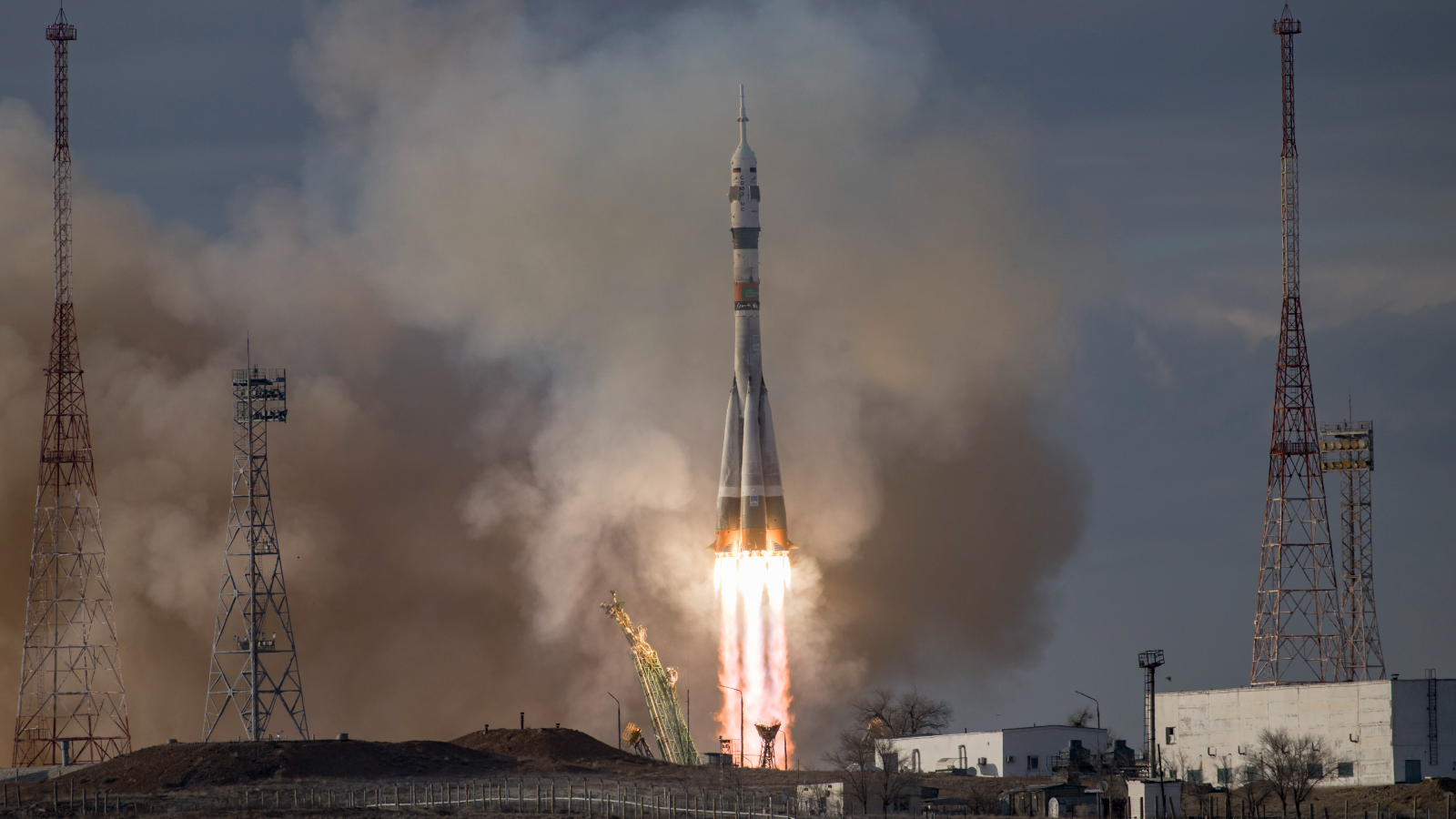 A Soyuz rocket that took off from the Baikonur Cosmodrome in Kazakhstan on Nov. 27 safely carried two Russian cosmonauts and a NASA astronaut to the ISS, but damaged the launch pad in the process. This photo shows a similar launch from March 2024.
(Image credit: Bill Ingalls/NASA via Getty Images)
A Soyuz rocket that took off from the Baikonur Cosmodrome in Kazakhstan on Nov. 27 safely carried two Russian cosmonauts and a NASA astronaut to the ISS, but damaged the launch pad in the process. This photo shows a similar launch from March 2024.
(Image credit: Bill Ingalls/NASA via Getty Images)
Russia's only working launch pad has been temporarily knocked out of action after sustaining significant damage during the recent launch of three astronauts to the International Space Station (ISS). This leaves the country unable to send humans into space for the first time in more than 60 years, experts say.
On Thanksgiving (Nov. 27), the Soyuz MS-28 spacecraft lifted off from Site 31/6 at the Baikonur Cosmodrome in Kazakhstan at around 2:30 p.m. local time (4:30 a.m. EST). The rocket was carrying Russian cosmonauts Sergey Kud-Sverchkov and Sergei Mikaev alongside NASA astronaut Chris Williams, who all successfully arrived on the ISS, where they will remain for the next eight months, Live Science's sister site Space.com reported.
You may like-
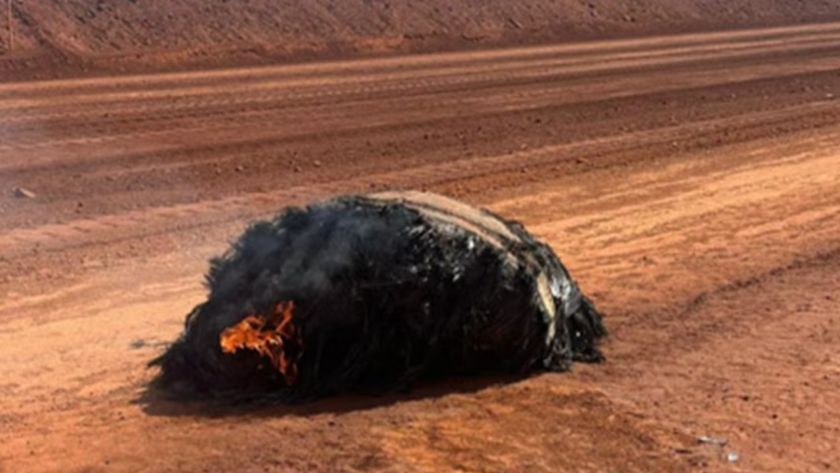 Charred piece of secretive Chinese rocket found still smoldering in the Australian outback
-
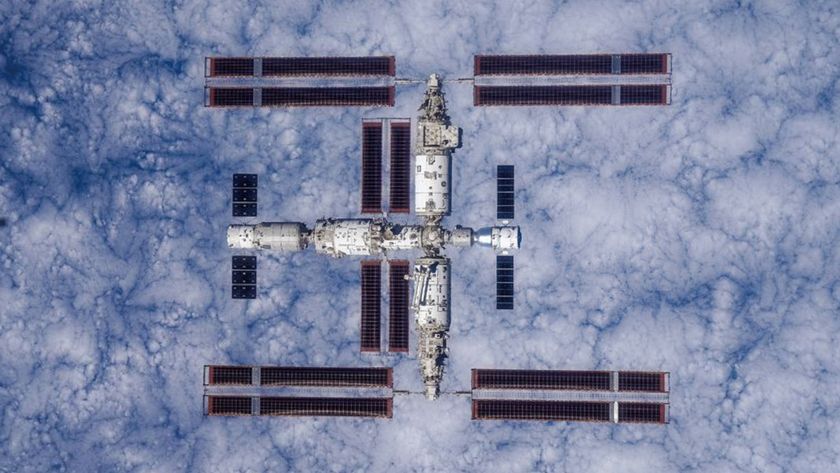 'Stranded' astronauts aboard Chinese space station are preparing to come home — but no date has been announced
-
 That was the week in science: Soyuz launch pad seriously damaged | 'Holy Grail' of shipwrecks | Interstellar object dangers
Russian officials did not reveal which parts of the launch pad had been impacted or how they were damaged, writing only that the damage was "currently being assessed" and would be "repaired shortly."
However, Ars Technica reported that an unnamed eyewitness noticed that during the launch, a roughly 22-ton (20 metric tons) service platform used to access rockets' engines fell into the "flame trench" — the section below the launch pad where the rocket's fiery plumes are vented. (If confirmed, this likely means that the platform was not properly secured in place before the launch.)
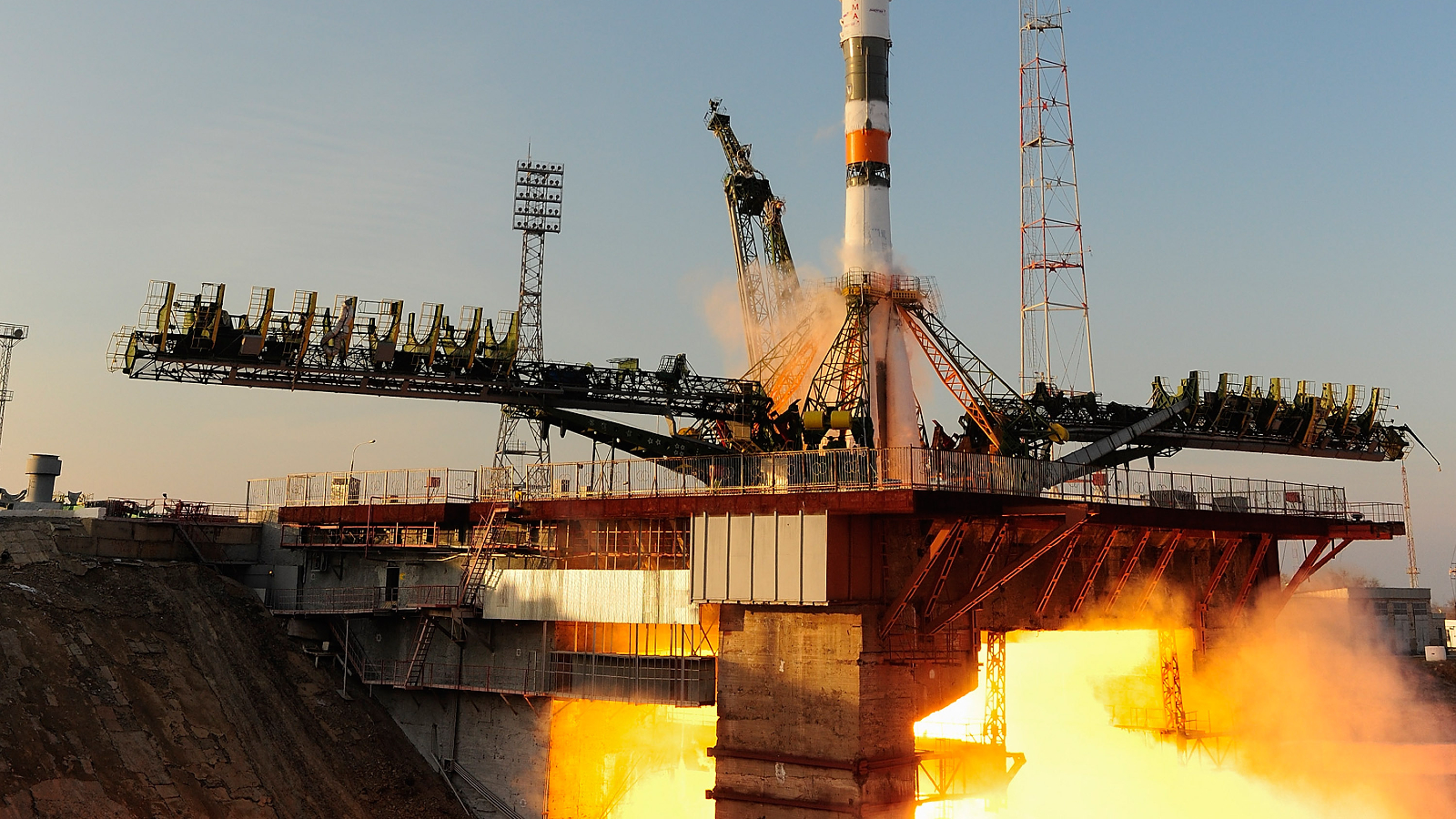
It is unclear how long it will take to fix Site 31/6 or if another decommissioned pad could be retrofitted to take its place. But, until this happens, Russia has no way of launching astronauts.
"In effect, from this day, Russia has lost the ability to launch humans into space, something that has not happened since 1961," Vitaliy Egorov, a Russian space journalist, wrote on Telegram, as reported by CNN. "Now it will be necessary to quickly repair this launch table or modernize another one."
Sign up for the Live Science daily newsletter nowContact me with news and offers from other Future brandsReceive email from us on behalf of our trusted partners or sponsorsBy submitting your information you agree to the Terms & Conditions and Privacy Policy and are aged 16 or over.The Baikonur Cosmodrome was constructed in the late 1950s, when Russia was part of the Soviet Union and was locked in a space race with the U.S. that ultimately ended with the Apollo moon landings. Since the Soviet Union fell in 1991, the site has been loaned back to Russia by Kazakhstan for around $115 million a year.
Russia has two other active cosmodromes, Vostochny and Plesetsk, within its own borders. However, neither of these sites can currently launch crewed Soyuz rockets.
Site 31/6, which has been used for more than 400 successful rocket launches, became the last operational launch pad at Baikonur in 2020, when Roscosmos retired the only other working pad, Site 1/5 (a.k.a. Gagarin's Start). The decommissioned pad was used to launch Yuri Gagarin, the first human in space, in 1961, and parts of it could now be used to repair Site 31/6, according to Space.com.
You may like-
Charred piece of secretive Chinese rocket found still smoldering in the Australian outback
-
'Stranded' astronauts aboard Chinese space station are preparing to come home — but no date has been announced
-
That was the week in science: Soyuz launch pad seriously damaged | 'Holy Grail' of shipwrecks | Interstellar object dangers
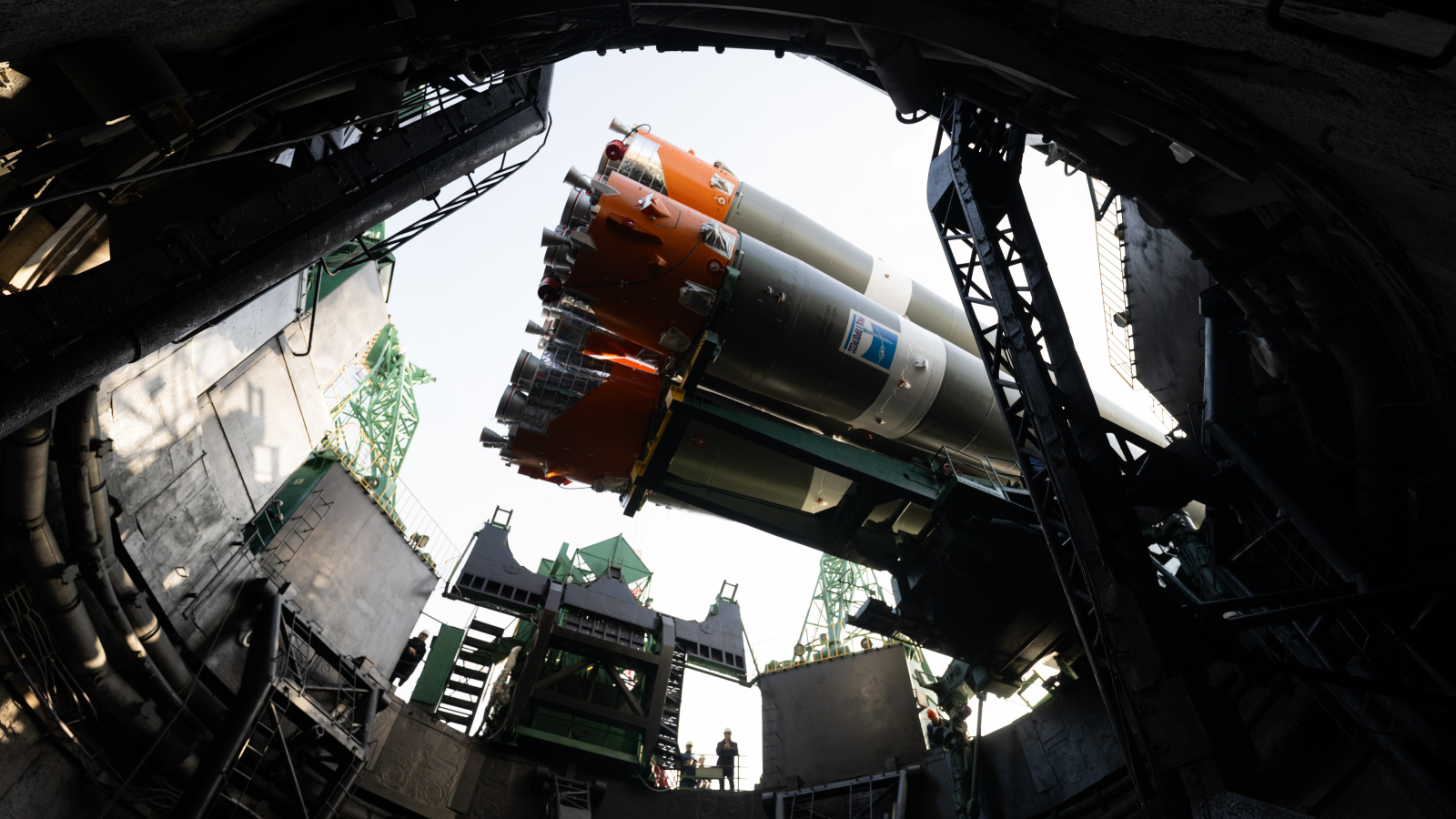
Russia launches astronauts to the ISS every six months, less frequently than it did in the past. That's partly due to the emergence of SpaceX's reusable Falcon 9 rockets, but also because Russia is rolling back its involvement in the ISS project, which is due to end by 2030.
The next crewed ISS mission is scheduled to take off from Site 31/6 in July 2026, while an uncrewed supply run is supposed to launch in less than three weeks, on Dec. 20, according to Space News.
RELATED STORIES—Secretive SpaceX satellites operated by US government are shooting disruptive radio signals into space, astronomer accidentally discovers
—Controversial startup's plan to 'sell sunlight' using giant mirrors in space would be 'catastrophic' and 'horrifying,' astronomers warn
—New report warns that China could overtake the US as top nation in space — and it could happen 'in 5-10 years,' expert claims
Whether or not Russia will be ready for these launches will be "a real-life test of their resilience," Jeff Manber, a space policy expert who leads the space stations division of the private aerospace company Voyager Technologies, told Ars Technica. "We are going to learn just how important the ISS is to leadership there."
Russia is also currently scheduled to launch missions from Site 31/6 that will help build the new Russian Orbital Service Station, currently due to begin construction in 2027, Egorov wrote.
Once the ISS is decommissioned, Russian cosmonauts are also expected to be sent to China's Tiangong space station, as the two countries strengthen their ties to achieve their shared goal of building a base on the moon by 2035. (It is unclear which country these astronauts will be launched from.)
China has also experienced its own spacecraft fiasco in recent weeks. In early November, a suspected space junk collision impacted a return capsule attached to Tiangong, stranding three astronauts in space. The trio was later returned to Earth onboard another capsule, which temporarily marooned three more astronauts before the launch of an unmanned "lifeboat" on Nov. 24.
 Harry BakerSocial Links NavigationSenior Staff Writer
Harry is a U.K.-based senior staff writer at Live Science. He studied marine biology at the University of Exeter before training to become a journalist. He covers a wide range of topics including space exploration, planetary science, space weather, climate change, animal behavior and paleontology. His recent work on the solar maximum won "best space submission" at the 2024 Aerospace Media Awards and was shortlisted in the "top scoop" category at the NCTJ Awards for Excellence in 2023. He also writes Live Science's weekly Earth from space series.
You must confirm your public display name before commenting
Please logout and then login again, you will then be prompted to enter your display name.
Logout Read more Charred piece of secretive Chinese rocket found still smoldering in the Australian outback
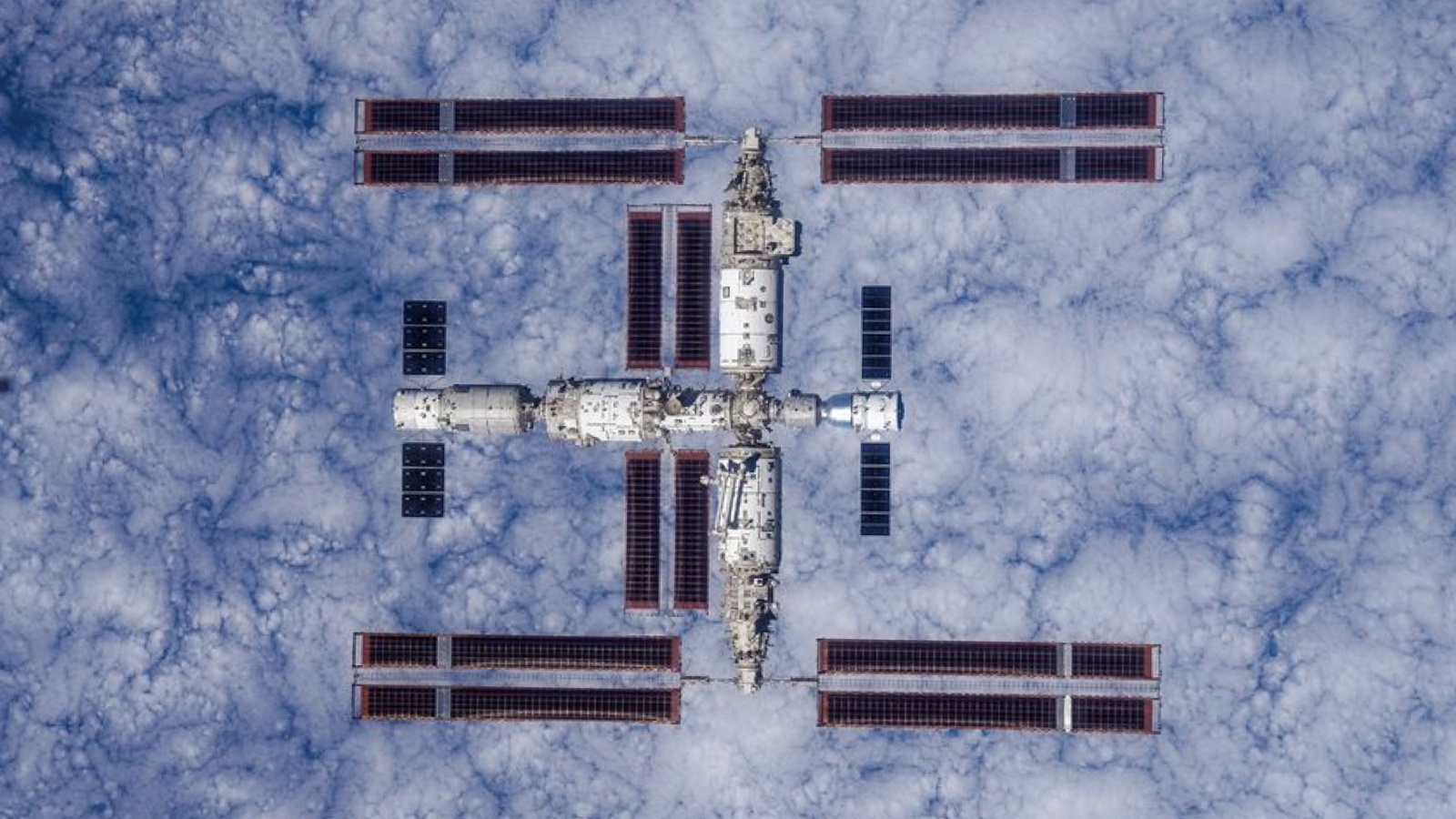 'Stranded' astronauts aboard Chinese space station are preparing to come home — but no date has been announced
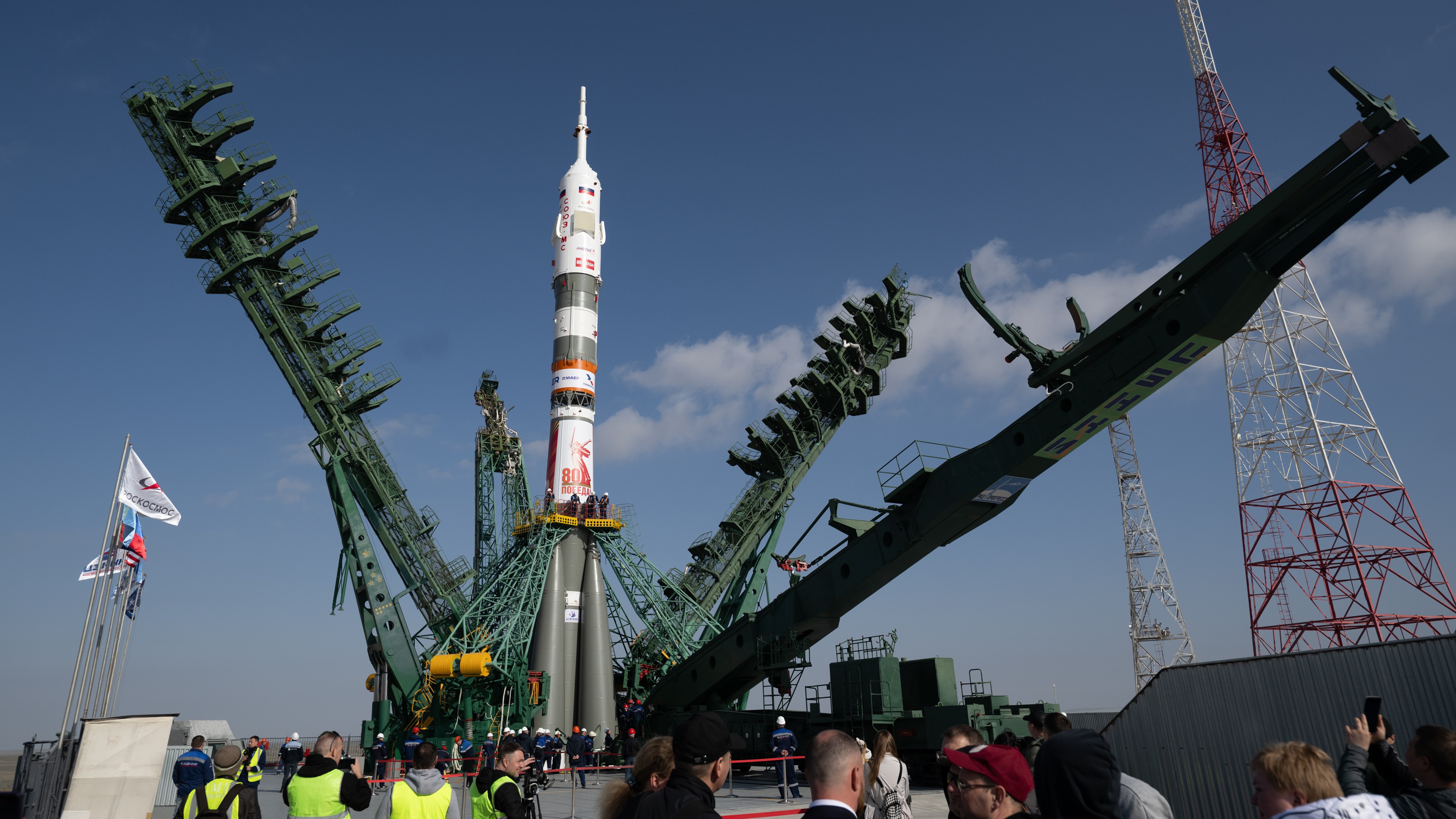 That was the week in science: Soyuz launch pad seriously damaged | 'Holy Grail' of shipwrecks | Interstellar object dangers
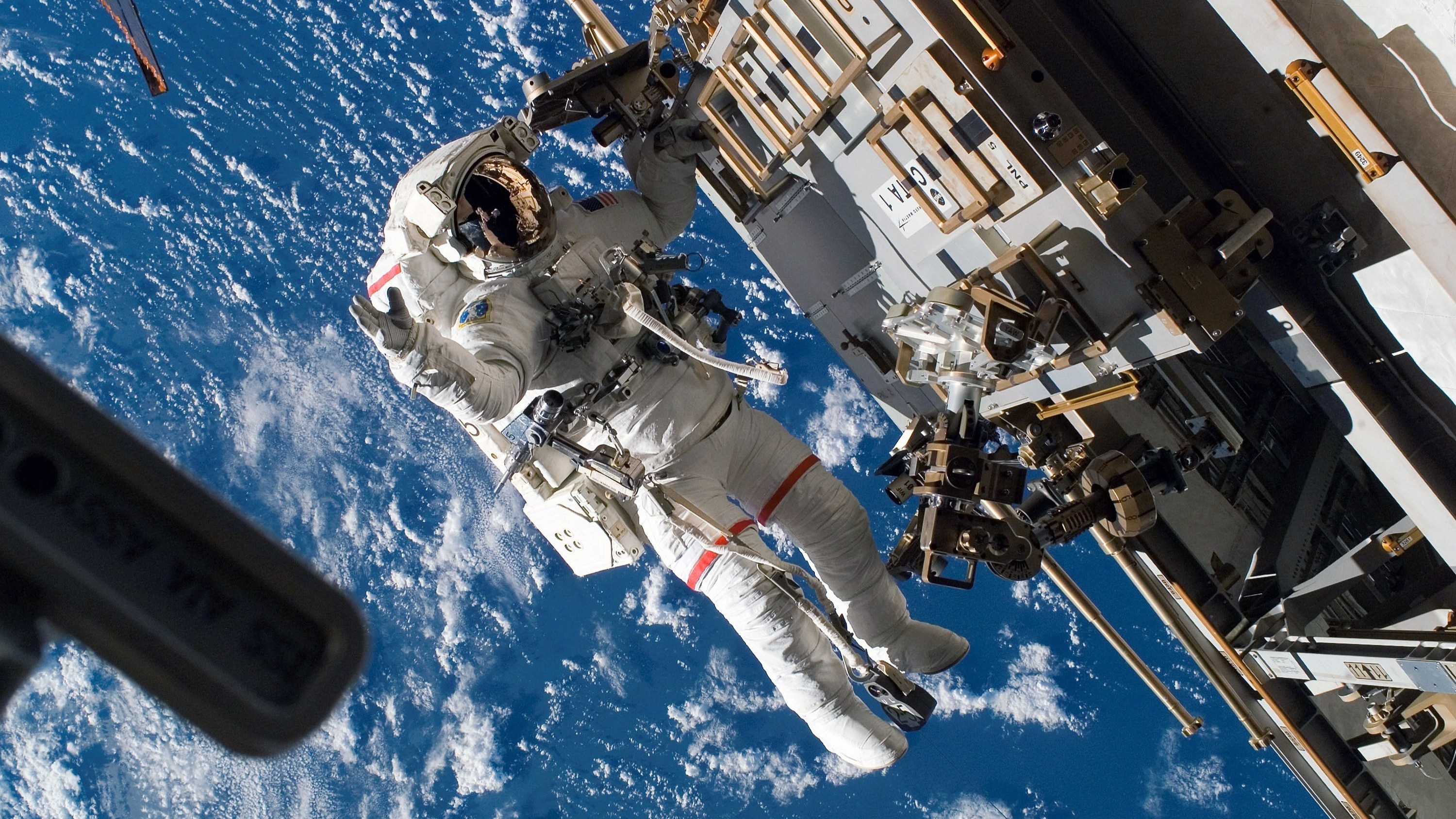 Human stem cells become more active in space — and that's not a good thing
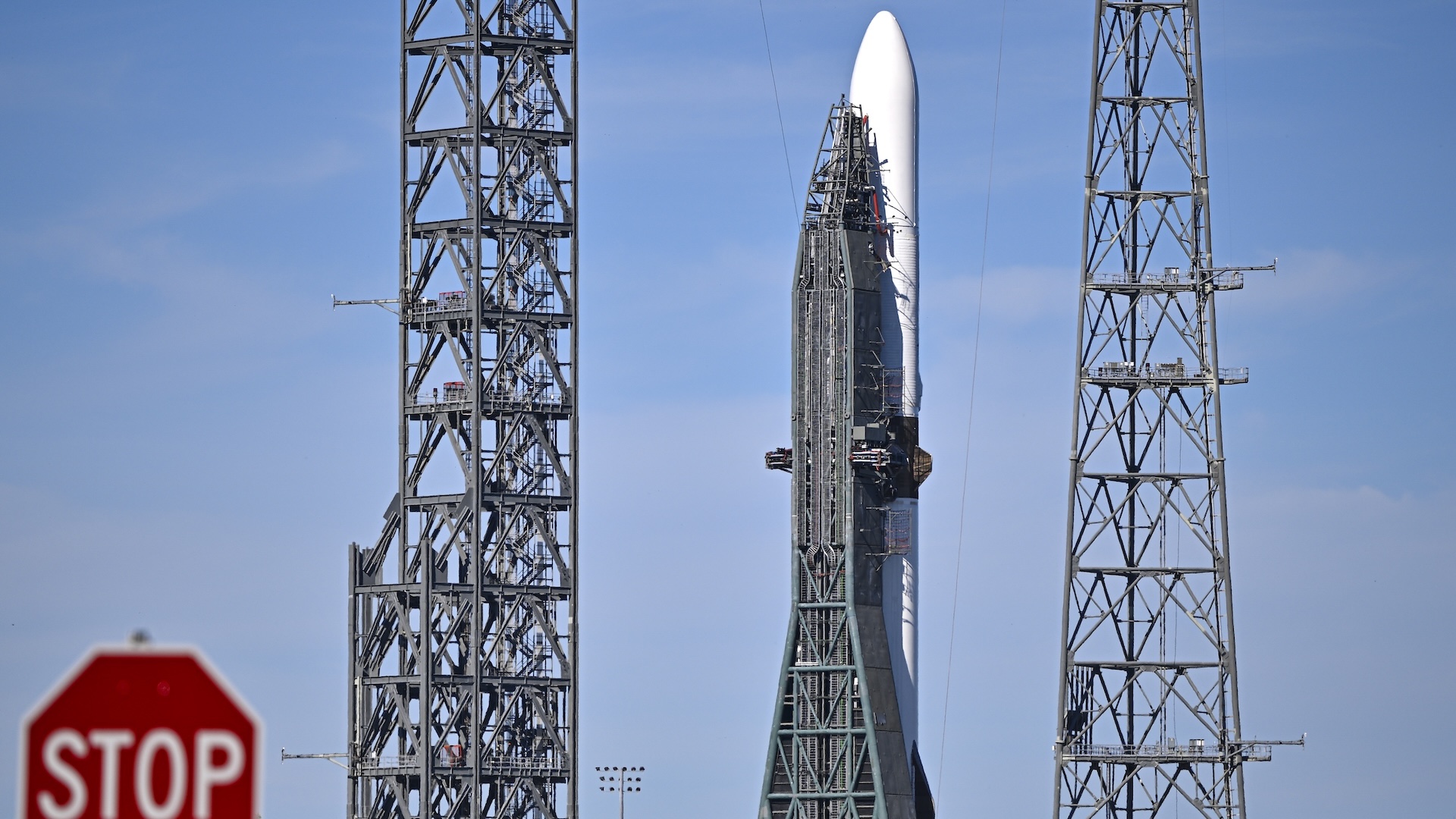 Blue Origin New Glenn rocket: New launch window for historic Mars mission after solar storm delay
 That was the week in science: Comet 3I/ATLAS glows green | Roman roads | Bear attacks
Latest in Space Exploration
That was the week in science: Comet 3I/ATLAS glows green | Roman roads | Bear attacks
Latest in Space Exploration
 Marooned no more! Stranded Chinese astronauts finally have a way home following launch of unmanned 'lifeboat'
 Secretive SpaceX satellites operated by US government are shooting disruptive radio signals into space, astronomer accidentally discovers
 Three more Chinese astronauts are now stranded in space following successful rescue of their colleagues
 Chinese astronauts are back on Earth after suspected 'space junk' strike left them stranded in space
'Stranded' astronauts aboard Chinese space station are preparing to come home — but no date has been announced
Blue Origin New Glenn rocket: New launch window for historic Mars mission after solar storm delay
Latest in News
Chinese astronauts are back on Earth after suspected 'space junk' strike left them stranded in space
'Stranded' astronauts aboard Chinese space station are preparing to come home — but no date has been announced
Blue Origin New Glenn rocket: New launch window for historic Mars mission after solar storm delay
Latest in News
 New 3I/ATLAS images show the comet getting active ahead of close encounter with Earth
 Ethereal structure in the sky rivals 'Pillars of Creation' — Space photo of the week
 Unusual, 1,400-year-old cube-shaped human skull unearthed in Mexico
 Strangely bleached rocks on Mars hint that the Red Planet was once a tropical oasis
 Lost Indigenous settlements described by Jamestown colonist John Smith finally found
 2,400-year-old 'sacrificial complex' uncovered in Russia is the richest site of its kind ever discovered
LATEST ARTICLES
2,400-year-old 'sacrificial complex' uncovered in Russia is the richest site of its kind ever discovered
LATEST ARTICLES- 1Lost Indigenous settlements described by Jamestown colonist John Smith finally found
- 2Strangely bleached rocks on Mars hint that the Red Planet was once a tropical oasis
- 32,400-year-old 'sacrificial complex' uncovered in Russia is the richest site of its kind ever discovered
- 4Ethereal structure in the sky rivals 'Pillars of Creation' — Space photo of the week
- 5What was the loudest sound ever recorded?
