- Health
- Viruses, Infections & Disease
The CDC's vaccine committee has voted to roll back a universal recommendation that newborns be vaccinated against hepatitis B, which is one of public health's major success stories.
0 Comments Join the conversationWhen you purchase through links on our site, we may earn an affiliate commission. Here’s how it works.
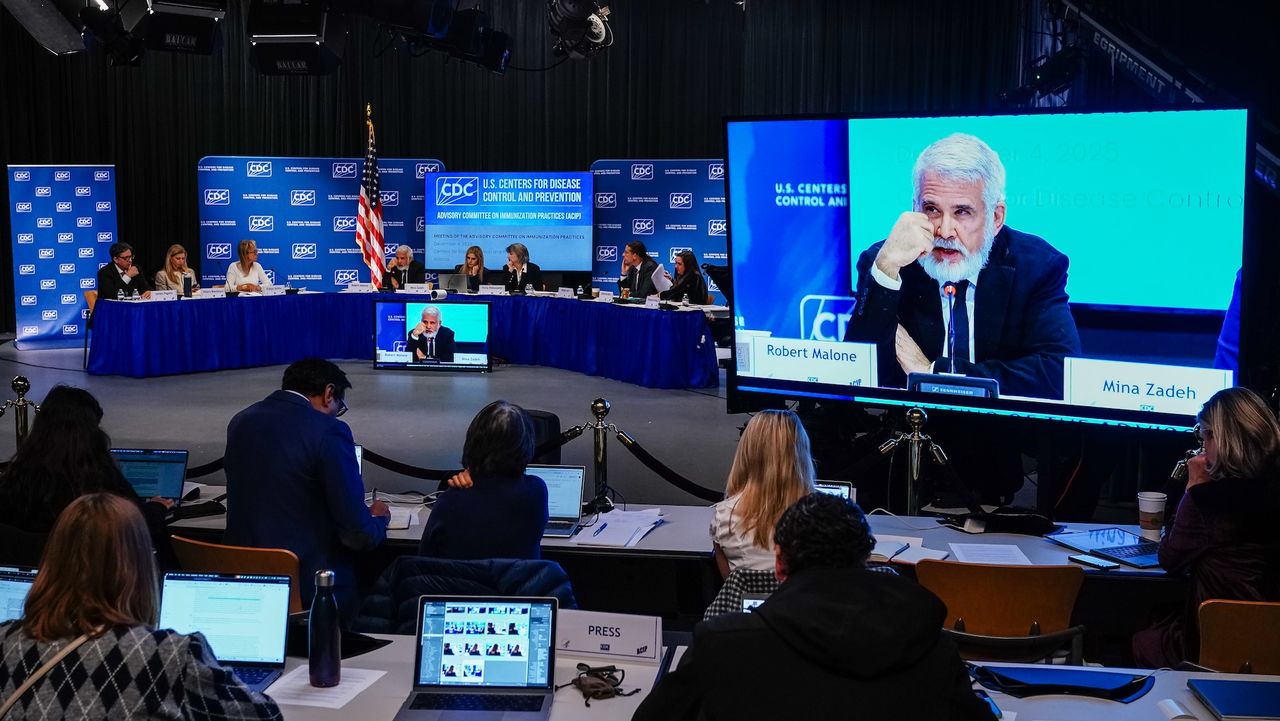
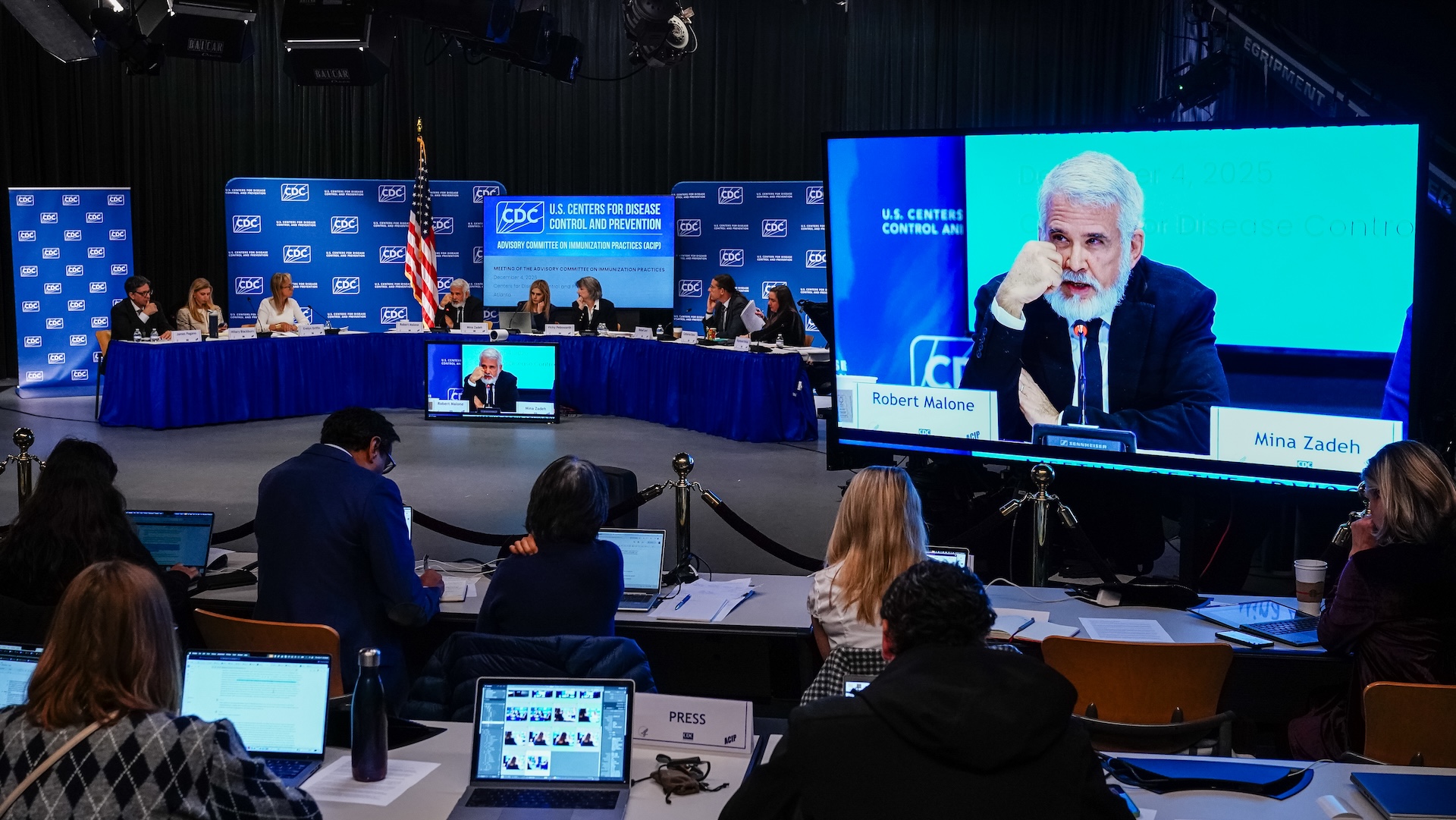 At a chaotic meeting on Friday, ACIP members, including vice chair Dr. Robert Malone, voted against recommending universal newborn hepatitis B vaccination.
(Image credit: Elijah Nouvelage/ Stringer/Getty Images)
At a chaotic meeting on Friday, ACIP members, including vice chair Dr. Robert Malone, voted against recommending universal newborn hepatitis B vaccination.
(Image credit: Elijah Nouvelage/ Stringer/Getty Images)
An influential vaccine advisory committee to the Centers for Disease Control and Prevention (CDC) has voted to eliminate the recommendation for universal vaccination of newborns against the hepatitis B virus (HBV). The committee voted that instead of getting a first dose within 24 hours of birth, children of mothers who test negative for the virus get the vaccine at 2 months of age.
The Advisory Committee on Immunization Practices (ACIP), which steers the CDC's vaccine policy, was recently overhauled by Health and Human Services Secretary Robert F. Kennedy Jr. Its members now include prominent vaccine skeptics who have sown doubt in the established childhood vaccine schedule.
You may like-
 The US is on track to lose its measles elimination status in months. RFK needs to go.
-
 'Health impacts are being felt in real time': How the CDC is being decimated by the Trump administration
-
 Who is eligible for this year's COVID vaccine? Everything you need to know
The proposed changes have been widely criticized by medical associations, including the American Academy of Pediatrics.
"No rational science has been presented" to support the new recommendations, Dr. Joseph Hibbeln, ACIP committee member and former Chief of the Section on Nutritional Neurosciences at the National Institutes of Health, said in the meeting.
"This has a great potential to cause harm, and I simply hope that the committee will accept its responsibility when this harm is caused," Hibbeln said in the meeting when the votes were cast.
During its chaotic, multi-day meeting, the committee rolled out four different versions of language, so multiple ACIP members expressed uncertainty as to what they were voting for.
Sign up for the Live Science daily newsletter nowContact me with news and offers from other Future brandsReceive email from us on behalf of our trusted partners or sponsorsBy submitting your information you agree to the Terms & Conditions and Privacy Policy and are aged 16 or over.What is Hepatitis B?
Hepatitis B, a viral infection, can easily go undetected because it doesn't always cause overt symptoms. However, when the infection becomes chronic, it can cause liver damage and raise the risk of liver cancer. The infections contribute to about one-third of liver cancer deaths globally.
The permanent infection must be managed with medications for life, and the organ damage can lead people to need liver transplants. Up to 1 in 4 four newborns infected with hepatitis B die prematurely of liver disease as adults.
This chronic form of the disease is especially common among people who are infected as kids. In about 95% of cases, hepatitis B contracted in early childhood becomes chronic, according to the World Health Organization (WHO). That's why the hepatitis B vaccine, first licensed in 1971, has been recommended to newborns in the U.S. since 1991.
You may like-
The US is on track to lose its measles elimination status in months. RFK needs to go.
-
'Health impacts are being felt in real time': How the CDC is being decimated by the Trump administration
-
Who is eligible for this year's COVID vaccine? Everything you need to know
According to the WHO, in countries where the virus is endemic and infects people in high numbers, the most common routes of transmission are from mother to child at the time of birth or from an infected person to an uninfected child in the first five years of the child's life — they can pick the infection up from a biting incident at daycare or from accidentally touching a friend's scraped knee, for instance, as the virus can be spread via contact with small quantities of blood. In the U.S., vaccinating babies at birth heads off these two common routes of transmission.
A second dose of the vaccine was recommended to be given at 1 to 2 months old, and then a third at 6 to 18 months old. This three-dose series in childhood also later protects against the types of transmission that are common in adults, such as unsafe intravenous drug use and sexual activity.
RELATED STORIES—CDC committee votes to change measles vaccine guidance for young children
—'I don't know if CDC will survive, to be quite frank': Former CDC officials describe the disintegration of the agency under RFK
—RFK's handpicked advisers are coming for the childhood vaccine schedule. Here's what to know.
Historically, anti-vaccine advocates have argued that the shot is unnecessary for kids because these latter two routes of transmission presumably aren't relevant to them. As with other vaccines given in early childhood, anti-vaxxers have claimed that the safety of the schedule hasn't been studied — which it has — and that the vaccines cause autism spectrum disorder — which they do not.
The risk-stratified approach of only vaccinating children of mothers known to be positive has been tried in the past and found to be ineffective. In 1990 — when children had started to be vaccinated for hepatitis B but newborn vaccination had yet to be introduced — acute hepatitis B infections affected 3 per 100,000 people ages 19 and under in the U.S. Compare that to 2023, when that rate fell to 0 per 100,000. The rate of chronic infections fell, in turn, with only 0.4 per 100,000 people under 19 diagnosed in 2023.
In the meeting, the committee also voted to recommend that after the first dose, patients should consult with doctors to see whether they should test for certain levels of antibodies against HBV before giving the second and third shots.
 Nicoletta LaneseSocial Links NavigationChannel Editor, Health
Nicoletta Lanese is the health channel editor at Live Science and was previously a news editor and staff writer at the site. She holds a graduate certificate in science communication from UC Santa Cruz and degrees in neuroscience and dance from the University of Florida. Her work has appeared in The Scientist, Science News, the Mercury News, Mongabay and Stanford Medicine Magazine, among other outlets. Based in NYC, she also remains heavily involved in dance and performs in local choreographers' work.
You must confirm your public display name before commenting
Please logout and then login again, you will then be prompted to enter your display name.
Logout Read more The US is on track to lose its measles elimination status in months. RFK needs to go.
 'Health impacts are being felt in real time': How the CDC is being decimated by the Trump administration
 Who is eligible for this year's COVID vaccine? Everything you need to know
 US could lose its measles elimination status within months, experts say
 HPV vaccination drives cervical cancer rates down in both vaccinated and unvaccinated people
 Restrictions on fetal tissue research would threaten progress on breakthrough treatments for devastating diseases — and yet not prevent a single abortion
Latest in Viruses, Infections & Disease
Restrictions on fetal tissue research would threaten progress on breakthrough treatments for devastating diseases — and yet not prevent a single abortion
Latest in Viruses, Infections & Disease
 Science history: Female chemist initially barred from research helps helps develop drug for remarkable-but-short-lived recovery in children with leukemia — Dec. 6, 1954
 A woman got a rare parasitic lung infection after eating raw frogs
 A 'functional cure' for HIV may be in reach, early trials suggest
US could lose its measles elimination status within months, experts say
The US is on track to lose its measles elimination status in months. RFK needs to go.
A 'functional cure' for HIV may be in reach, early trials suggest
US could lose its measles elimination status within months, experts say
The US is on track to lose its measles elimination status in months. RFK needs to go.
 High-fiber diet may 'rejuvenate' immune cells that fight cancer, study finds
Latest in News
High-fiber diet may 'rejuvenate' immune cells that fight cancer, study finds
Latest in News
 New 3I/ATLAS images show the comet getting active ahead of close encounter with Earth
 Ethereal structure in the sky rivals 'Pillars of Creation' — Space photo of the week
 Unusual, 1,400-year-old cube-shaped human skull unearthed in Mexico
 Strangely bleached rocks on Mars hint that the Red Planet was once a tropical oasis
 Lost Indigenous settlements described by Jamestown colonist John Smith finally found
 2,400-year-old 'sacrificial complex' uncovered in Russia is the richest site of its kind ever discovered
LATEST ARTICLES
2,400-year-old 'sacrificial complex' uncovered in Russia is the richest site of its kind ever discovered
LATEST ARTICLES- 1Lost Indigenous settlements described by Jamestown colonist John Smith finally found
- 2Strangely bleached rocks on Mars hint that the Red Planet was once a tropical oasis
- 32,400-year-old 'sacrificial complex' uncovered in Russia is the richest site of its kind ever discovered
- 4Ethereal structure in the sky rivals 'Pillars of Creation' — Space photo of the week
- 5What was the loudest sound ever recorded?
