
- Planet Earth
- Geology
A 2023 astronaut photo shows three dark hills, or mesas, towering above part of the Sahara desert in southern Mauritania. The structures are remnants of a single Paleozoic era formation, and have helped to create a series of striking sand dunes.
0 Comments Join the conversationWhen you purchase through links on our site, we may earn an affiliate commission. Here’s how it works.
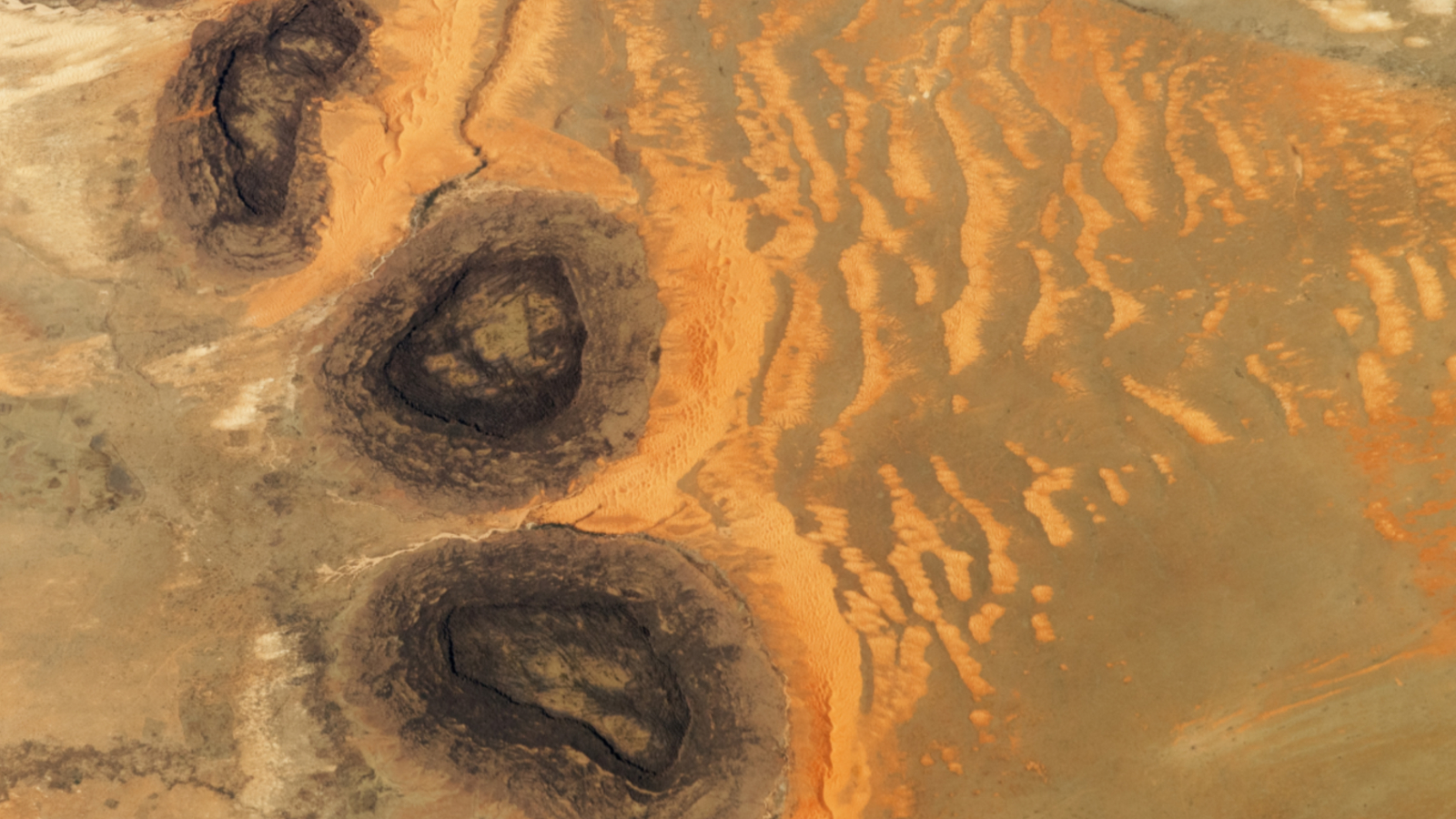 This trio of dark, flat-topped hills, or mesas, were photographed by an astronaut in 2023, along with a rippling tail of sand dunes.
(Image credit: NASA/ISS program)
QUICK FACTS
This trio of dark, flat-topped hills, or mesas, were photographed by an astronaut in 2023, along with a rippling tail of sand dunes.
(Image credit: NASA/ISS program)
QUICK FACTSWhere is it? Guérou, Mauritania [16.930575400, -11.759622605]
What's in the photo? Three black mesas surrounded by unusual sand dunes in the Sahara Desert
Who took the photo? An unnamed astronaut onboard the International Space Station (ISS)
When was it taken? May 3, 2023
This intriguing astronaut photo shows a trio of ancient "black mesas", which sit side-by-side in the Sahara desert. The dark structures have enabled a series of rare sand dunes to form around them while also creating a surprising "dune-free zone."
The dark color of these circular hills is the result of "rock varnish" — a black, clay-based coating, rich in manganese and iron oxides, that forms on exposed and arid rocks over thousands of years, according to NASA's Earth Observatory. This coating was likely partly fixed in place by microorganisms and is made up of multiple micrometer-thick laminations, according to Science Direct.
You may like-
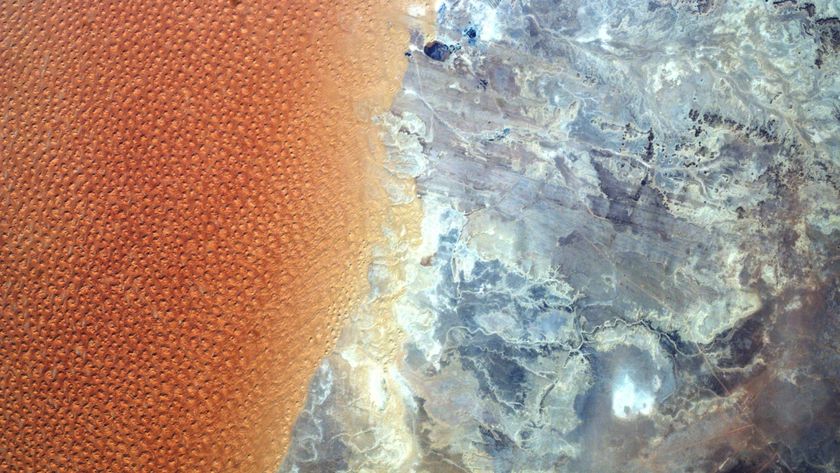 Sea of Saharan 'star dunes' clashes with otherworldly terrain where 2 countries meet
-
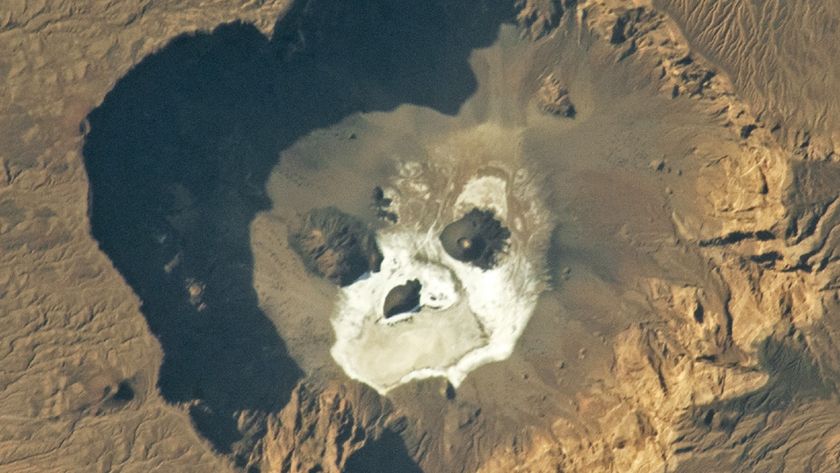 Glowering 'skull' stares upward from a giant volcanic pit in the Sahara
-
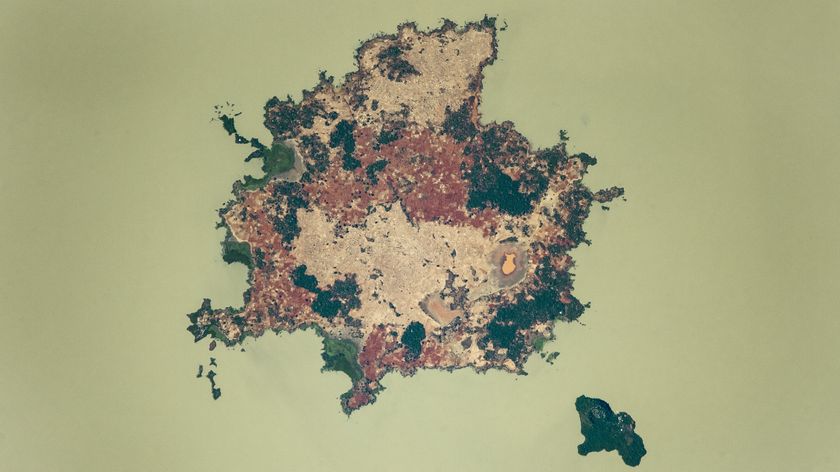 Pair of 'holy' islands in eerily green African lake hold centuries-old relics and mummified emperors
To the west of the mesas (on the left of the photo) is a barren rocky plain with a surprising lack of sand dunes. But to the east of the flattened hills, you can see several sizable dunes that are seemingly flowing away from the black rocks like a rippling tail.
There are two main types of sand dunes visible in the image. The first type are rare "climbing dunes," which are the larger, ridge-like piles of sand that have piled up along the mesas' eastern walls. The second type are "barchan dunes," which are more common and make up the mesas' stripy tail. In both cases, the dunes have a distinctive reddish-yellow hue.
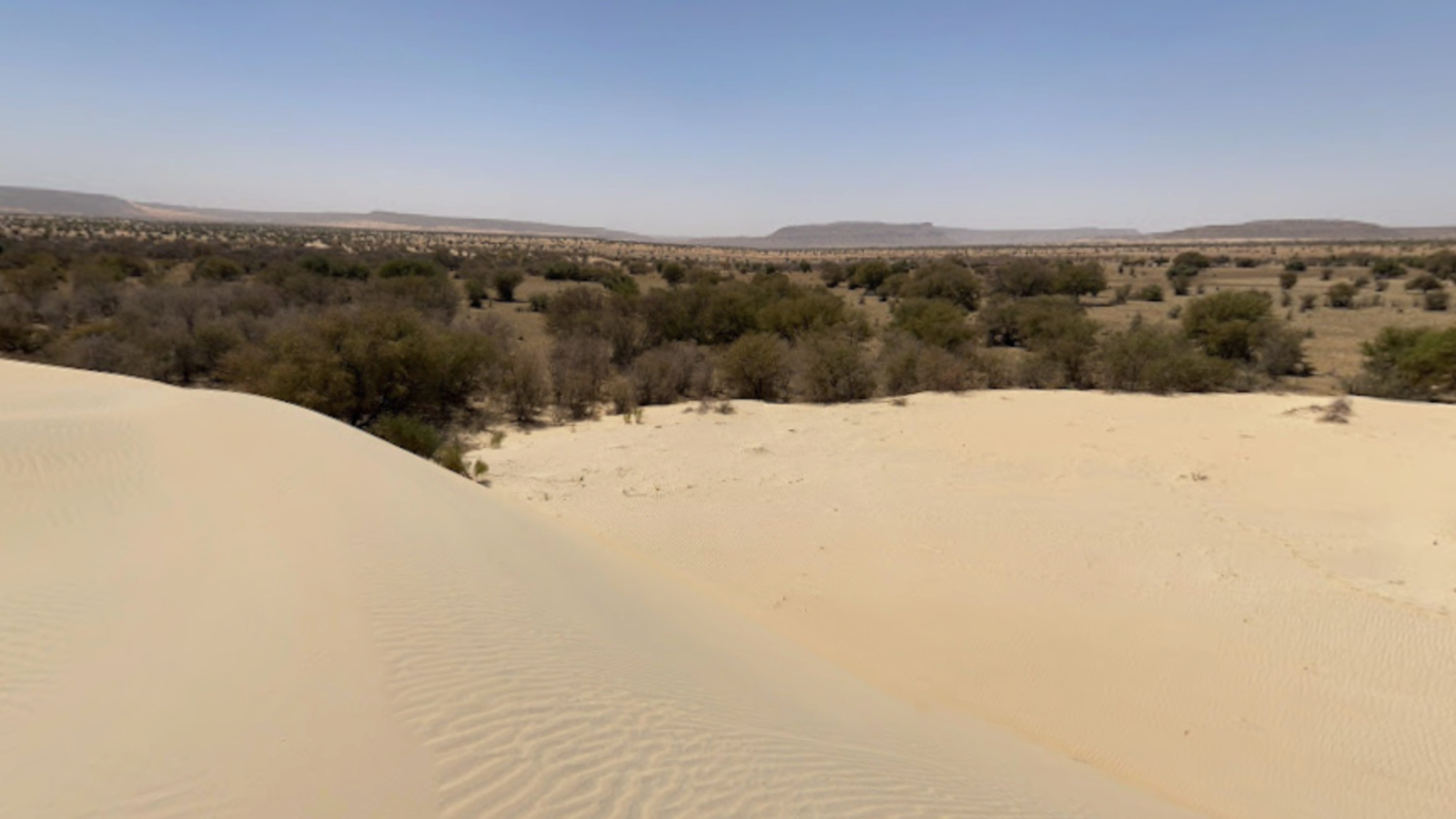
The sand dunes only form on the eastern side of the mesas because the wind predominantly blows from that direction, carrying sand that then gets caught on the sloped elevations surrounding the black rocks.
Sand does not accumulate to the west of the mesas because of a phenomenon known as "wind scour," which results from superfast vortices within the wind that gets squeezed in between the mesas, which blow sand away from the flattened hills, according to the Earth Observatory.
Sign up for the Live Science daily newsletter nowContact me with news and offers from other Future brandsReceive email from us on behalf of our trusted partners or sponsorsBy submitting your information you agree to the Terms & Conditions and Privacy Policy and are aged 16 or over.Another astronaut photo, taken in 2014, shows this odd effect over a larger area (see below). In this shot, you can see the barchan dunes extend much further away from the mesas in the photo, as well as another larger mesa further east.
During the Paleozoic era, which lasted from 541 million to 251.9 million years ago, all these mesas were likely part of a single massive rock formation that has since been broken up by millennia of water and wind erosion, according to the Earth Observatory.
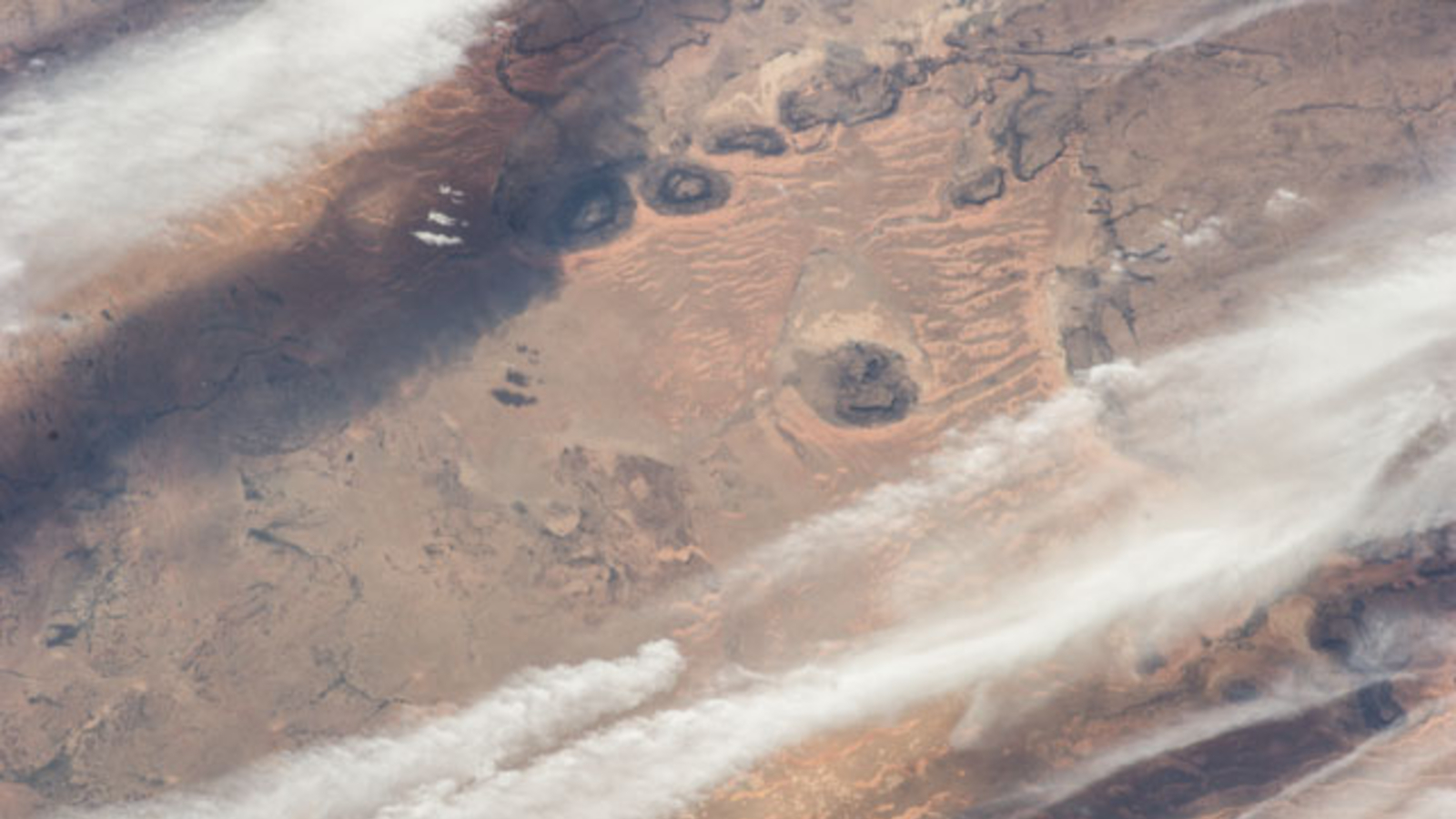
This formation may have been similar to the Richat Structure — a massive set of concentric rings of rock, also known as the "Eye of the Sahara," which is located in Mauritania around 285 miles (460 km) north of Guérou.
MORE EARTH FROM SPACE—Wandering sand dunes circle gigantic 'eye' sculpted by ancient city-killer meteor in the Sahara
—Near-lifeless 'Land of Terror' looks like an alien landscape in the Sahara
—Giant, pyramid-like 'star dunes' slowly wander across Moroccan desert
Mesas can be found across the globe but there is a particularly high concentration of them in the Sahara, as well as throughout parts of the U.S., such as Colorado, New Mexico, Utah, and Arizona, according to the National Park Service.
Elsewhere in the solar system, mesas are a prominent geological feature on Mars, having been carved out of the Red Planet by billions of years of wind erosion, according to Live Science's sister site Space.com.
For more incredible satellite photos and astronaut images, check out our Earth from space archives.
TOPICS Earth from space sahara desert Harry BakerSocial Links NavigationSenior Staff Writer
Harry is a U.K.-based senior staff writer at Live Science. He studied marine biology at the University of Exeter before training to become a journalist. He covers a wide range of topics including space exploration, planetary science, space weather, climate change, animal behavior and paleontology. His recent work on the solar maximum won "best space submission" at the 2024 Aerospace Media Awards and was shortlisted in the "top scoop" category at the NCTJ Awards for Excellence in 2023. He also writes Live Science's weekly Earth from space series.
You must confirm your public display name before commenting
Please logout and then login again, you will then be prompted to enter your display name.
Logout Read more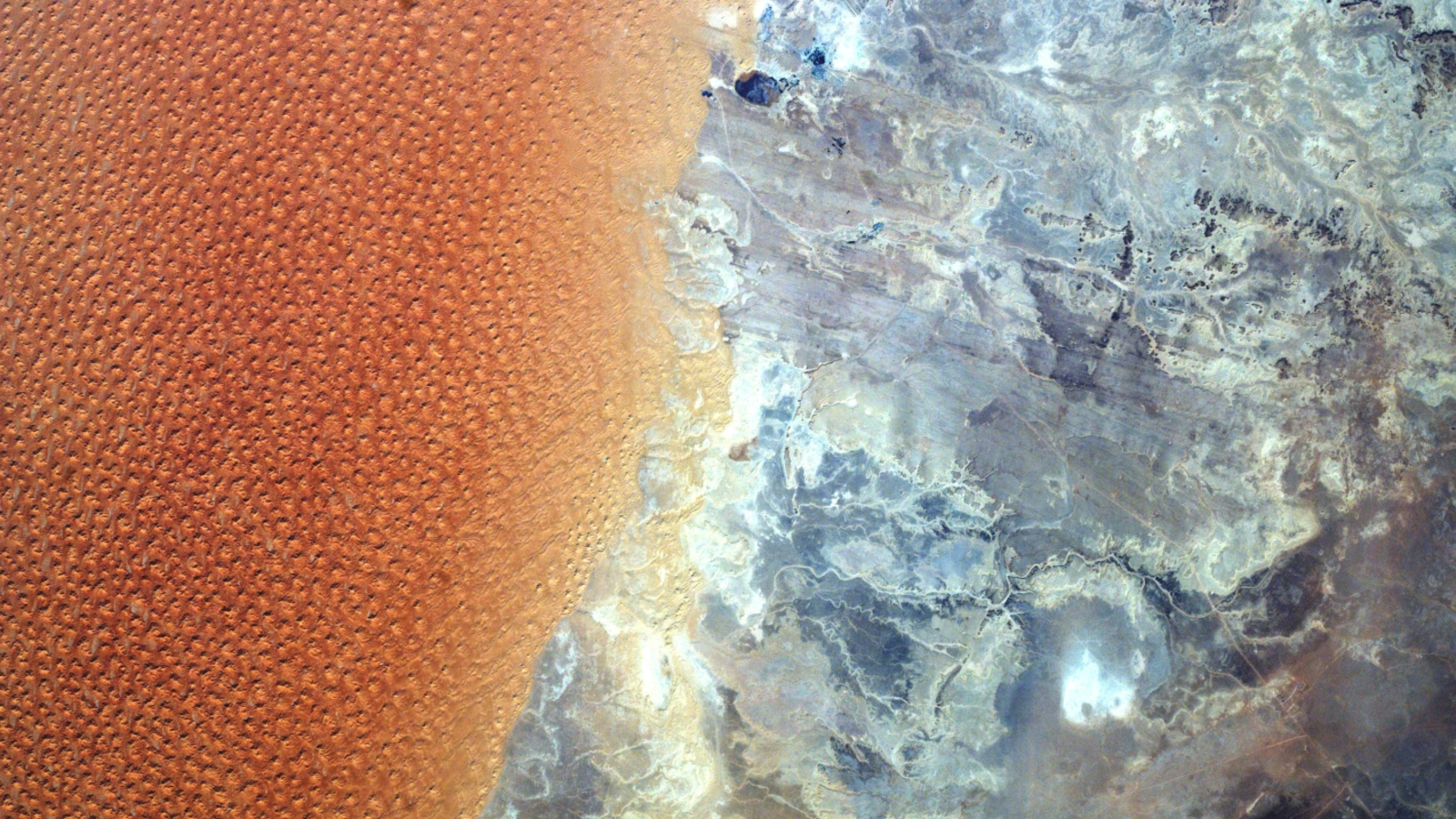 Sea of Saharan 'star dunes' clashes with otherworldly terrain where 2 countries meet
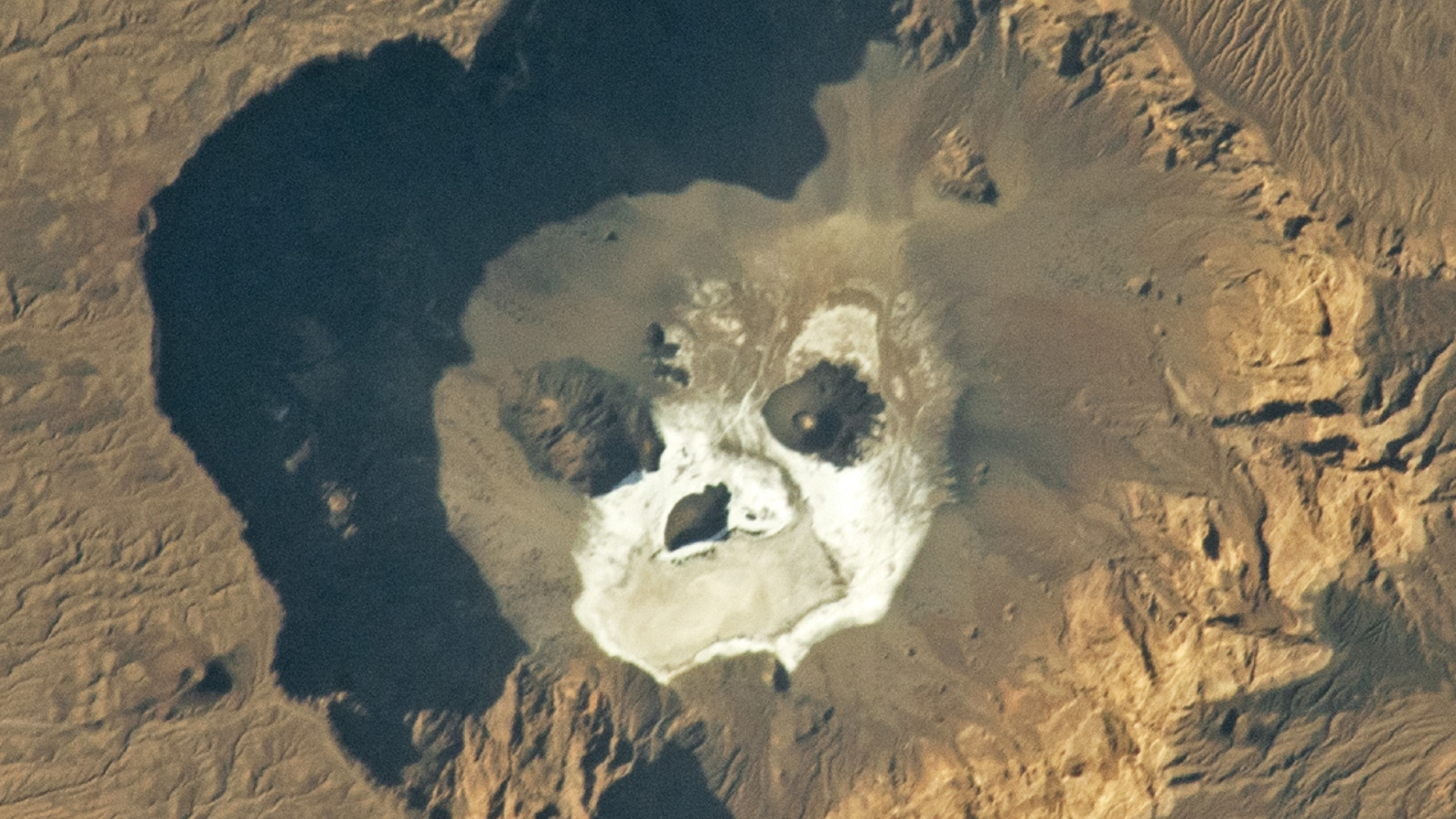 Glowering 'skull' stares upward from a giant volcanic pit in the Sahara
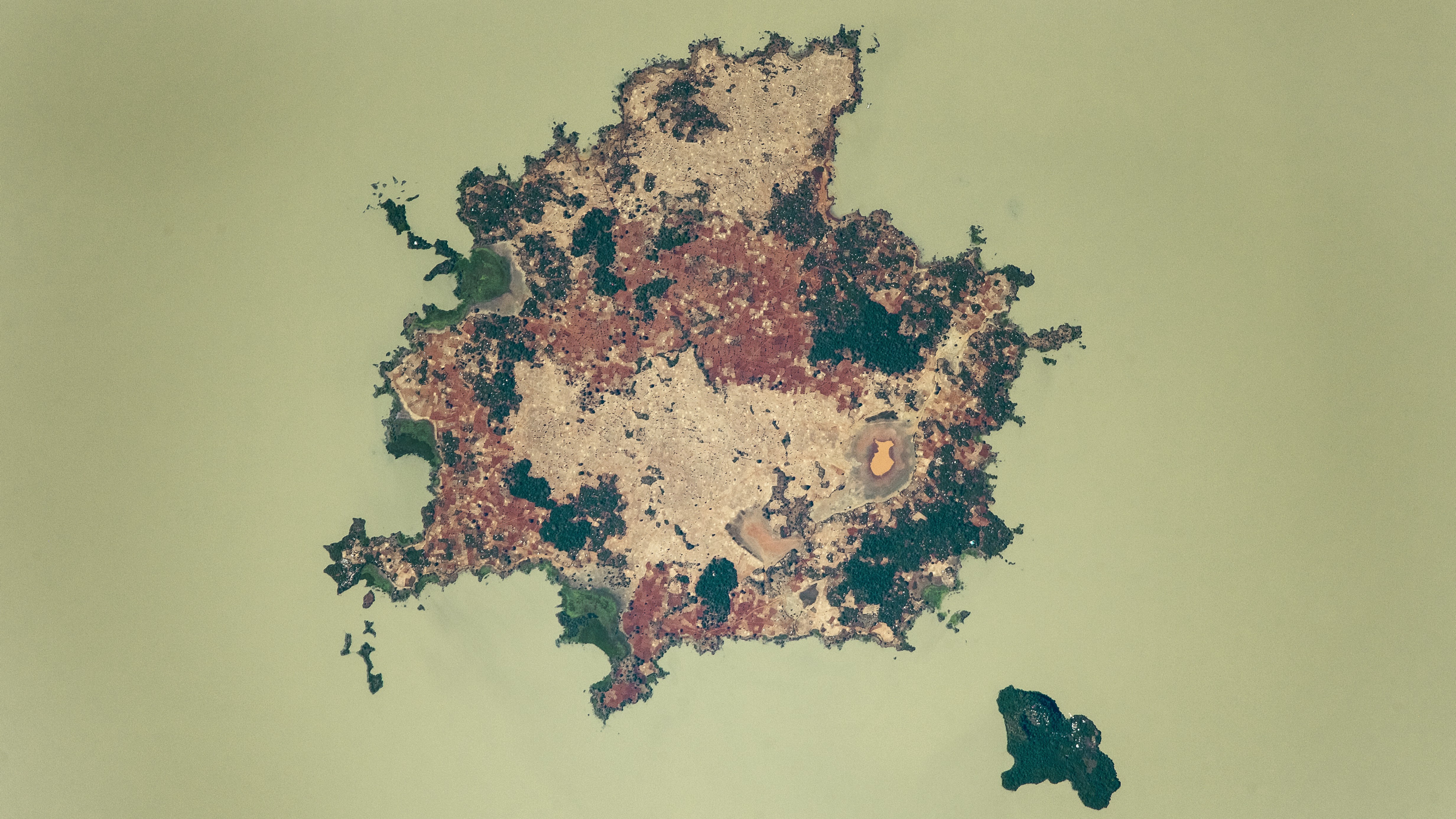 Pair of 'holy' islands in eerily green African lake hold centuries-old relics and mummified emperors
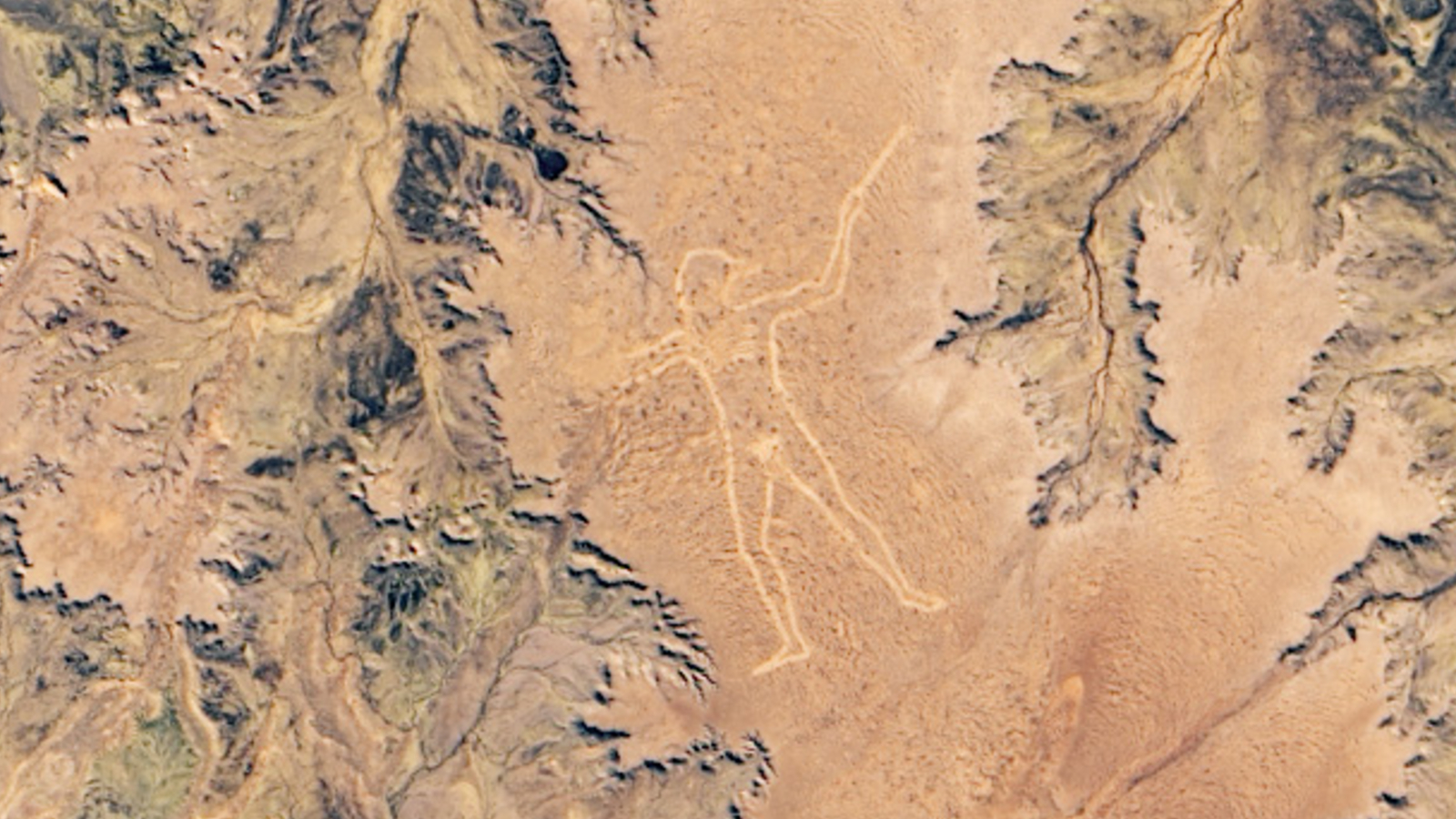 2-mile-tall, naked 'Marree Man' looming over Australian outback is a total mystery
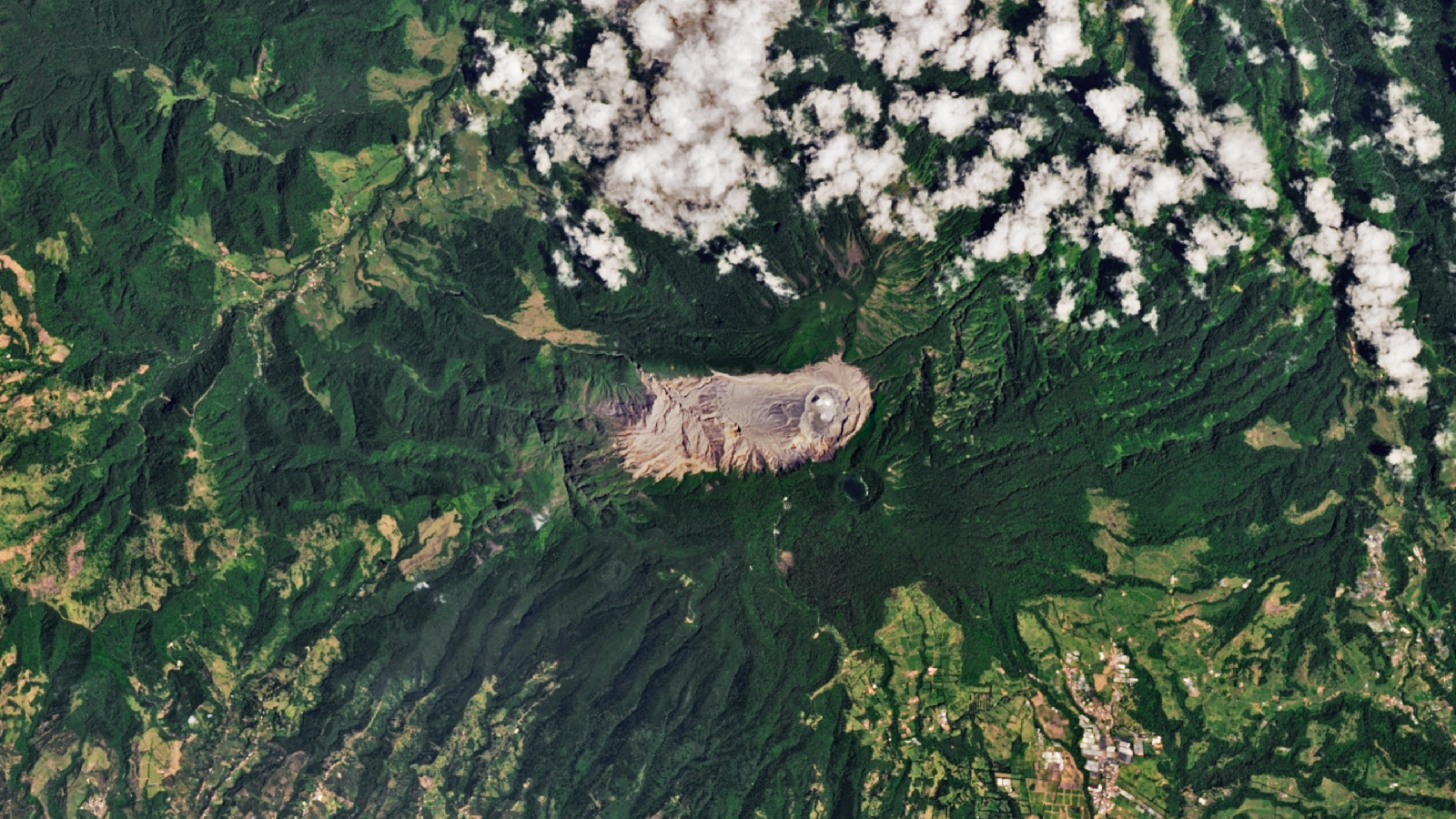 Extreme 'paradise' volcano in Costa Rica is like a piece of ancient Mars on our doorstep
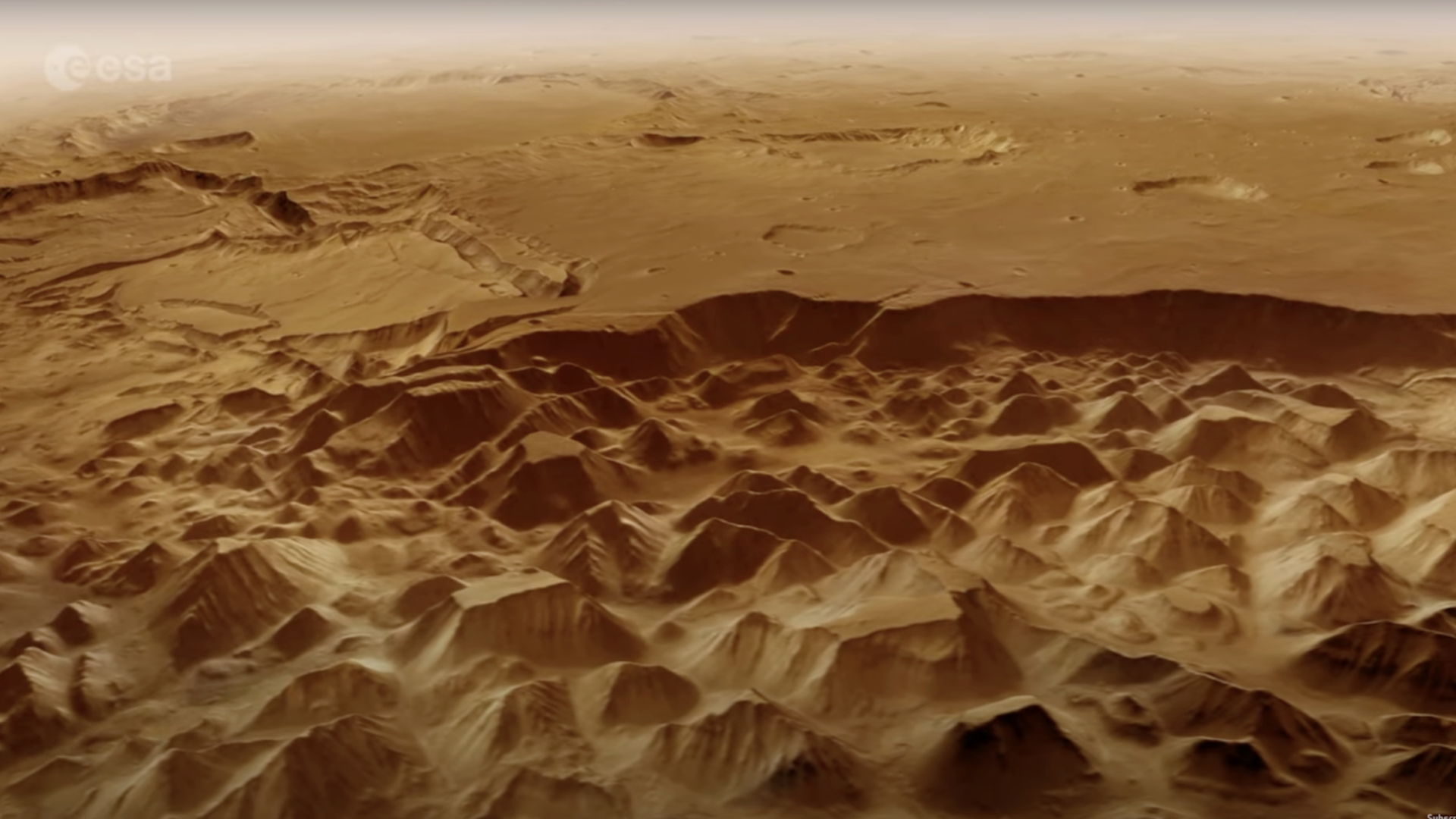 Soar through a 1,000-mile-long maze on Mars in this mesmerizing new satellite video
Latest in Geology
Soar through a 1,000-mile-long maze on Mars in this mesmerizing new satellite video
Latest in Geology
 Sistema Ox Bel Ha: A vast hidden system that's the longest underwater cave in the world
 A gulf separating Africa and Asia is still pulling apart — 5 million years after scientists thought it had stopped
 Parts of Arizona are being sucked dry, with areas of land sinking 6 inches per year, satellite data reveals
 Breakup of ancient supercontinent Nuna created 'incubators' for complex life, study finds
 A huge helium shortage is looming — but ancient rocks in Earth's crust may be hiding massive reservoirs
 Triple Divide Peak: Montana's unique liquid 'crossroads' where water can flow into three oceans
Latest in Features
Triple Divide Peak: Montana's unique liquid 'crossroads' where water can flow into three oceans
Latest in Features
 Science history: Female chemist initially barred from research helps helps develop drug for remarkable-but-short-lived recovery in children with leukemia — Dec. 6, 1954
 A woman got a rare parasitic lung infection after eating raw frogs
 Science history: Computer scientist lays out 'Moore's law,' guiding chip design for a half century — Dec. 2, 1964
 'Intelligence comes at a price, and for many species, the benefits just aren't worth it': A neuroscientist's take on how human intellect evolved
 Scientists map the shape of a supernova for the first time ever: Space photo of the week
Trio of 'black mesas' leftover from Paleozoic era spawn rare sand dunes in the Sahara
LATEST ARTICLES
Scientists map the shape of a supernova for the first time ever: Space photo of the week
Trio of 'black mesas' leftover from Paleozoic era spawn rare sand dunes in the Sahara
LATEST ARTICLES- 1Science history: Female chemist initially barred from research helps helps develop drug for remarkable-but-short-lived recovery in children with leukemia — Dec. 6, 1954
- 2Science news this week: A human population isolated for 100,000 years, the biggest spinning structure in the universe, and a pit full of skulls
- 3CDC panel, stuffed with vaccine skeptics, votes to end recommendation for universal newborn hepatitis B vaccination
- 4Giant sunspot on par with the one that birthed the Carrington Event has appeared on the sun — and it's pointed right at Earth
- 5A huge helium shortage is looming — but ancient rocks in Earth's crust may be hiding massive reservoirs