
Calgarians are unpacking the city’s newly approved budget for next year, with advocates celebrating spending boosts for transit, safety and infrastructure, while others are questioning council’s use of reserves to pay for it.

Council approved the 2026 budget Wednesday with a 1.64 per cent property tax increase, down from the originally proposed 3.6 per cent hike.
The move is expected to cost the typical residential homeowner an additional $4.50 in property taxes, for a total of $9.79 extra per month when combined with a $5.29 monthly increase in waste and recycling fees, as well as water utilities. Originally, the budget would’ve cost residents an extra $13.11 in property taxes alone.
“Most Calgarians seem pretty reasonable,” Calgarian Christina Maluta told Global News. “It should be something that should be absorbed in a family’s budget pretty easily.”
Next year’s budget is the final year in a four-year spending plan approved by the previous city council, but overhauled by the newly-elected council.
Story continues below advertisementTo reduce the property tax increase, council tapped into $50 million of investment income to help pay for city operations and cancelled the previously scheduled property tax shift from businesses to homes.
The Calgary Chamber of Commerce commended council’s decision to reduce the property tax increase while investing in “critical services” like transit and public safety.
However, Chamber president Deborah Yedlin is questioning council’s use of upwards of $90 million from reserves to cover one-time initiatives.
More on Calgary More videos- Calgary residents worried new McDonalds will affect ‘congestion, crime, safety’
- Calgary’s GlobalFest pauses ticket sales as affordability, politics squeeze festivals
- Calgary police issue warning about impaired driving during holiday season
- No charges will be laid against civilian pilot who violated G7 airspace during summit
-
![]() ‘Titanic was sinking,’ Ford says he was aware of Algoma Steel layoffs before 100M loan
‘Titanic was sinking,’ Ford says he was aware of Algoma Steel layoffs before 100M loan
-
![]() Tentative deal between Canada Post and union
Tentative deal between Canada Post and union
-
![]() Air Transat pilots vote to strike if contract talks fail
Air Transat pilots vote to strike if contract talks fail
-
![]() Search for possible base jumper ties up resources
Search for possible base jumper ties up resources
 ‘Titanic was sinking,’ Ford says he was aware of Algoma Steel layoffs before 100M loan
 Tentative deal between Canada Post and union
 Air Transat pilots vote to strike if contract talks fail
 Search for possible base jumper ties up resources
“Getting into reserve funds and using investment income is not sustainable longer term,” Yedlin told Global News. “If you keep relying on those funds, at some point they’re not there.
“At the same time, they’re expecting the market to return that level of returns so you can continue to withdraw throughout the year. None of that is guaranteed.”
Yedlin also took issue with city council cancelling a planned one per cent tax shift from businesses onto residents to reduce the ratio that businesses pay in property tax compared to homeowners. If that ratio hits 5:1, the provincial government is legislated to intervene.
According to city administration, the forecasted ratio without the shift is 4.60:1 in 2026.
Yedlin said cancelling the tax shift would cost the typical business an extra $2,100.
Story continues below advertisementInstead, city council approved a motion to introduce an annual shift of 0.25 per cent of the tax burden from businesses to residents over eight years, starting in 2027.

Get breaking National news
For news impacting Canada and around the world, sign up for breaking news alerts delivered directly to you when they happen. Sign up for breaking National newsletter Sign Up By providing your email address, you have read and agree to Global News' Terms and Conditions and Privacy Policy.“It’s not going to make a meaningful difference, it’s really not,” Yedlin said. “Let’s do something deliberate and bold and continue to be a city that is attractive from a business standpoint.”
On Thursday, Calgary’s mayor defended council’s cancellation of the tax shift, as well as the use of reserves and investment income.
“We’ve taken a very cautious and prudent approach,” Mayor Jeromy Farkas told reporters. “We’ve continued to maintain a very healthy balance sheet that outpaces practically every other major city in Canada.”
According to the city, council boosted public safety investments by $94 million in 2026 to cover new police officers, the replacement of aging police vehicles, a transit safety pilot project, and additional vehicles and staff for the Calgary Fire Department.
 2:05
Calgary city council approves 2026 budget with slashed 1.64% property tax increase
2:05
Calgary city council approves 2026 budget with slashed 1.64% property tax increase
The Calgary Firefighters’ Association, the union representing city firefighters, took to social media to thank council for “a non-partisan, fiscally responsible decision,” while the Calgary Police Service said the adjustments “strengthen front line capacity, fund lifecycle upgrades, and advance transparent policing.”
Story continues below advertisementCalgary Transit received a $76 million funding boost to improve frequency across the system, purchase new buses, and expand funding for the low-income transit pass program.
Calgary Transit Riders, a local advocacy group, applauded the increased funding despite council approving a hike in transit fares across the board to generate an additional $4 million in revenue.
“We understand it,” said Alex Williams, the chair of Calgary Transit Riders, “We were just glad, for the people who can’t pay that $4 fare, that we’re still able to have that low income transit pass to make sure everybody is able to ride transit and get around the city.”
Trending Now-
![]() Trump says he’s open to letting CUSMA expire
Trump says he’s open to letting CUSMA expire
-
![]() Canada’s federal income tax brackets are changing in 2026
Canada’s federal income tax brackets are changing in 2026
 Trump says he’s open to letting CUSMA expire
 Canada’s federal income tax brackets are changing in 2026
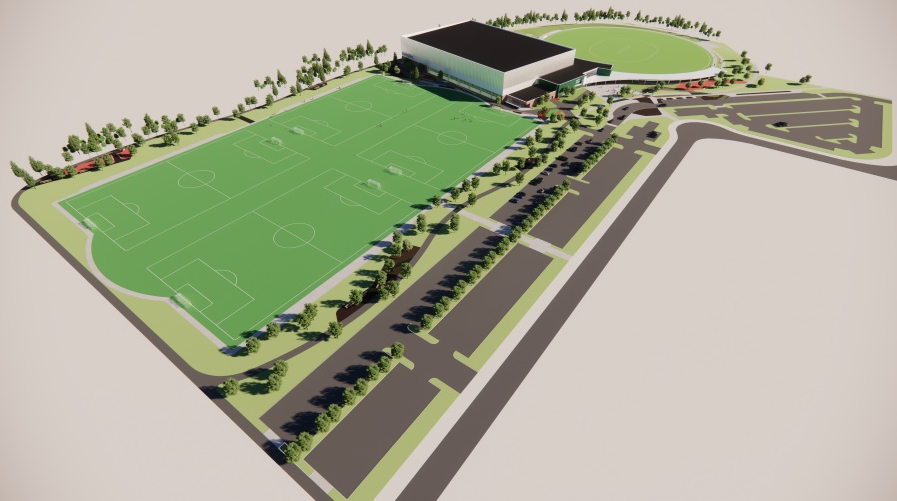
Local cricket leagues are also celebrating next year’s budget, which includes $65 million from reserves to help fund the planned Northeast Athletic Complex.
 View image in full screen
A rendering of the Northeast Athletic Complex.
Courtesy: City of Calgary
View image in full screen
A rendering of the Northeast Athletic Complex.
Courtesy: City of Calgary
The complex, which is still in design, includes four multi-sport turf fields and a fieldhouse which would be home to a first-of-its-kind competition-capable cricket field in Calgary.
Story continues below advertisement“It’ll become a community hub for people to come together through the means of cricket,” said Hamza Tariq with the Future Stars Cricket Academy.
“It’s important for the kids and the next generation to have an opportunity to play on a field that (is) designated for cricket itself.”
Funding for the facility is also welcomed by the Calgary Minor Soccer Association, which also lobbied council during last week’s budget public hearing to inject funding into city recreation and GamePLAN, the city’s investment strategy for recreation.
An additional $28.7 million in reserves was allocated by council for upgrades at a number of facilities across the city.
 View image in full screen
The list of recreation facility upgrades approved by Calgary city council as part of the 2026 budget.
Global News
View image in full screen
The list of recreation facility upgrades approved by Calgary city council as part of the 2026 budget.
Global News
“We’re starting to finally make strides towards creating capacity instead of surviving the shortage,” said Calgary Minor Soccer Association president Carlo Bruno, who has argued there is a growing lack of space and facilities for local sports leagues.
Story continues below advertisementThe property tax increase will be finalized in the spring, following city property assessments and the provincial budget, which will include a property tax requisition.
“A big share of the increases in recent years on property taxes have come from the provincial government,” Farkas said.
“We’ve done our work and if the province continues to increase property taxes by double digits, it’s going to be very clear to Calgarians who is responsible.”
According to Farkas, the next four-year budget in 2027 will come after a comprehensive review of spending in each city department to find efficiencies, as well as areas that require more funding.

