- AI Platforms & Assistants
The chipmaker's CEO met with the president and lawmakers
Comments (0) ()When you purchase through links on our site, we may earn an affiliate commission. Here’s how it works.
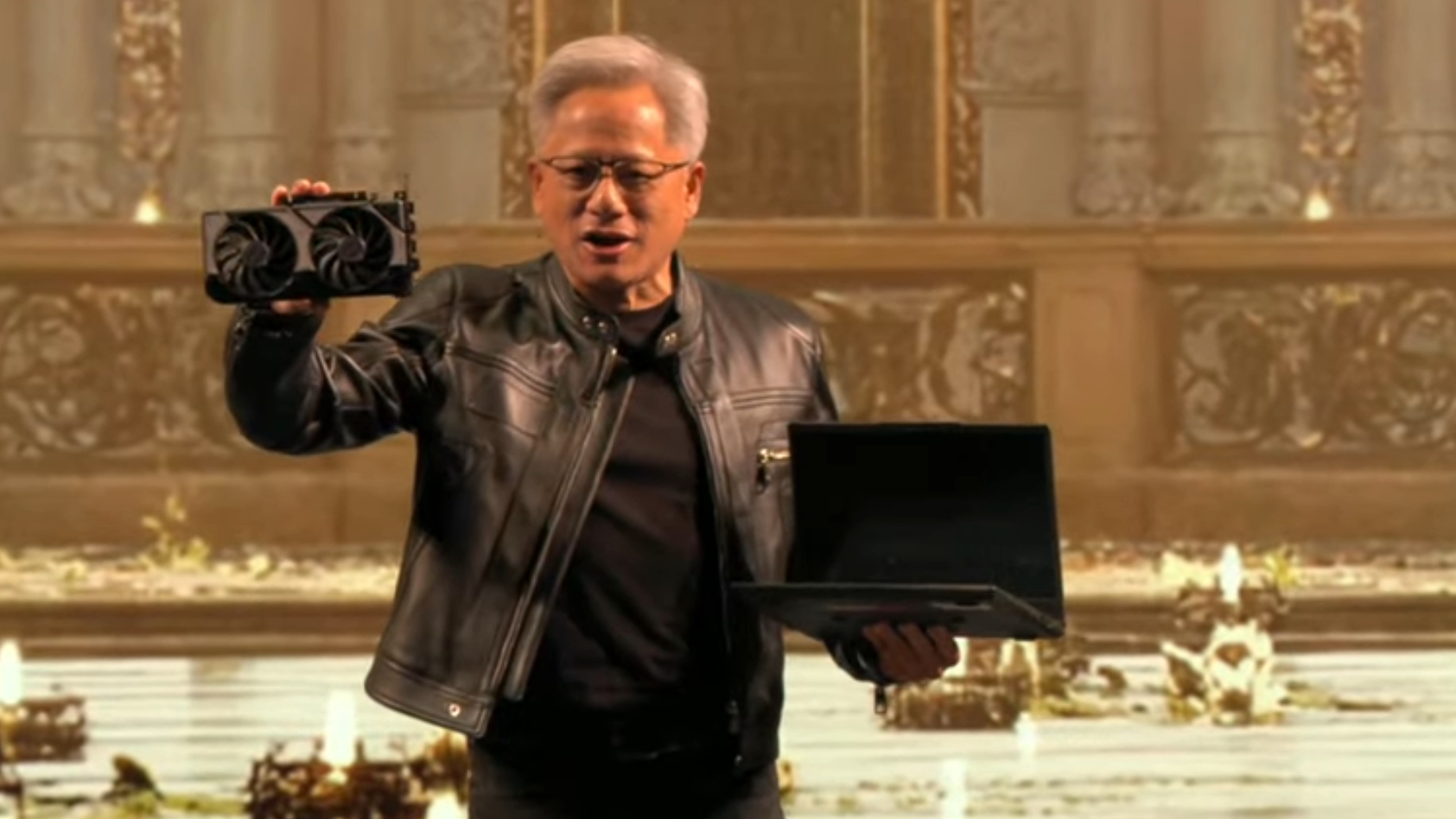 (Image credit: Nvidia)
- Nvidia CEO Jensen Huang met with Donald Trump and criticized the proposed GAIN AI Act's chip export restrictions
- Lawmakers have now dropped the chip export proposal from the annual defense bill
- Huang also warned that state-level AI laws would harm U.S. innovation and national security
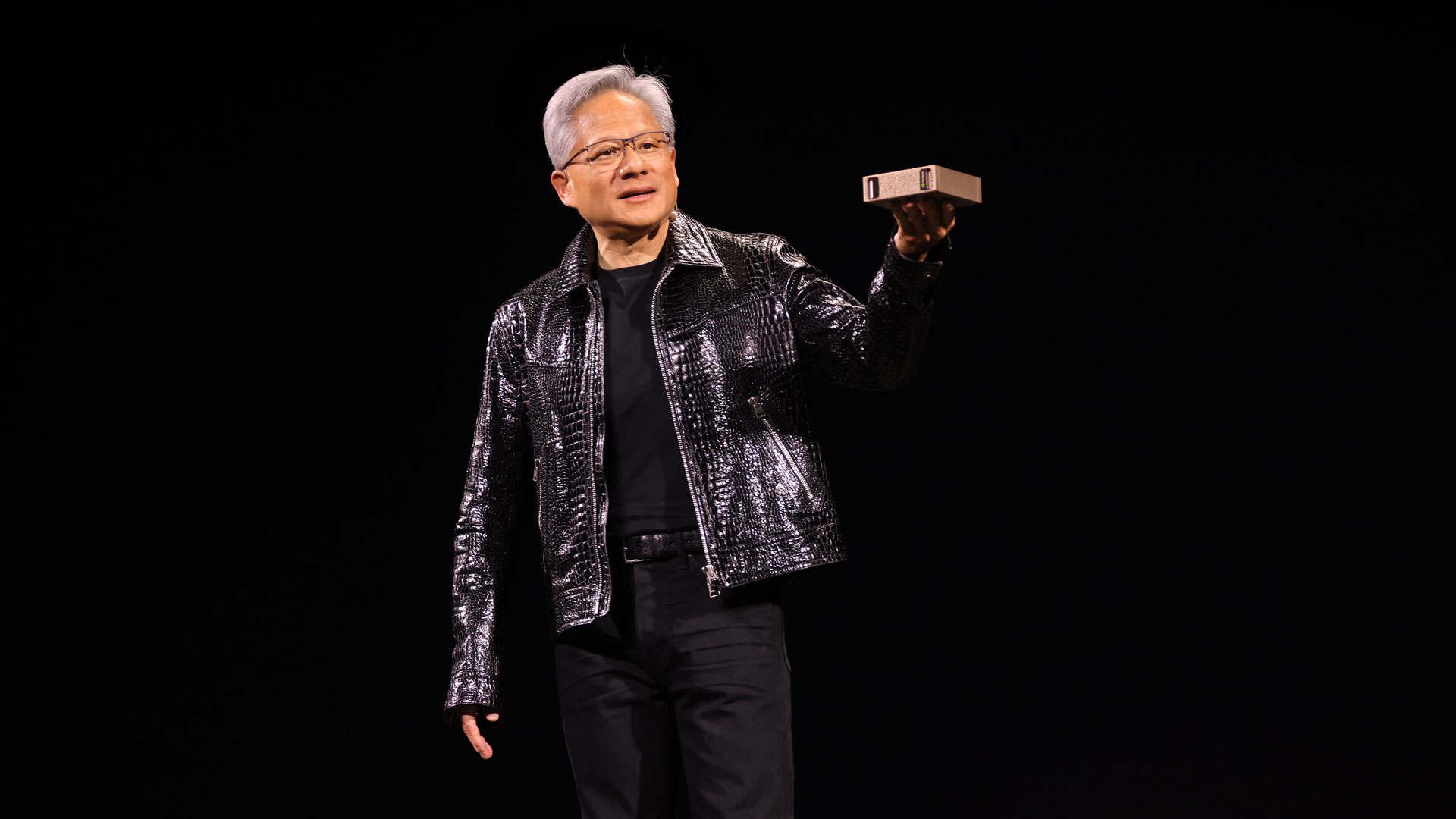
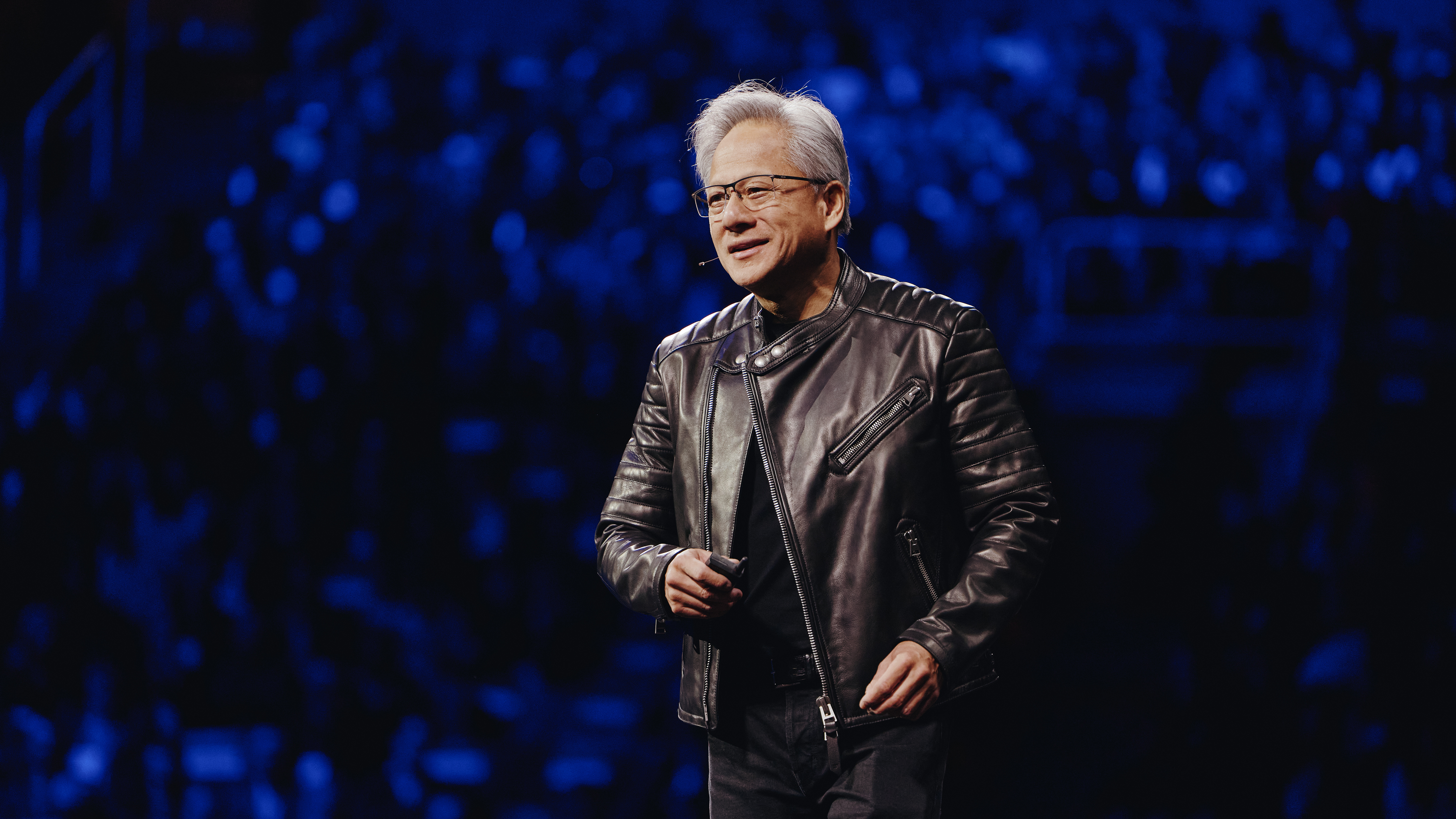
Nvidia CEO Jensen Huang isn’t known for wading into the political fray, but this week, he made an exception with some quality time in Washington, DC. He met with President Trump to argue against the GAIN AI Act and its proposed rule requiring U.S. chipmakers like Nvidia and AMD to prioritize domestic buyers before selling advanced AI chips abroad.
The act was pitched as a way to keep America ahead of China in the AI race, but it was not long after he met with the president that lawmakers removed it from the National Defense Authorization Act. Huang hastened to proclaim his support for export controls, just not this one.
“The GAIN AI Act is even more detrimental to the United States than the AI Diffusion Act,” Huang said in a press conference after the meeting. He called it “wise” that lawmakers are backing away from the plan.
You may like-
 "China is going to win the AI race" - Nvidia CEO Jensen Huang makes bold proclamation, says we all need a little less "cynicism" in our lives
-
 Trump's push to overrule AI regulation falters as Republicans split
-
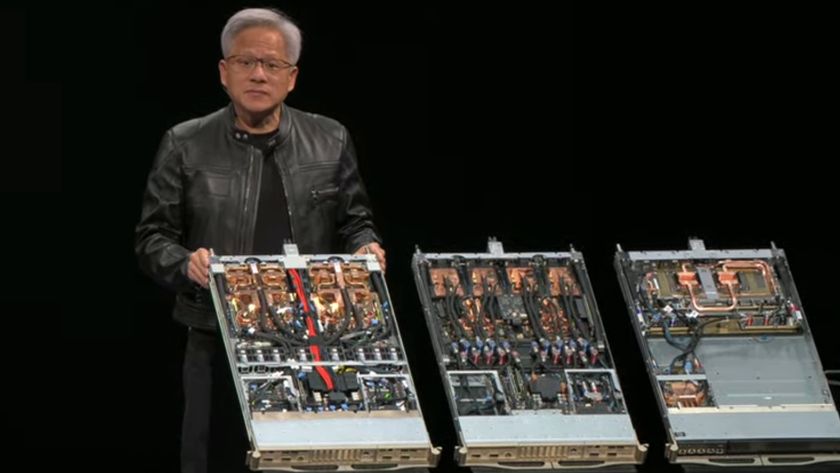 "Our business in China has been a bit of a rollercoaster" - Nvidia CEO “disappointed” in further Chinese ban on buying its AI chips
For Nvidia, which is the undisputed global heavyweight in AI hardware, that kind of disruption would be like asking Boeing to fly with half an engine. Their chips already dominate cloud computing and generative AI development worldwide. Losing the freedom to sell to vetted international customers without a government-imposed queue would erode their edge in a business built on speed and scale.
Though Huang gave his corporate lobbying a patriotic veneer, he did point to more than just Nvidia’s bottom line as a reason to oppose the GAIN AI Act. The law would have forced companies like Nvidia to delay foreign chip orders while confirming there was no outstanding demand in the U.S. But giving American institutions and companies a fair shot at high-end AI chips ahead of foreign markets would, he claimed, slow innovation for rivals as well, complicate global logistics, and damage America’s ability to stay competitive in AI.
For most people, the impact of these legislative debates is indirect, but very real. If Huange is right, the regulatory bottleneck would slow the pace of AI improvements for everyone. Although if he's wrong, it will make it harder for American businesses to compete if foreign groups can nab all of the most powerful chips.
Patchwork AI rules
That wasn't Huang's only legislative foe this week. He met with lawmakers to criticize a separate idea gaining traction among U.S. states: local AI regulation. “State-by-state AI regulation would drag this industry into a halt,” Huang warned. “It would create a national security concern.”
Get daily insight, inspiration and deals in your inboxContact me with news and offers from other Future brandsReceive email from us on behalf of our trusted partners or sponsorsBy submitting your information you agree to the Terms & Conditions and Privacy Policy and are aged 16 or over.If AI laws start diverging wildly across California, Texas, New York, and every other state, it could create a compliance nightmare for developers. Imagine needing to tweak your chatbot’s features depending on which zip code your user lives in. Bills are circulating in at least 30 states that propose different standards for disclosure, bias, transparency, and safety in AI systems.
Trump reportedly echoed Huang’s concern during their meeting and has publicly backed the idea of a national standard that would override state laws. So far, the NDAA doesn't have that kind of rule, but if it becomes a real problem, it might end up in the bill next year.
To tech critics, this is familiar territory: Big Tech pushing for a single federal rule to avoid dealing with 50 regulatory headaches. And it's not as though the regulatory friction might not annoy the average AI user. It would be like 50 different versions of the GDPR, but without any way to fully comply.
You may like-
"China is going to win the AI race" - Nvidia CEO Jensen Huang makes bold proclamation, says we all need a little less "cynicism" in our lives
-
Trump's push to overrule AI regulation falters as Republicans split
-
"Our business in China has been a bit of a rollercoaster" - Nvidia CEO “disappointed” in further Chinese ban on buying its AI chips
The shelving of the GAIN AI Act is, depending on your point of view, a signal that lawmakers aren’t ready to clip the wings of America’s most important chip company, or that they are in thrall to powerful and rich corporate interests. Or both. And while the future of AI regulation at every level is still in flux, Huang has outlined what tech’s most powerful players envision as the ideal solution.
If you use AI tools, or will soon, this matters. It’s not just about export forms and legal frameworks. It’s about who gets to move fast, who gets slowed down, and how much trust we’re placing in a handful of companies to shape the technological infrastructure of the next decade.
Follow TechRadar on Google News and add us as a preferred source to get our expert news, reviews, and opinion in your feeds. Make sure to click the Follow button!
And of course you can also follow TechRadar on TikTok for news, reviews, unboxings in video form, and get regular updates from us on WhatsApp too.
 The best business laptops for all budgetsOur top picks, based on real-world testing and comparisons
➡️ Read our full guide to the best business laptops1. Best overall:Dell Precision 56902. Best on a budget:Acer Aspire 53. Best MacBook:Apple MacBook Pro 14-inch (M4)
TOPICS AI Nvidia Eric Hal SchwartzSocial Links NavigationContributor
Eric Hal Schwartz is a freelance writer for TechRadar with more than 15 years of experience covering the intersection of the world and technology. For the last five years, he served as head writer for Voicebot.ai and was on the leading edge of reporting on generative AI and large language models. He's since become an expert on the products of generative AI models, such as OpenAI’s ChatGPT, Anthropic’s Claude, Google Gemini, and every other synthetic media tool. His experience runs the gamut of media, including print, digital, broadcast, and live events. Now, he's continuing to tell the stories people want and need to hear about the rapidly evolving AI space and its impact on their lives. Eric is based in New York City.
You must confirm your public display name before commenting
Please logout and then login again, you will then be prompted to enter your display name.
Logout Read more "China is going to win the AI race" - Nvidia CEO Jensen Huang makes bold proclamation, says we all need a little less "cynicism" in our lives
 Trump's push to overrule AI regulation falters as Republicans split
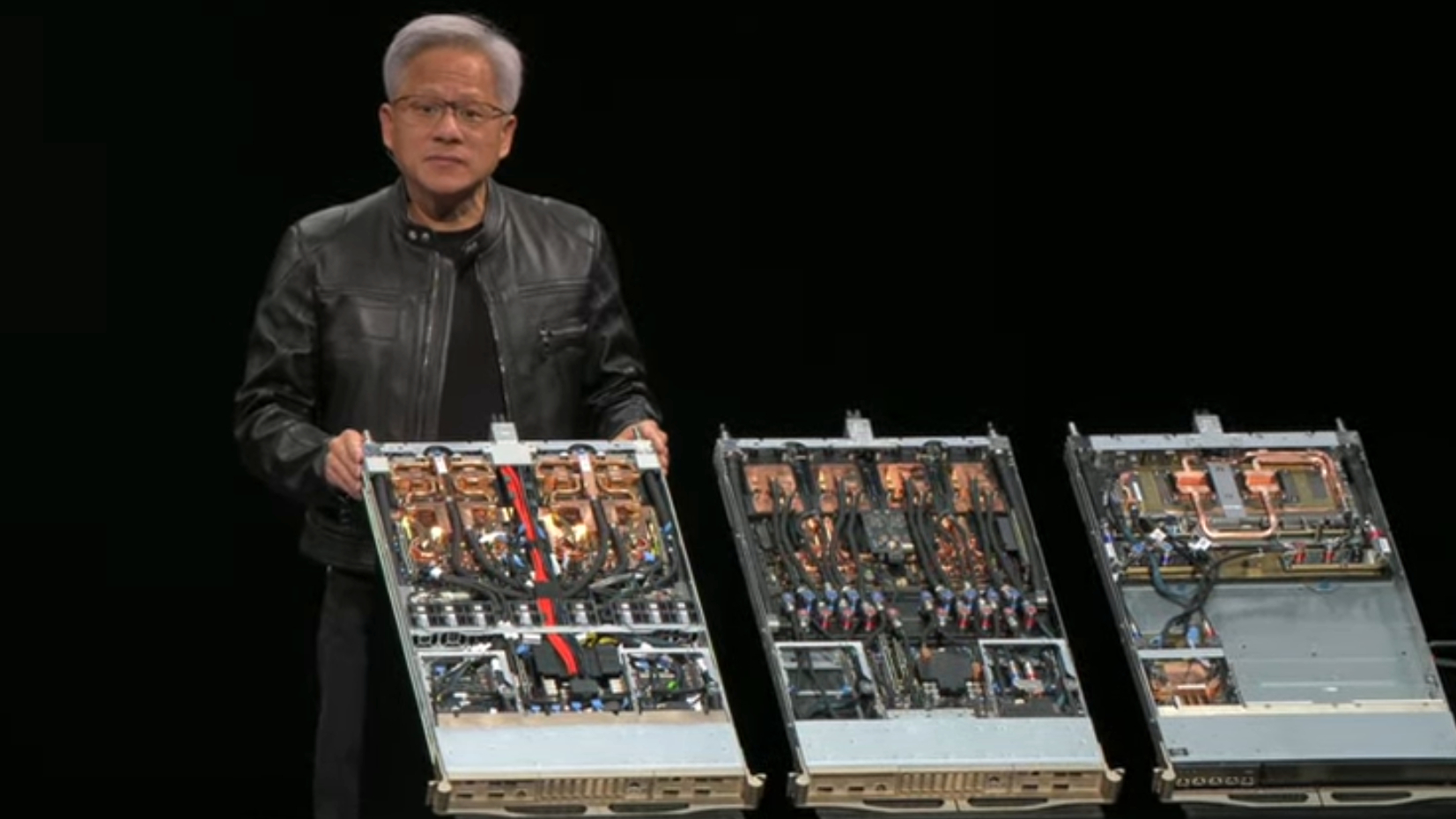 "Our business in China has been a bit of a rollercoaster" - Nvidia CEO “disappointed” in further Chinese ban on buying its AI chips
 Emperor Jensen? Nvidia's CEO is so powerful in AI that even Google and Amazon inform him of their own in-house AI chip efforts, as Huang doesn't apparently like surprises
 Jensen Huang says Nvidia’s China market share fallen to zero - so where does it go next?
'You’re not going to lose your job to AI. You’re going to lose your job to someone who uses AI’ says Nvidia CEO – and his timing couldn’t have been more fitting
Latest in AI Platforms & Assistants
Jensen Huang says Nvidia’s China market share fallen to zero - so where does it go next?
'You’re not going to lose your job to AI. You’re going to lose your job to someone who uses AI’ says Nvidia CEO – and his timing couldn’t have been more fitting
Latest in AI Platforms & Assistants
 The disproportionate effects of AI data centers on local communities – and what can be done about it
 I went hands-on with Hengbot Sirius, an AI robot that left me wanting more
 Your ChatGPT chats could be less private thanks to a new court ruling
 Hate VAR? Wait until you see how FIFA plans to use AI at the World Cup
 Top strategies for Nano Banana Pro images
 Google’s Antigravity AI wiped out a developer’s drive and then apologized
Latest in News
Google’s Antigravity AI wiped out a developer’s drive and then apologized
Latest in News
 AWS Graviton5 is its most powerful and efficient CPU to date - and could mean big changes for your key cloud workloads
 Android vs iPhone: here’s what TechRadar readers prefer
Nvidia CEO meets with Trump and pressures Congress to fight AI chip limits state-by-state AI rules
Android vs iPhone: here’s what TechRadar readers prefer
Nvidia CEO meets with Trump and pressures Congress to fight AI chip limits state-by-state AI rules
 Roblox, FaceTime become the last targets of Russia's censorship
 Marvel Rivals now has a gacha mini-game featuring a limited-time Psylocke bundle – here's how it works
 YouTube to lock out under-16s in Australia as controversial social media ban looms
LATEST ARTICLES
YouTube to lock out under-16s in Australia as controversial social media ban looms
LATEST ARTICLES- 1Nvidia CEO meets with Trump and pressures Congress to fight AI chip limits state-by-state AI rules
- 2The disproportionate effects of AI data centers on local communities – and what can be done about it
- 3Android vs iPhone: here’s what TechRadar readers prefer
- 4Nvidia drops Linux 590 driver support for GTX 900 and 10-series, signaling the end of Game Ready updates for older GPUs
- 5Top YouTube app for Android TV compromised to serve malware - here's what we know, and how to stay safe